Chess Team Hotel Crisis
Indian Chess Teams Stranded Without Hotel Rooms Ahead of Samarkand Olympiad
Anonymous
Key Points
1
The accommodation delay was especially concerning because classical chess games can last around four hours, making adequate rest and recovery important for concentration and reducing the risk of blunders.
2
Some Indian players and support staff were reportedly still waiting outside Samarkand airport because rooms had not been allotted, rather than merely experiencing a delayed hotel check-in.
3
India won gold in both the open and women’s sections at the 2024 Olympiad in Budapest, giving the team a dual title to defend in Samarkand.
4
The Olympiad is scheduled to run from September 15 to 27, with the first round beginning September 16 at the Silk Road International Exhibition Centre.
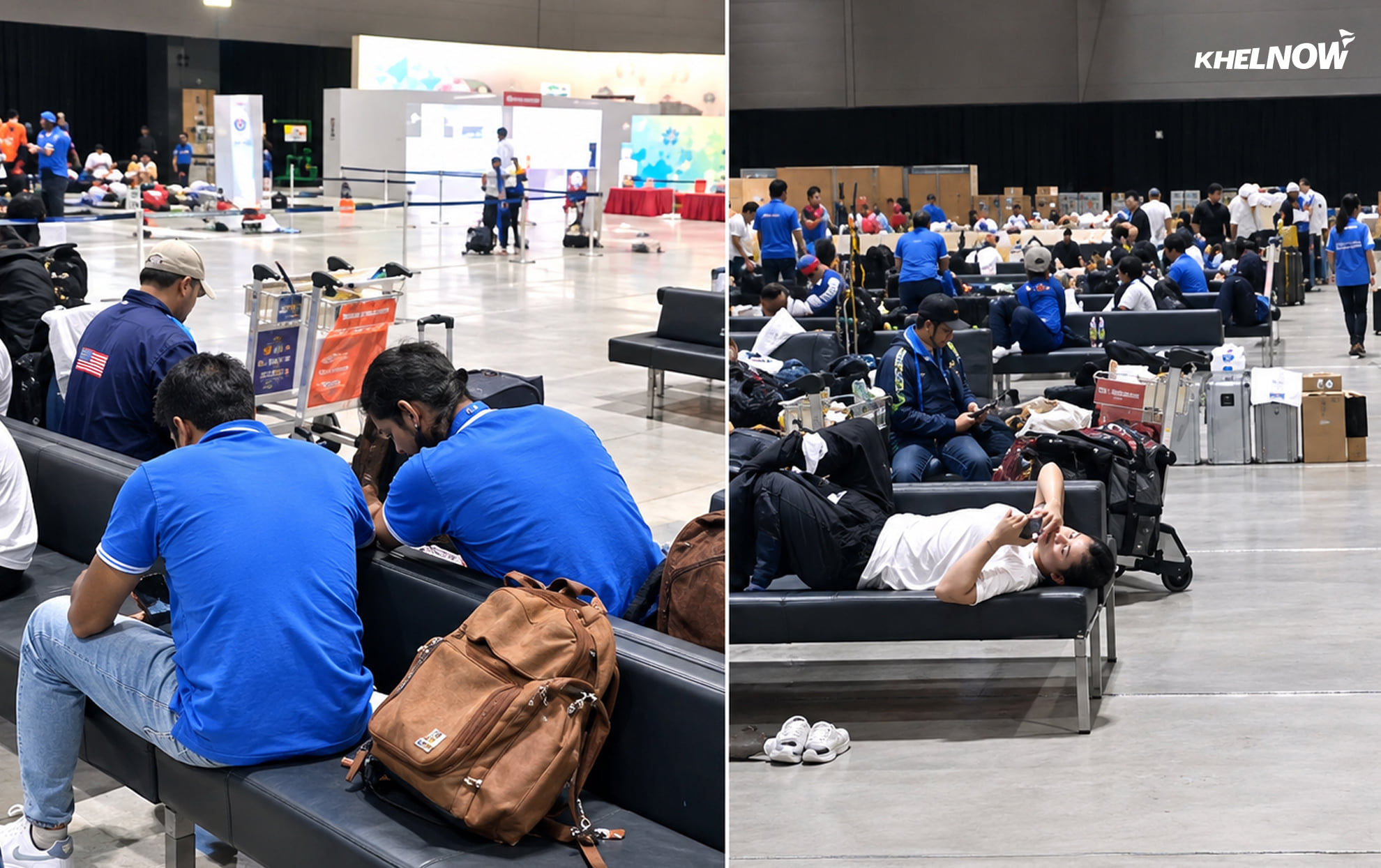
India's chess teams arrived in Samarkand for the 46th Chess Olympiad on September 15 only to find themselves stranded without hotel rooms for more than five hours. The Print reported that the Silk Road by Minyoun hotel had not received room reservations from the Local Organising Committee and was overbooked, forcing players and staff to wait at the airport with no clear timeline for accommodation. The crisis hit just one day before competition began, raising concerns about rest and recovery for India's defending champions.
India enters as the double defending champion after winning gold in both the open and women's divisions at the 2024 Budapest Olympiad. The team features world champion D Gukesh, R Praggnanandhaa, Arjun Erigaisi, and other top players. Classical chess games last around four hours, making adequate sleep and mental recovery critical to avoid concentration lapses and costly blunders.
Five Hours Without Rooms at Airport
When the Indian delegation landed at Samarkand Airport on September 15, hotel staff immediately informed them that reserved rooms were unavailable due to overbooking and missing reservation data from the organizing committee. The Indian Express reported that only one room was given to the entire Open team and a second to the Women's team, mothers, and support staff. Players and staff waited in limbo for hours while negotiations unfolded behind the scenes.
Open team captain Srinath Narayanan posted publicly: "Having a terrible experience at the FIDE chess 2026 Olympiad. The team landed 5 hours ago... The team still haven't been allotted rooms, with absolutely no clarity on when it'll be allotted." Grandmaster Vidit Gujrathi called it a "very poor first impression" of the tournament. The Times of India reported that Austria's team also faced identical delays, suggesting a broader organizational failure rather than a problem isolated to India.
AICF and FIDE Intervene to Resolve Crisis
The All India Chess Federation quickly escalated the matter to both the Local Organising Committee and FIDE. AICF President Nitin Narang told The Times of India: "We took up the matter very strongly with both the LOC and FIDE... In very simple terms, it was communicated that this was not acceptable." The federation sent Grandmaster Abhijit Kunte directly to Samarkand to oversee on-ground resolution and coordinate with hotel management.
By late evening on September 15, the hotel confirmed 14 of its 16 reserved rooms. The Indian Express reported that all players received individual rooms while support staff shared accommodations temporarily. Women's team captain Swayams Mishra said: "All players now have their individual rooms... But the support staff will be adjusting for a couple of days." FIDE later issued a formal public apology and promised financial compensation to all affected teams.
Sleep Loss Risks Performance for Defending Champions
Classical chess games demand intense focus for four or more hours. Sleep deprivation and arrival stress directly threaten performance, especially for defending champions facing tougher opponents. Deccan Chronicle noted that D Gukesh, R Praggnanandhaa, and other top-ranked players lost critical rest time before competition began on September 16.
The timing amplified the problem: players had no buffer to recover from travel fatigue, adjust to the local environment, or prepare mentally for opening matches. The Indian Express reported that accommodation mishaps at major sporting events often stem from poor communication between the central host authority and hotel vendors. This incident exposed gaps in the organizing committee's ability to manage logistics for a world-class international championship.
Sentiment
Mostly NegativeNEGATIVENEUTRALPOSITIVE
Publishers
37
Articles
29
Reach
66
Topics
A
AnonymousAuthor