134-Kilometer Pinglu Canal Opens China-ASEAN Trade Route
134-Kilometer Pinglu Canal Opens China-ASEAN Trade Route
Anonymous
Key Points
1
The Pinglu Canal is described as the first canal planned and coordinated at the national level since 1949 to connect a river with the sea. Construction began in August 2022 and involved more than 20,000 workers over more than 1,400 days and nights.
2
Project construction chief Cheng Yaofei said the canal is expected to save more than 5 billion yuan (about $745 million) in transport costs annually, calling it a break with the southwestern region’s historic need to take a detour to the sea.
3
The New International Land-Sea Trade Corridor connected 166 stations across 18 Chinese provincial-level regions with nearly 600 ports in more than 120 countries and regions as of September 2026; trains on the corridor had carried about six million TEUs across more than 1,100 categories of goods by Sept. 10.
4
The corridor’s expansion is occurring alongside strong trade growth: in the first half of 2026, imports and exports in western China rose 20.3% year on year, while trade with RCEP members increased 25.3%.
5
Guangxi previously lacked a natural inland waterway linking its inland hinterland with Beibu Gulf ports, forcing cargo to rely on long land transshipment or detours; the canal directly addresses that geographic bottleneck and connects the Pingtang River estuary near Nanning with the Qinjiang River and Beibu Gulf.
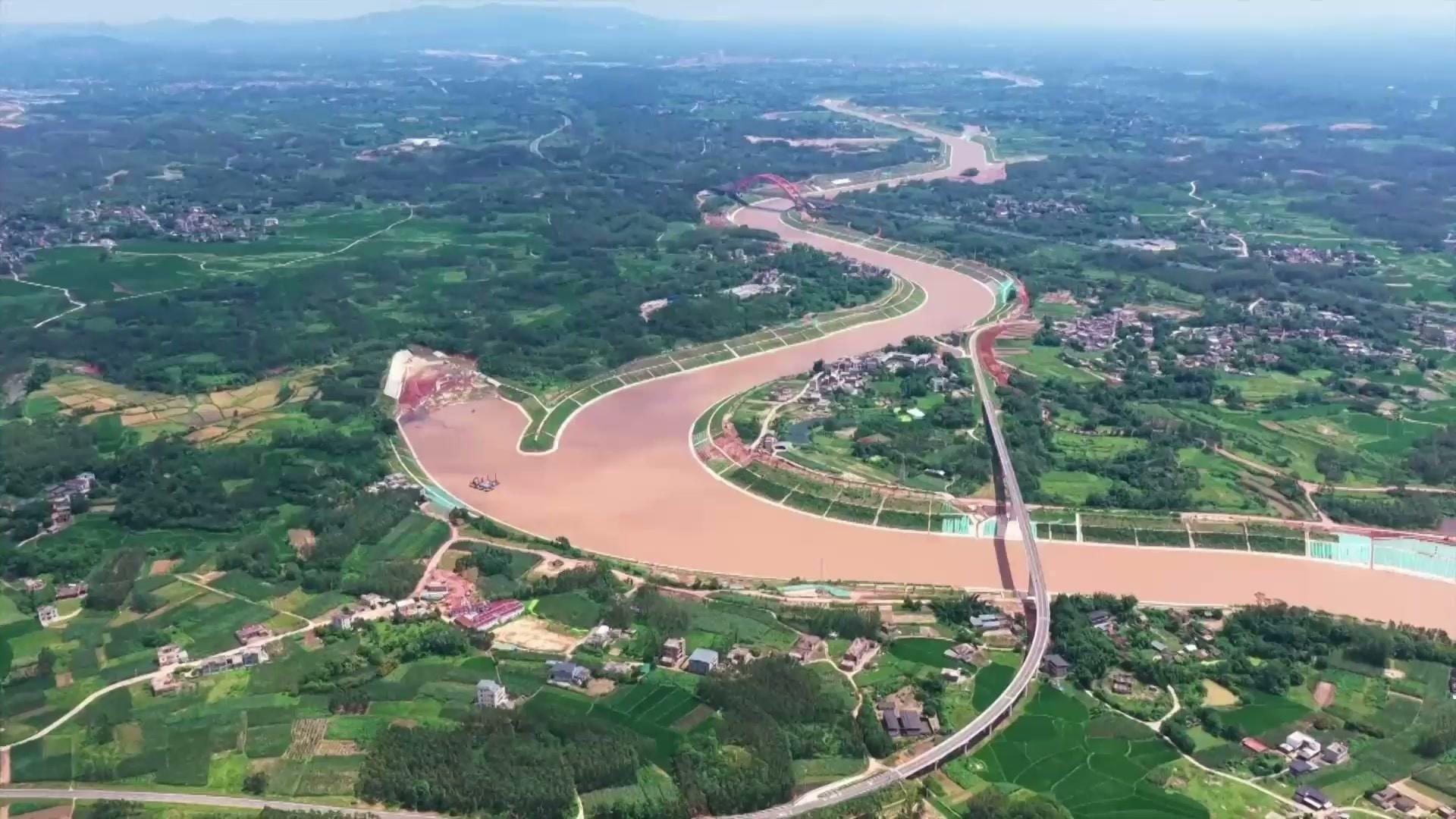
China opened the Pinglu Canal to commercial traffic on September 16, creating a direct waterway from inland southwestern regions to the Beibu Gulf Xinhua. The 134.2-kilometer canal, built at a cost of 72.7 billion yuan, eliminates more than 560 kilometers of travel compared to existing routes and is expected to save over 5 billion yuan annually in transport costs Xinhua.
The canal strengthens the New International Land-Sea Trade Corridor, which connected 166 stations across 18 Chinese regions with nearly 600 ports in over 120 countries by September 2026 Korea Herald. The project opens access for Sichuan, Yunnan, Guizhou, and Chongqing provinces to ship goods directly to ports, deepening China-ASEAN trade in electric vehicles, equipment, and agricultural products Xinhua.
Breaking a Geographic Bottleneck for Southwest China
Guangxi province previously lacked a natural inland waterway connecting its hinterland to Beibu Gulf ports Korea Herald. Cargo had to rely on costly land transshipment or long detours toward Guangzhou. The Pinglu Canal directly connects the Pingtang River estuary near Nanning with the Qinjiang River and Beibu Gulf, solving this historic constraint Xinhua.
The canal accommodates vessels up to 5,000 tonnes and is the first national-level river-sea waterway built since 1949 Xinhua. Construction began in August 2022 and involved more than 20,000 workers over 1,400 days. Project chief Cheng Yaofei called it a break with the southwest's historic need to take a detour to reach the sea Xinhua.
Strong Trade Growth Along the Corridor
The New International Land-Sea Trade Corridor is expanding rapidly. Trains on the corridor had carried about six million TEUs across more than 1,100 categories of goods by September 10 Xinhua. In the first half of 2026, imports and exports in western China rose 20.3% year-on-year, while trade with RCEP members increased 25.3% Xinhua.
The canal further accelerates this momentum by offering cheaper, faster routes for regional goods. Electric vehicles, equipment, new-energy materials, and agricultural products are expected to flow more efficiently through Beibu Gulf ports Xinhua. According to Filipino expert Wilson Lee Flores, the canal has potential to deliver win-win results for both China and ASEAN Xinhua.
Reshaping Ports and Logistics Across Southeast Asia
The Pinglu Canal is expected to enhance Beibu Gulf ports and reshape where factories, warehouses, and logistics facilities locate Xinhua. Closer integration among Guangxi, Hong Kong, southwest China, and Southeast Asia becomes more feasible with direct maritime access Xinhua.
However, the canal's broader economic impact depends on sustained cargo volumes and deeper regional integration Xinhua. Success requires coordinated trade policies and infrastructure development across multiple countries and provinces to fully unlock the waterway's potential Korea Herald.
Sentiment
Mostly PositiveNEGATIVENEUTRALPOSITIVE
Publishers
14
Articles
26
Reach
40
Topics
A
AnonymousAuthor


