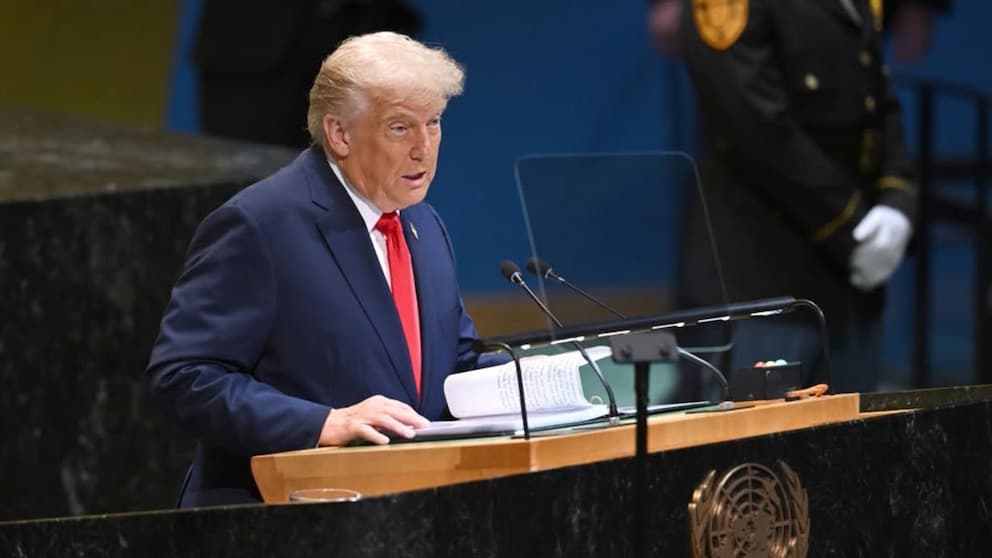
Trump Demands Iran Deal
Trump Threatens to Annihilate Iran and Expects a Deal After Midterm Elections
Anonymous
Key Points
1
Trump’s 37-minute address framed the conflict as a seven-month U.S. war with Iran and declared that Tehran was “the bully of the Middle East, but they are the bully no more.”
2
Dozens of anti-Iranian-government demonstrators gathered outside the U.N. headquarters, with some displaying signs calling for freedom and democracy and condemning dictatorship.
3
Trump was also expected to criticize the United Nations, arguing that his administration was resisting efforts by the organization and other international bodies to encroach on U.S. sovereignty or promote what it considers a left-wing agenda.
4
Trump claimed that U.S. crime had fallen by 27% and that the country had the world’s most secure border, saying, “We have stopped illegal migrants to come to America.”
5
Trump said the midterm elections would determine control of Congress and could shape the final two years of his presidency, even though he emphasized that he was not personally a candidate.
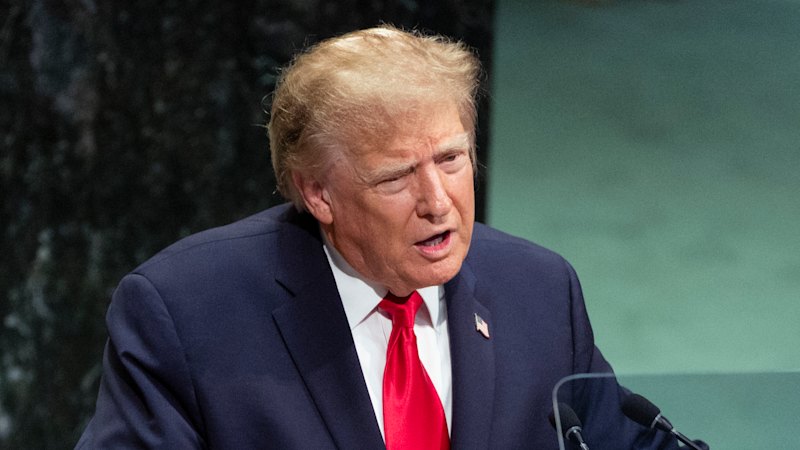
President Donald Trump delivered a stark warning at the United Nations General Assembly, threatening to "annihilate" Iran if it refuses to strike a deal with Washington. Sydney Morning Herald reported that Trump predicted a peace agreement would come shortly after November's midterm elections, framing his seven-month conflict with Tehran as a decisive victory that stripped Iran of regional power.
In his 37-minute address, Trump declared Iran "the bully of the Middle East, but they are the bully no more," defending U.S. and Israeli military actions as necessary to block Tehran's nuclear ambitions. The Age noted that anti-Iranian-government protesters gathered outside U.N. headquarters demanding freedom and democracy while Trump called on other nations to maintain economic pressure on Iran.
Trump Blames Iran for Regional Instability
Trump used his speech to pin Middle East chaos on Iranian aggression and terrorism. The Australian reported that the president claimed his military campaign had restored U.S. strength while stripping Tehran of its dominance. He accused Iran of sponsoring terrorism across the region and demanded global allies maintain tough sanctions to force negotiations.
The president's framing contrasts sharply with Iran's public stance. According to Brisbane Times, Iran has repeatedly denied seeking nuclear weapons, yet Trump's administration justified military strikes as prevention. Trump presented the conflict as a win, though neither side has formally announced surrender or capitulation.
Election Timing Could Unlock Peace Talks
Trump suggested the November midterm elections would determine Congress's makeup and shape his final two years in office. WA Today reported that Trump predicted a deal with Iran could follow shortly after voters cast ballots. He emphasized he was not personally running but that midterm results would influence his negotiating power and domestic political capital.
The timeline creates diplomatic leverage. A post-election agreement would let Trump claim victory before facing a potentially divided Congress. His prediction assumes Iran will concede to U.S. demands once American voters reaffirm his administration's direction, though Tehran has shown no public willingness to yield.
Trump Touts Domestic Achievements Without Independent Proof
Beyond Iran, Trump used the U.N. platform to trumpet domestic gains. He claimed crime had fallen 27%, that America had "the world's most secure border," and that his administration had stopped illegal migration surges. The Age reported these assertions as part of his broader pitch that his leadership strengthened the nation economically, militarily, and socially.
Trump also attacked the United Nations itself, arguing his administration was resisting the organization's efforts to encroach on U.S. sovereignty or push what he called a left-wing agenda. The Australian noted that Trump positioned himself against international bodies he views as threats to American independence and conservative values.
Sentiment
Mostly NegativeNEGATIVENEUTRALPOSITIVE
Publishers
62
Articles
136
Reach
198
A
AnonymousAuthor