JSW Launches Ampstar EV Brand
JSW Group Enters Electric Commercial Vehicle Market With Ampstar Brand
Anonymous
Key Points
1
JSW has invested ₹2,500 crore in Ampstar’s business to reach the initial 15,000-unit production capacity. Parth Jindal said capacity could be doubled once utilization at the Chhatrapati Sambhajinagar plant exceeds 70%.
2
JSW estimates India’s electric commercial-vehicle market could reach 75,000 to 100,000 units, while its initial 15,000-unit capacity is expected to be supported by demand from the group’s steel, power and cement businesses.
3
Ampstar says it has developed the electric drivetrain’s base logic, software and control algorithms in-house. Its vehicles will also use a double-cooling battery system and a high-strength monocoque chassis.
4
The manufacturing site is described by JSW as India’s largest integrated EV manufacturing plant, and it includes what the company calls India’s first pre-treatment and electro-deposition process for bus production, alongside an automated truck-cabin assembly line and integrated battery facilities.
5
Interbrand developed Ampstar’s brand strategy after researching drivers, owner-drivers and fleet operators, focusing on concerns such as operating performance, reliability and the support needed to reduce the risks of switching to electric vehicles.
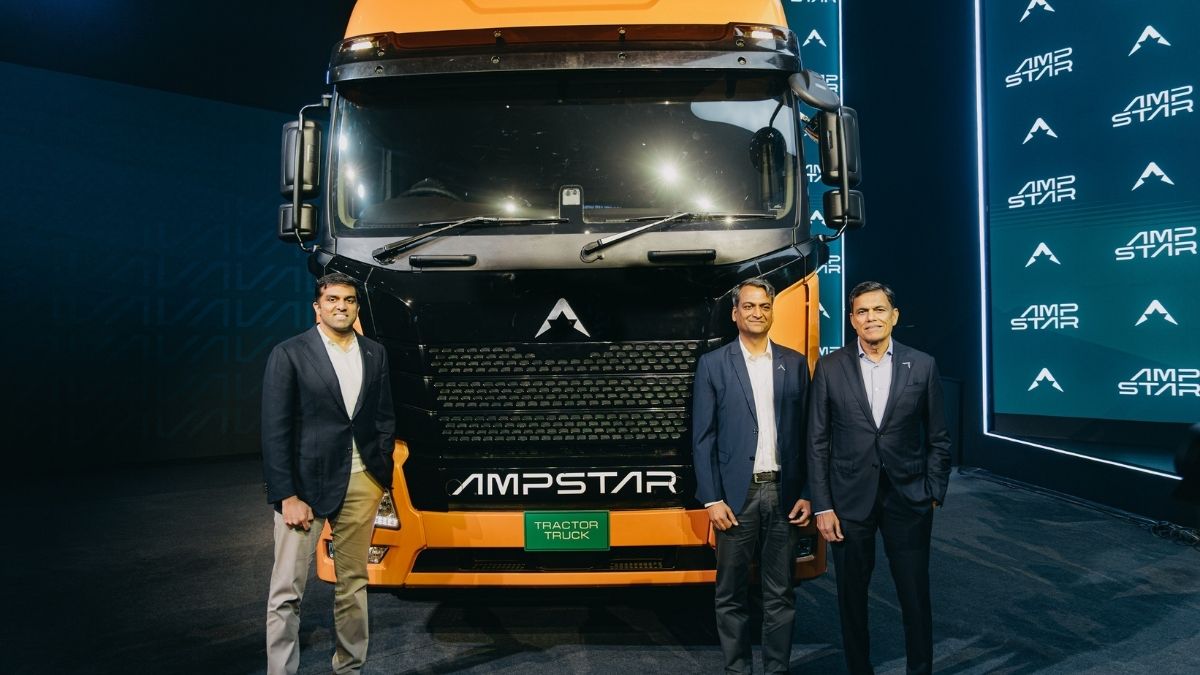
JSW Group has launched Ampstar, a new electric commercial-vehicle brand under JSW Greentech, to build buses and trucks designed for Indian roads. News18 reports the company invested ₹2,500 crore to enter India's electric truck and bus market, with manufacturing starting at a 90-acre facility in Chhatrapati Sambhajinagar, Maharashtra.
The plant will initially produce 15,000 vehicles annually and can scale to 30,000 units. Ampstar will make buses from 7 to 18 meters long, electric trucks, and later tippers and dumpers. JSW estimates 20% to 30% of India's commercial-vehicle demand could shift to electric within the next decade.
Plant Features India's First EV Bus Production Line
The Chhatrapati Sambhajinagar facility is Financial Express's description of India's largest integrated EV manufacturing plant. It includes India's first pre-treatment and electro-deposition process for bus production, an automated truck-cabin assembly line, and integrated battery-making systems on-site.
Ampstar's vehicles use a double-cooling battery system and high-strength monocoque chassis built in-house. The company developed the electric drivetrain's base logic, software and control algorithms internally to meet India's operating conditions and road requirements.
JSW's Own Businesses Could Drive 10,000 Truck Orders
JSW Group owns steel, power, and cement businesses that together may need about 10,000 electric trucks annually for operations. Rediff notes this internal demand, combined with orders from private fleet operators and government bus tenders, is expected to fill the plant's initial 15,000-unit capacity quickly.
Parth Jindal, a JSW executive, said capacity could double once the plant hits 70% utilization. The company predicts India's total electric commercial-vehicle market could reach 75,000 to 100,000 units annually over time.
Ampstar Offers Battery Leasing and Financing Options
Ampstar will sell buses and trucks with power from 150 kW to 500 kW and offer multiple ownership models. Customers can buy vehicles outright, lease them, or choose Battery-as-a-Service, where Ampstar owns the battery and charges a usage fee instead.
The brand provides charging infrastructure, financing, and after-sales service support. According to Tribune India, Interbrand developed Ampstar's brand strategy by researching drivers, owner-drivers and fleet operators to address concerns about switching to electric vehicles, including reliability and performance.
Sentiment
Mostly PositiveNEGATIVENEUTRALPOSITIVE
Publishers
21
Articles
13
Reach
34
A
AnonymousAuthor


