Foldable Smartphone Market Competition
Xiaomi and Huawei launch new foldable smartphones to intensify competition with Apple.
Anonymous
Key Points
1
Xiaomi’s 18 Fold includes a 200-megapixel main camera and a 6,000mAh battery, adding significant hardware detail beyond its Leica branding and display specifications.
2
Xiaomi says the 18 Fold weighs 219 grams—“lighter than Apple’s iPhone Pro Max,” according to the company’s CEO—and its Chinese pricing reaches 15,999 yuan for the highest configuration.
3
Huawei’s Mate XT2 adds a redesigned hinge intended to reduce the screen crease, improved water resistance and a privacy screen; its highest-end version costs 29,999 yuan.
4
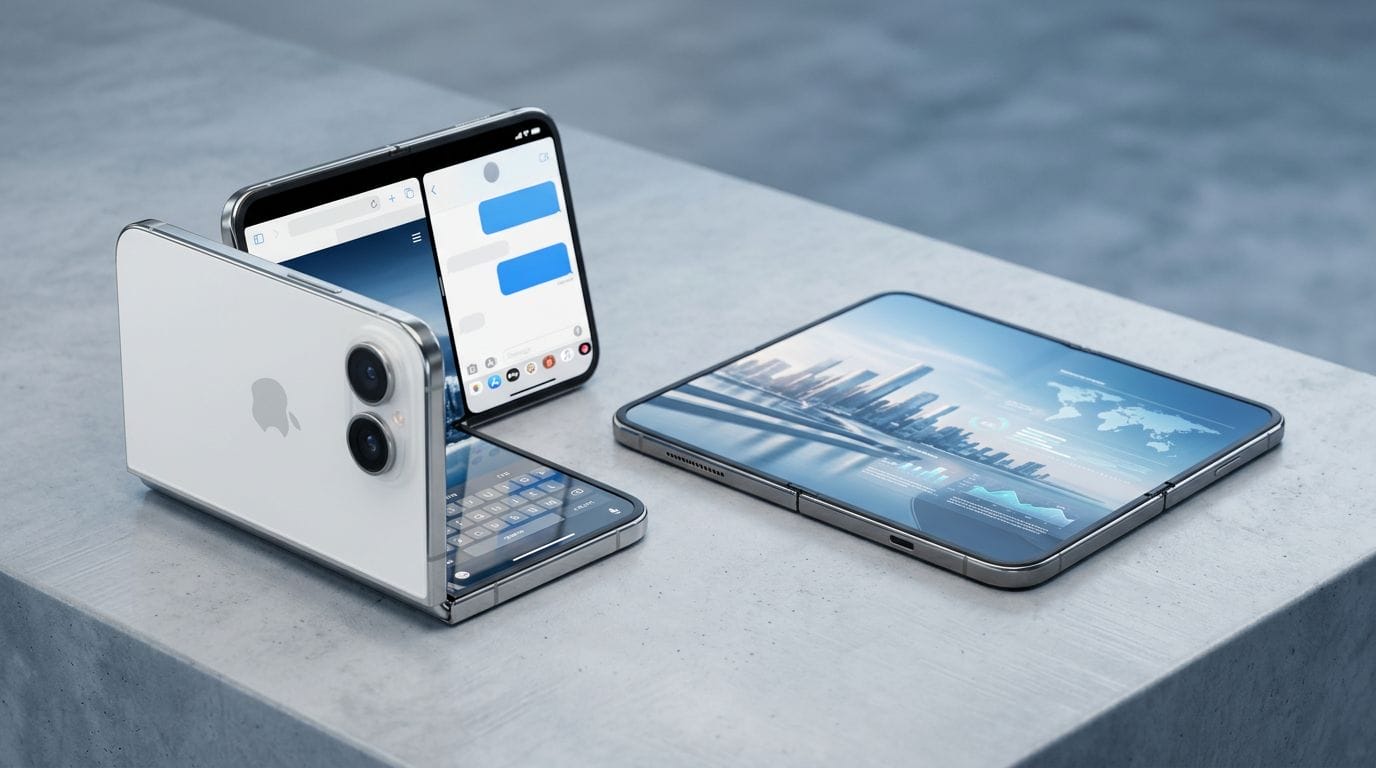
The iPhone Duo uses Touch ID rather than Face ID, while its 7.6-inch Super Retina display supports running two apps side by side.
5
Xiaomi’s 18 Fold is currently available only in China, with sales beginning September 10, and Xiaomi has not announced whether it will launch internationally; by contrast, Apple scheduled iPhone Duo pre-orders for October 16 and retail availability for October 23 as part of a global launch.
Xiaomi and Huawei are racing ahead of Apple in the foldable-phone race, launching cutting-edge devices weeks before Apple's first foldable arrives. Xiaomi unveiled its passport-style 18 Fold on September 7 in China, starting at 10,999 yuan—roughly $1,540. Huawei unveiled its tri-fold Mate XT2 at 19,999 yuan. Apple's iPhone Duo, launching October 23 globally, costs $1,999, putting pressure on the tech giant to convince customers that premium pricing justifies late entry into the booming foldable market.
Chinese manufacturers are attacking from two angles. Xiaomi offers superior hardware at lower prices—a 200-megapixel Leica camera, 6,000mAh battery, and 219-gram weight that Xiaomi's CEO says is lighter than Apple's iPhone Pro Max. Huawei aims for ultra-premium innovation with its tri-fold tablet-sized display and redesigned hinge to reduce screen creases. Analysts warn that Apple faces a tough challenge persuading non-loyal customers to pay $1,999 when competitors offer more hardware for less money.
Xiaomi's 18 Fold Undercuts Apple on Price and Specs
Xiaomi's 18 Fold packs serious hardware into a lighter frame than rivals. The device features a 5.38-inch cover screen and 7.58-inch main display, powered by Xiaomi's custom XRING O3 chip. The 200-megapixel Leica main camera and 6,000mAh battery make it a strong value proposition starting at 10,999 yuan, with premium versions reaching 15,999 yuan. Xiaomi emphasized weight as a key advantage—at 219 grams, the CEO claimed it's lighter than Apple's iPhone Pro Max. The phone hits Chinese stores September 10, but Xiaomi hasn't announced plans for international availability.
The pricing gap between Xiaomi and Apple is substantial. Apple's iPhone Duo starts at $1,999 in the US, while Xiaomi's flagship 18 Fold tops out at 15,999 yuan—still significantly cheaper. In the UAE, iPhone Duo pricing ranges from AED 8,499 to AED 13,599. For price-conscious premium buyers in China, Xiaomi's aggressive positioning creates immediate competitive pressure on Apple's ability to command global price premiums in the foldable category.
Huawei's Mate XT2 Targets the Ultra-Premium Segment
Huawei's tri-fold Mate XT2 takes a different strategy, aiming for users willing to pay top dollar for bleeding-edge innovation. The device features a massive 10.2-inch tri-fold tablet-sized display, powered by Huawei's Kirin 9050 Pro processor and a 30-billion parameter on-device AI model. Huawei redesigned the hinge to reduce screen creases and improved water resistance. Pricing starts at 19,999 yuan, with the highest configuration reaching 29,999 yuan—nearly 50% more than Apple's iPhone Duo.
The Mate XT2 appeals to innovation-first customers rather than value seekers. Huawei positioned the device as a showcase for advanced on-device artificial intelligence and premium engineering. By launching ahead of Apple, Huawei claims the "first-mover" perception in the ultra-premium foldable space. This tri-pronged attack—Xiaomi on value, Huawei on premium innovation, Apple on ecosystem—splits the foldable market into distinct competitive niches.
Apple's iPhone Duo Arrives Late but Goes Global
Apple's iPhone Duo uses a different design philosophy than rivals. The device features a 7.6-inch Super Retina folding screen with side-by-side multitasking support and dual 48-megapixel rear cameras. Notably, Apple replaced Face ID with Touch ID and skipped periscope telephoto optics—compromises that leave some premium features on the table. Running iOS 27, the software is purpose-built for the foldable form factor. Apple starts pre-orders October 16 and launches retail availability October 23 across 75+ countries.
Apple's global strategy contrasts sharply with Xiaomi's China-only approach. Apple synchronized a worldwide launch, betting that its ecosystem and brand loyalty will drive adoption despite premium pricing and later arrival. However, analysts warn that Apple's core challenge remains persuading mainstream consumers beyond its loyal fanbase to spend $1,999 when its artificial-intelligence strategy still appears incomplete. The success of iPhone Duo sales will signal whether Apple can command foldable premiums or cede market share to faster-innovating rivals.
Sentiment
Mostly PositiveNEGATIVENEUTRALPOSITIVE
Publishers
46
Articles
47
Reach
93
A
AnonymousAuthor


