Limited iPhone Duo Supply
Apple Expected to Limit iPhone Duo Production to Six Million Units Over Hinge Constraints
Anonymous
Key Points
1
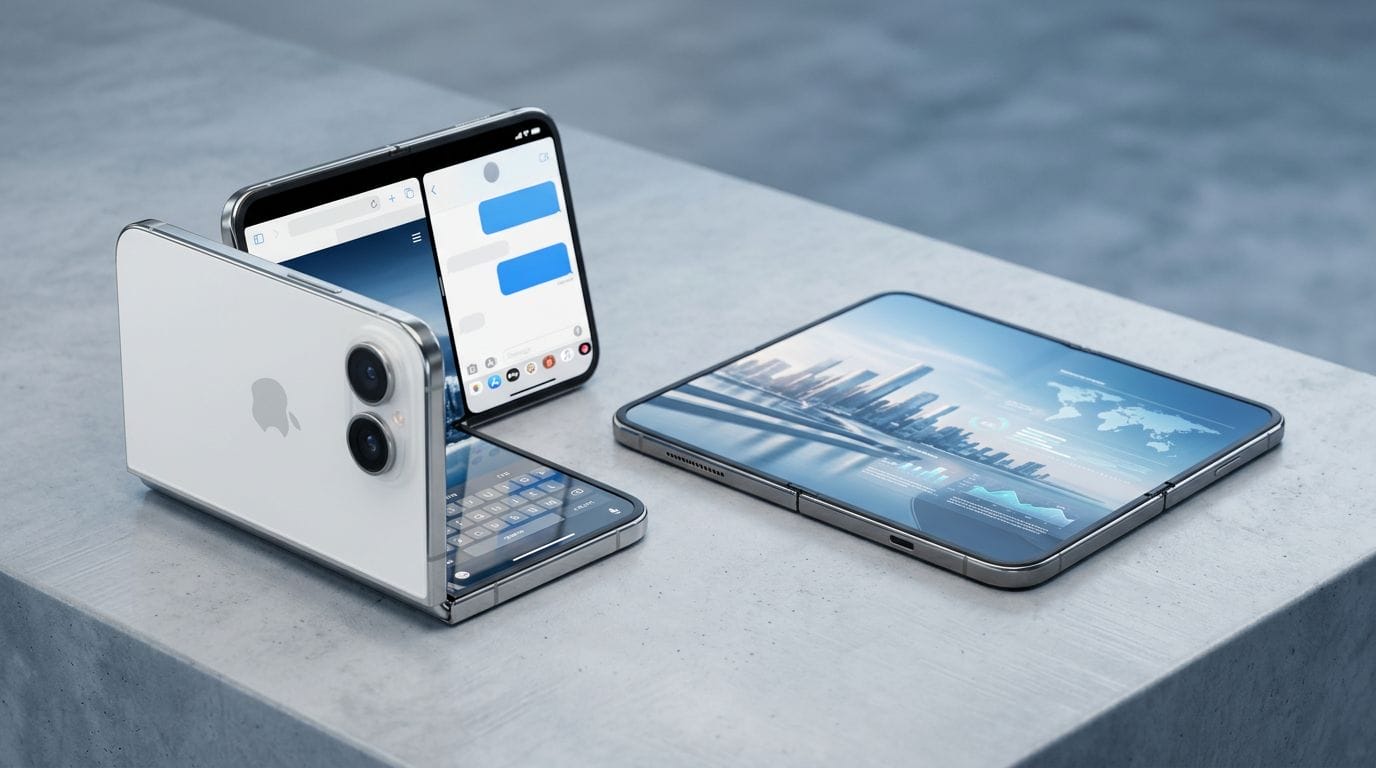
The iPhone Duo is reportedly expected to feature a 7.6-inch internal Super Retina XDR OLED display and a 5.4-inch external OLED display, with refresh rates of up to 120Hz and peak brightness of 3,000 nits.
2
Reported hardware specifications include Apple’s A20 Pro chip, up to 2TB of storage, dual 48-megapixel rear cameras, 5G, Wi-Fi 7, Bluetooth 6.0 and a USB-C 3.2 Gen 2 port.
3
The Duo is also reportedly expected to offer IP68 certification, USB-C Apple Pencil support and an eSIM-only design, with battery life rated at up to 24 hours.
4
The phone’s launch strategy reflects Apple’s long-standing tendency to be selective about which specifications it emphasizes, focusing instead on how the product improves the user’s experience rather than competing on every technical metric.
5
The Duo would be Apple’s first foldable iPhone, while Samsung has already spent seven years releasing foldable phones; the article characterizes current foldable owners as largely early adopters who are comfortable with technology that is not yet fully mature.
Apple's first foldable iPhone, the iPhone Duo, will ship at roughly 6 million units in 2026 — a significant constraint that could create long wait times and empty store shelves at launch. GF Securities analyst Jeff Pu cut his production estimate from 7 million to 6 million units, citing hinge-related manufacturing bottlenecks rather than weak buyer interest.
The device starts at $1,999 and tops out at $3,199, making it a high-cost first-generation product. Preorders open October 16, with retail availability on October 23. That 6 million unit cap is roughly one-twelfth the expected shipment volume for the iPhone 18 Pro and Pro Max combined, suggesting the Duo will be tough to obtain at launch.
Why Production Is Capped at 6 Million Units
The bottleneck is not demand — it's manufacturing. GF Securities pinpointed grade 5 titanium hinge constraints as the primary culprit. Assembly complexity, durability testing of the hinge mechanism, and inner-display flatness inspections all slow the production line.
These are not quick fixes. Apple built a foldable from scratch with custom engineering: ten ultra-thin display layers, Ceramic Shield 2 protection, and a passport-style fold that required rethinking how phones close. Each unit needs rigorous testing to ensure the hinge survives repeated folds.
Record Pricing Signals Apple's Premium Play
At $1,999 to $3,199, the iPhone Duo costs two to three times more than a standard iPhone 18. The base model includes 256GB of storage and a 7.6-inch inner display. The maximum configuration — 2TB storage — hits $3,199.
This pricing reflects Apple's standard playbook: enter late, charge premium prices, use best-in-class materials, and focus on experience over raw specs. Apple eschews spec-sheet battles in favor of user experience. Forrester analyst Dipanjan Chatterjee said the launch is *'straight out of Apple's playbook: Wait for the product to work out its kinks and for the market to offer glimpses of viability, then enter and shape the category.'*
Supply Shortage Will Drive Sellouts and Long Wait Times
With just 6 million units earmarked for 2026, Apple faces a supply crunch. Compare that to TrendForce's estimate of 72 million iPhone 18 Pro and Pro Max shipments expected this year. The Duo will likely sell out within hours of preorder opening.
Early customers should expect fast inventory depletion, scarce store stock, and shipping delays stretching weeks or months. This mirrors Apple's playbook for limited-production launches — artificial scarcity boosts desirability and average selling prices across the portfolio.
Apple Challenges Samsung's Seven-Year Foldable Dominance
Samsung has dominated foldables since 2019, releasing eight generations of the Galaxy Z Fold. The Galaxy Z Fold 8 costs less than Apple's entry-level Duo, giving Samsung a price advantage. However, Tom's Guide polling of 1,705 readers showed 62% preferred the Samsung foldable — a sign that Apple still has work to convince the mainstream.
Apple's Duo features a larger inner display (7.6 inches versus the typical 7.4-inch folds) and a slimmer folded footprint. TrendForce projects Apple will capture nearly 25% of the global foldable market in 2026, second to Samsung's 35%. That's a powerful debut for a first-generation device in a niche category.
Sentiment
Mostly NegativeNEGATIVENEUTRALPOSITIVE
Publishers
25
Articles
11
Reach
36
Topics
A
AnonymousAuthor


