New Hampshire Business Leaders
Five New Hampshire Women Named 2026 Business Leaders and Honorees
Anonymous
Key Points
1
During the pandemic, Laurie Masiello’s biostorage company shifted from an 8-to-5 operation to round-the-clock work supporting pharmaceutical companies. A customer’s urgent request was handled in just 12 hours, with the purchase order arriving at 4 a.m. after the project began at 4 p.m. the previous day.
2
Lisa Madden’s commitment to mental-health advocacy was shaped by visiting her aunt, who had been institutionalized in Massachusetts when the family could no longer care for her. Madden says deinstitutionalization did not come with the complete, funded and staffed network of community supports people needed.
3
Courtney Morin’s responsibilities at Northeast Delta Dental include rate development, pricing, product design and reserving for individual and group dental and vision products. She also serves as vice chair of the Girl Scouts of the Green and White Mountains and coaches cross-country at Auburn Village School.
4
Nicole Bluefort’s interest in law emerged during her junior year at Boston College, after she became treasurer of the Black Law Students Association. The organization introduced her to judges and law students and helped connect her with her interest in advocating for people without representation.
5
Jennica Dearborn’s career progression at BAE Systems included positions in software engineering, systems engineering and program engineering management before she moved into program management. She says that technical foundation shaped how she processes information, evaluates problems and applies critical thinking.
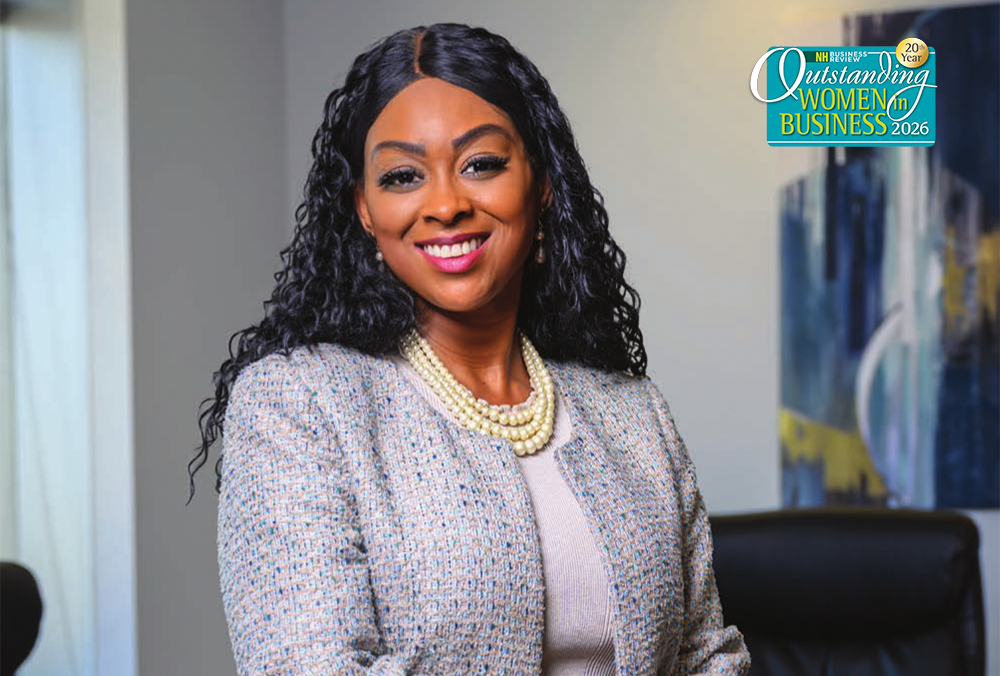
Five New Hampshire women leaders have been named 2026 Outstanding Women in Business honorees by NH Business Review. Their careers span aerospace manufacturing, law, actuarial science, biotechnology and mental health. Each woman built her path by combining technical expertise with a willingness to tackle tough problems and lead across complex systems.
The honorees credit frontline experience, trusted networks and a commitment to solving real-world problems with shaping their rise into executive roles. From pandemic-era innovation to community advocacy, their stories show how domain expertise expands into system-level leadership.
From Technical Roles to Executive Leadership at BAE Systems
Jennica Dearborn, vice president of operations at NH Business Review BAE Systems, credits her technical foundation with shaping how she leads today. She started in software engineering, moved into systems engineering, then program engineering management before advancing to program management. That progression gave her deep knowledge of how problems flow through complex organizations.
Dearborn encourages women to build broad experience across uncomfortable stretching assignments. She says a technical background teaches you how to evaluate problems and apply critical thinking to any challenge. Her advice: don't stay in one specialty too long. Push yourself into unfamiliar territory.
Building a Law Practice to Serve People Without Representation
Nicole Bluefort founded the Law Offices of M Bluefort in Manchester to address unmet legal needs among people of color. Her path to law began in her junior year at Boston College, when she became treasurer of the Black Law Students Association. That role connected her with judges, law students and her passion for advocating for people who lack representation.
Bluefort has since expanded her practice while balancing new motherhood and entrepreneurship. She remains driven by a commitment to serve communities that struggle to find legal support. Her success shows how networks — professional associations, mentors, civic involvement — can turn passion into sustainable leadership.
Pandemic Crisis Sparked AI-Driven Biopharma Innovation
Laurie Masiello, CEO and co-founder of Predictive Monitor, turned pandemic demand into a new business. During COVID-19, her biostorage company shifted from standard daytime operations to round-the-clock work supporting pharmaceutical companies. A customer's urgent request was completed in just 12 hours — with the purchase order arriving at 4 a.m. after the project started at 4 p.m. the previous day.
That crisis response revealed a durable market need. Masiello's company now uses artificial intelligence and machine learning to protect critical refrigeration systems used by biopharma firms. Her story illustrates how trusted customer relationships, quick mobilization and permission to move beyond established offerings can transform crisis into innovation.
Mathematics and Community Service Drive Actuarial Leadership
Courtney Morin's early interest in mathematics, statistics and risk analysis led her to become a Fellow of the Society of Actuaries and member of the American Academy of Actuaries. At Northeast Delta Dental, she manages rate development, pricing, product design and reserving for dental and vision products. She earned demanding actuarial certifications while raising three children.
Beyond her corporate role, Morin serves as vice chair of the Girl Scouts of the Green and White Mountains and coaches cross-country at Auburn Village School. She shows how technical leadership and community service reinforce each other. Both require the same skills: planning, risk assessment and commitment to long-term outcomes.
Mental Health Advocate Builds Systems Beyond Deinstitutionalization
Lisa Madden's work at Riverbend Community Mental Health focuses on building coordinated, adequately funded community support systems. Her commitment to advocacy was shaped by personal experience. She visited her aunt, who had been institutionalized in Massachusetts when her family could no longer provide care. The aunt's experience showed her what deinstitutionalization left behind.
Madden says that when institutions closed, the complete network of funded, staffed community supports didn't follow. Her leadership at Riverbend tackles that gap. She demonstrates how frontline experience — working directly with people in crisis — reveals the distance between formal policy and real-world outcomes, creating opportunities for system-level leadership and change.
Sentiment
Mostly PositiveNEGATIVENEUTRALPOSITIVE
Publishers
13
Articles
3
Reach
16
Topics
A
AnonymousAuthor


