Lula's UNGA Multilateralism Push
Brazilian President Lula to Defend Multilateralism at UN General Assembly
Anonymous
Key Points
1
Brazil is part of the G4 grouping with Germany, India and Japan, which jointly supports permanent Security Council seats for all four countries in a reformed UN structure.
2
The 81st General Assembly’s high-level debate is scheduled for September 22–28 under the theme “Restoring trust, managing transformation: a United Nations that delivers results for all.”
3
Brazil’s Global Alliance Against Hunger and Poverty is intended to mobilize governments, international organizations and financial institutions to support food security, social-protection programs and income-generation policies.
4
Lula characterized Trump’s approach as “the law of the strongest,” describing its underlying logic as: “I am the strongest, I am the richest, I can do everything and the others have to obey.”
5
On the eve of the General Assembly, Lula signed a Financial Times-published manifesto with other international leaders in support of multilateralism, including European Council President António Costa and Kenyan President William Ruto.
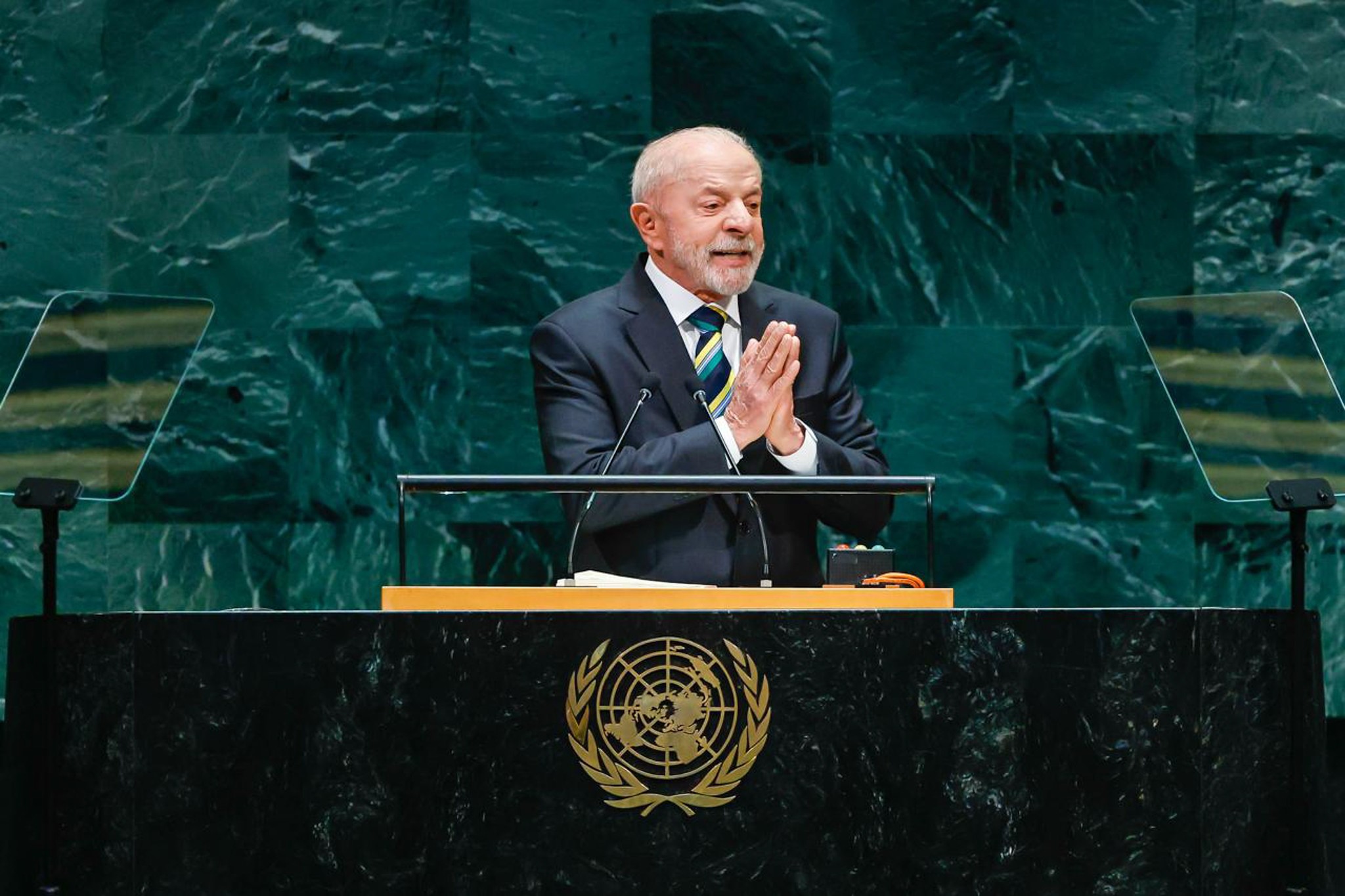
Brazilian President Luiz Inácio Lula da Silva will open the 81st United Nations General Assembly debate on September 22, defending multilateralism and criticizing what he calls the "law of the strongest." Valor International reports that Lula's speech will push for a reformed UN Security Council with permanent seats for Brazil, alongside calls for negotiated solutions to global conflicts including the war in Gaza.
Lula has directly challenged President Donald Trump's unilateral foreign-policy approach, stating that the United States has no right to impose its will on other nations. Newsposl reports that Lula said Trump cannot "boss other nations around." The Brazilian leader also signed a multilateralism manifesto with European and African leaders ahead of the assembly.
A Challenge to American Unilateralism
Lula has framed the upcoming speech as a direct rebuttal to what he calls Trump's "law of the strongest." According to the Brazilian president, this logic means: "I am the strongest, I am the richest, I can do everything and the others have to obey." Newsposl reports that Lula explicitly stated Trump has no right to impose America's rules on other nations or demand their obedience.
The timing is significant. Democracy Now reports that Lula warned against foreign interference in Brazil's upcoming 2026 elections during his UN address. Brazilian intelligence has already flagged concerns about potential US interference in the electoral process, underscoring tensions between Brasília and Washington.
Brazil Pushes for a Reformed UN Security Council
Lula will call for expanding the UN Security Council to include permanent seats for Brazil and other nations from underrepresented regions like Latin America and Africa. Brazil is part of the G4 grouping with Germany, India and Japan, which jointly backs permanent seats for all four countries in a restructured Security Council framework.
This push reflects Brazil's broader effort to reshape global governance away from Cold War-era power structures. Valor International notes that Lula's speech carries themes of defending national sovereignty and challenging existing hierarchies in international institutions.
Gaza, Humanitarian Access, and Diplomatic Solutions
Lula will address the war in Gaza, advocating for negotiated ceasefires and civilian protection. He will push for humanitarian access to affected regions and support a two-state solution. These calls align with Brazil's broader commitment to international humanitarian law and respect for national sovereignty in conflict zones.
The speech also promotes Brazil's Global Alliance Against Hunger and Poverty, which aims to mobilize governments, international organizations and financial institutions to tackle food insecurity and support social protection programs. This agenda positions Brazil as a leader in addressing global inequality alongside its diplomatic push for multilateralism.
A Manifesto Signed by Global South Leaders
On the eve of the General Assembly, Lula signed a Financial Times-published manifesto backing stronger multilateral cooperation. The signers included European Council President António Costa and Kenyan President William Ruto. This show of solidarity from leaders across continents signals a coordinated pushback against unilateral foreign policy approaches.
Sentiment
Mostly NegativeNEGATIVENEUTRALPOSITIVE
Publishers
21
Articles
44
Reach
65
A
AnonymousAuthor


