UN Assembly Human Rights Defense
Human Rights Groups Urge World Leaders to Defend Global Institutions Ahead of UN General Assembly
Anonymous
Key Points
1
Palestinian President Mahmoud Abbas is expected to participate virtually for the second consecutive year after the United States refused visas to him and other Palestinian officials seeking to attend the UN headquarters.
2
Human Rights Watch said the Trump administration has sanctioned International Criminal Court officials and judges and announced an effort to dismantle the court; the measures also targeted a UN human rights expert and three Palestinian rights organizations. The ICC has issued arrest warrants for Israeli officials, including Prime Minister Benjamin Netanyahu, as well as Russian President Vladimir Putin and other Russian officials.
3
Agnès Callamard said the next UN secretary-general should engage meaningfully with civil society, condemn atrocities regardless of who commits them and avoid being selected through a closed-door deal among powerful states; Amnesty also called for a binding, transparent and effective global model for regulating artificial intelligence.
4
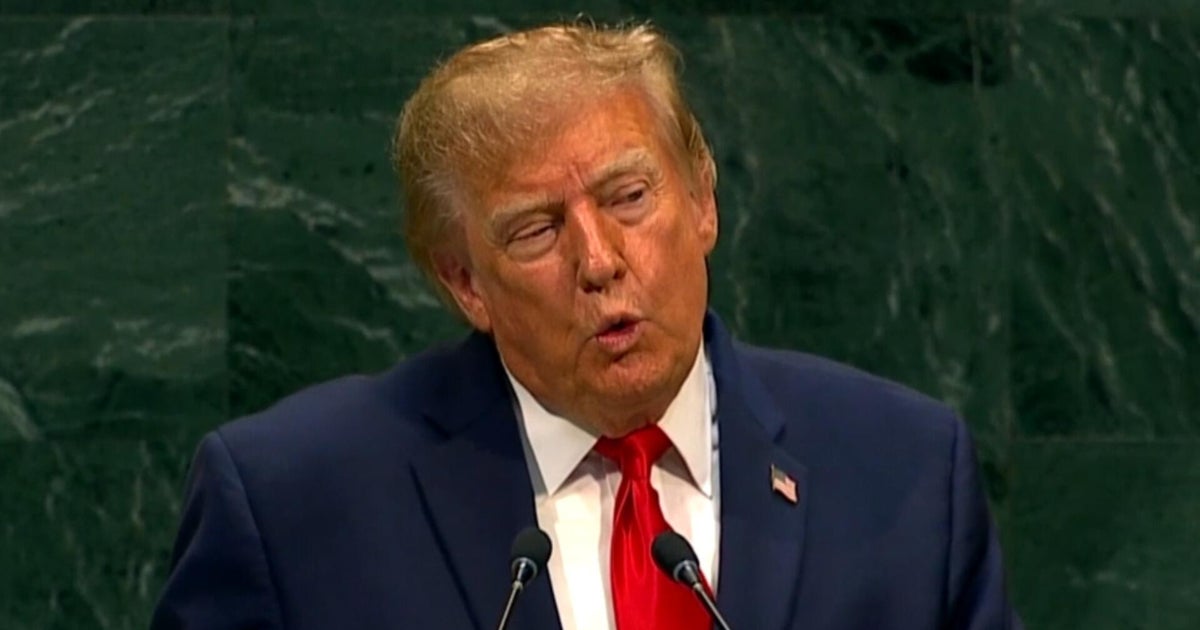
The opening sequence for the General Assembly’s general debate is scheduled to begin with Brazilian President Luiz Inácio Lula da Silva, followed by current U.S. President Donald Trump; the leaders of Türkiye, France, the United Kingdom and Japan are also listed to speak on the first day.
World leaders gathered at the UN General Assembly this week face pressure to defend human rights institutions and hold powerful nations accountable for grave abuses. Human Rights Watch called on governments to strengthen international courts and resist efforts by the United States, Russia, and China to weaken the UN, while eleven countries separately reaffirmed that a two-state solution remains the only credible path to lasting Israeli-Palestinian peace.
Amnesty International Secretary-General Agnès Callamard said the next UN secretary-general must independently confront powerful states amid wars, inequality, climate change, and emerging artificial-intelligence risks. The General Assembly's agenda includes human rights abuses, accountability for grave crimes, the future of multilateral institutions, and AI regulation, with current U.S. President Donald Trump and leaders from Brazil, France, Turkey, the United Kingdom, and Japan scheduled to speak.
Gaza, Iran, and Ukraine Among Critical Human Rights Crises
Human Rights Watch highlighted human rights emergencies spanning eight regions: Gaza and the West Bank, Iran, Ukraine, Sudan, the Democratic Republic of Congo, Myanmar, Haiti, and Afghanistan. The organization emphasized that international accountability mechanisms face mounting pressure from major powers seeking to weaken institutions designed to investigate and prosecute grave abuses.
Trump Administration Targets International Criminal Court
The U.S. has sanctioned International Criminal Court officials and judges while announcing an effort to dismantle the court entirely, Human Rights Watch reported. The Trump administration also targeted a UN human rights expert and three Palestinian rights organizations. The ICC has issued arrest warrants for Israeli Prime Minister Benjamin Netanyahu, Russian President Vladimir Putin, and other Russian officials.
Palestinian Officials Blocked From Attending in Person
Palestinian President Mahmoud Abbas is expected to participate virtually for the second consecutive year after the United States refused to grant visas to him and other Palestinian officials seeking to attend UN headquarters in New York. The visa denials prevent direct Palestinian participation in high-level discussions on the Israeli-Palestinian conflict and international law.
Next UN Leader Must Challenge Powerful States Directly
Amnesty International's Callamard called for the next UN secretary-general to engage meaningfully with civil society, condemn atrocities regardless of perpetrator, and avoid selection through closed-door deals among powerful nations. Amnesty also demands binding, transparent, and effective global rules for regulating artificial intelligence as the technology expands rapidly worldwide.
Sentiment
Mostly NegativeNEGATIVENEUTRALPOSITIVE
Publishers
14
Articles
67
Reach
81
A
AnonymousAuthor


