Deep-Root Soybeans for Climate Mitigation
Salk Institute researchers develop genetically engineered soybeans with deeper roots to store atmospheric carbon.
Anonymous
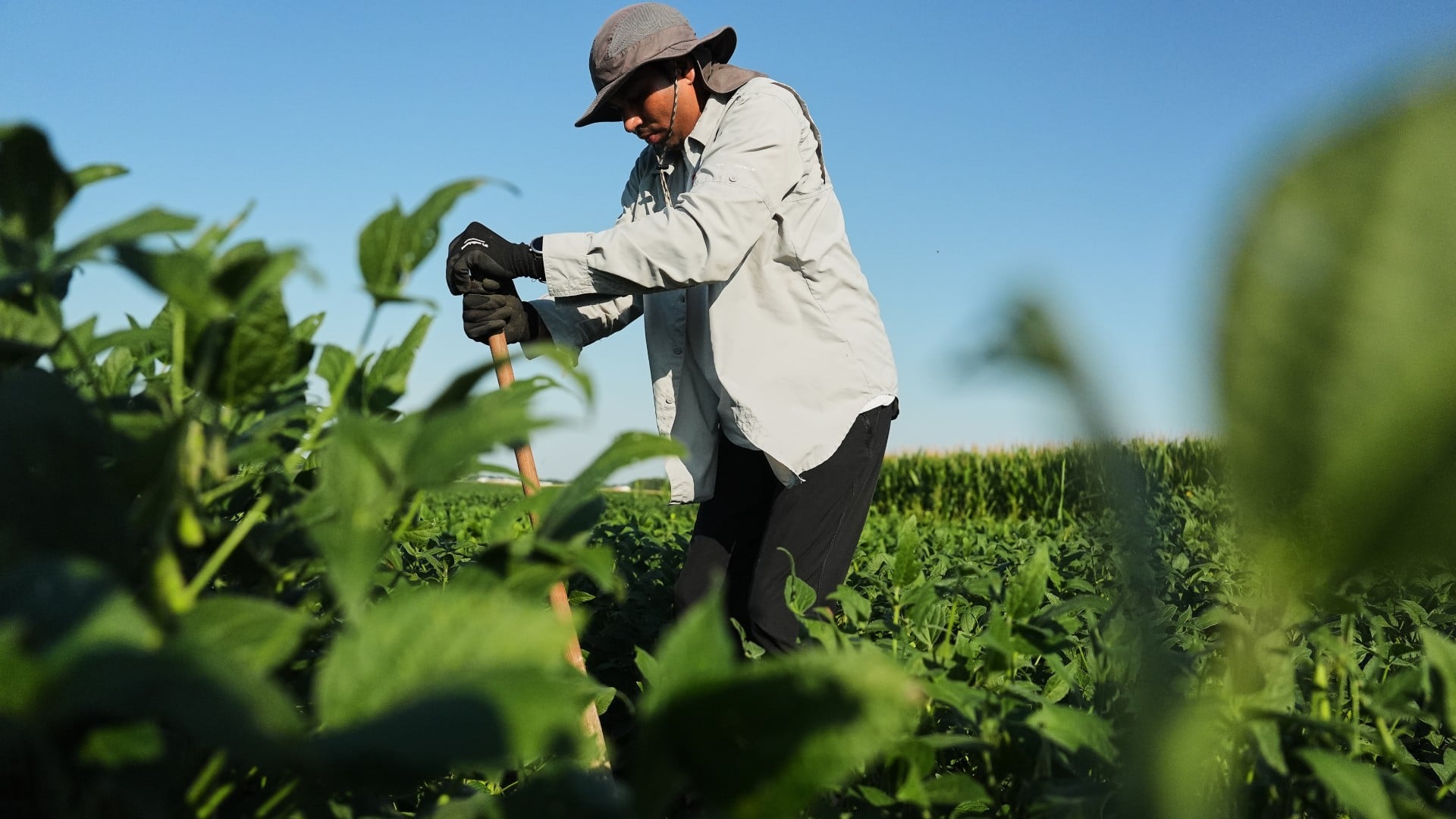
Salk Institute researchers have genetically engineered soybeans with deeper, denser roots that grow downward rather than spreading outward, aiming to help crops access water during drought and store more atmospheric carbon in soil. The team identified 347 genes associated with root growth and carbon storage and used gene editing to develop the modified plants. An $18 million Bezos Earth Fund grant is supporting field trials in Illinois and elsewhere to measure carbon sequestration, root growth, crop yields and resilience to climate stress. Scientists say the approach could become an agricultural tool for climate mitigation and food security, but they still must determine how much carbon is stored under real farming conditions, how long it remains underground and whether the crops can be scaled without sacrificing commercially viable yields.
Key Points
1
The engineered soybean lines were developed from naturally occurring varieties whose genes promote vertical root growth and greater root mass; some lines have produced roots up to about 1 meter deeper than standard soybean varieties.
2
At the University of Illinois Urbana-Champaign, researchers are using an adjustable canopy to simulate drought conditions, along with underground cameras and sensor arrays to monitor root penetration and track changes in soil carbon in real time.
3
The deeper roots may store carbon farther below the soil surface, where it could be less vulnerable to erosion, in addition to helping plants access water and nutrients in subsurface layers.
4
The project is led by research scientist Ashish Rajurkar, who demonstrated the modified plants at an Illinois research field by excavating a soil clod showing their steep, vertically oriented root structure.
5
Wolfgang Busch, director of Salk’s Harnessing Plants Initiative, said the food-security stakes are urgent: “It will become harder to grow enough food for enough people.”
Sentiment
Mostly PositiveNEGATIVENEUTRALPOSITIVE
Publishers
7
Articles
134
Reach
141
Topics
A
AnonymousAuthor


