Accidental Lunar Impact Study
Scientists Will Study SpaceX Falcon 9 Upper Stage Impacting Moon
Anonymous
Key Points
1
The spent Falcon 9 upper stage is about 4,000 kg (roughly 8,800 pounds) and roughly 12 meters long, leaving it drifting in space after the January 2025 mission that carried Firefly’s Blue Ghost-1 and ispace’s Hakuto‑R Mission 2; with insufficient propellant to return, it’s now on a long, looping path that will intersect the Moon.
2
The impact is expected near the Einstein crater on the Moon’s western limb, with a crater roughly 20–30 meters in diameter and around 5 meters deep, aligning with predictions of the site published by multiple observers.
3
The ejecta plume could feature a central spike reaching altitudes on the order of 75–100 kilometers, offering a valuable testbed for calibrating impact and ejecta models for man-made debris on the Moon.
4
A coordinated observation campaign is planned: NASA’s Lunar Reconnaissance Orbiter and South Korea’s Danuri are expected to image the site before and after impact, while a detectable dust plume could be visible from Earth with suitable large telescopes or high-speed imaging, though naked-eye viewing is unlikely.
5
This event is not a deliberate mission; it’s an accidental collision that still provides a rare, controllable real-world laboratory. Observers note that, unlike many natural impacts, the mass, speed, and size of the impactor are known in advance, a hallmark of what some describe as a controlled source event; the last similar instance was NASA’s LCROSS in 2009, with this case marking the second time a discarded rocket has struck the Moon.
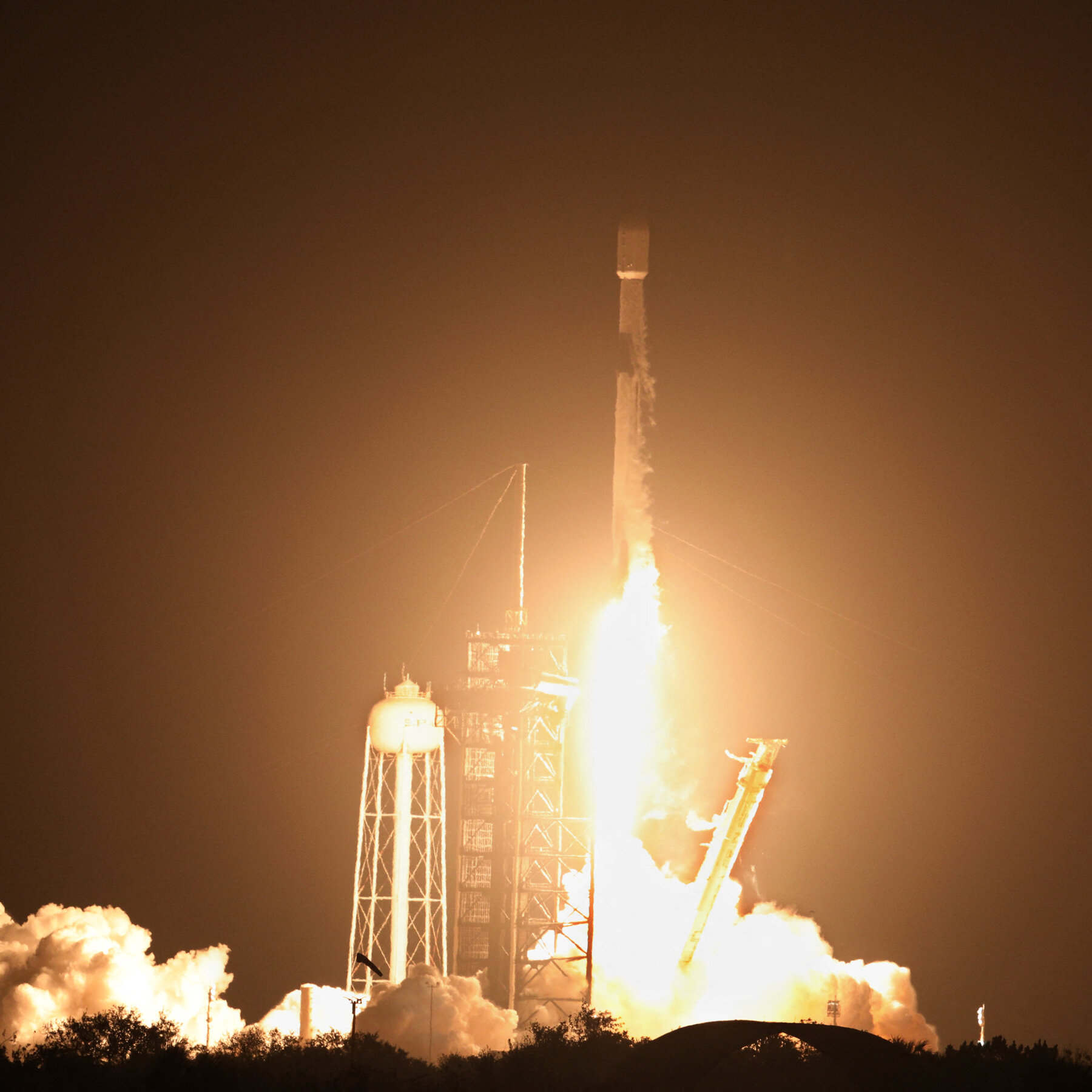
A spent SpaceX Falcon 9 upper stage is headed straight for the Moon. The roughly 4,000-kilogram rocket body will slam into the lunar surface on August 5 at about 8,700 kilometers per hour, according to Newsy Today. The impact is expected near the Einstein crater on the Moon's western limb at around 2:35 a.m. Eastern time.
The crash is not planned. The upper stage was left drifting after a January 2025 mission that launched two lunar landers — Firefly's Blue Ghost-1 and ispace's Hakuto-R Mission 2. With no fuel left to steer home, it has been looping through space ever since, The New York Times reported.
What Happens When 4,000 Kilograms Hits the Moon
The Falcon 9 upper stage is 12 meters long and about 4 meters wide. At 8,700 km/h, the collision will punch a crater roughly 20 to 30 meters wide and about 5 meters deep, according to Newsy Today. That is roughly the size of a small house plot carved into the lunar surface in an instant.
The blast will throw up a large ejecta plume — a spray of dust and rock shooting upward. Researchers expect the central spike of that plume to reach 75 to 100 kilometers in altitude. That makes it a rare, real-time test of how man-made objects punch into the Moon, according to Head Topics.
Satellites and Telescopes Race to Watch the Crash
NASA's Lunar Reconnaissance Orbiter and South Korea's Danuri spacecraft are both expected to image the impact site before and after August 5. Scientists will compare the before-and-after photos to measure the crater and track how debris spreads across the surface, The New York Times reported.
Observers on Earth may also catch a glimpse. A detectable dust plume or flash could be visible through large telescopes, though naked-eye viewing is unlikely, according to Sun Commercial. Professional and amateur astronomy groups are coordinating to capture high-speed images of the event as it unfolds.
A Rare Controlled Event — Not Seen Since LCROSS in 2009
Most lunar impacts are random. Scientists never know the mass, speed, or angle in advance. This one is different. Researchers know the rocket's weight, velocity, and strike point ahead of time. That makes it what some call a "controlled source event" — a term for an impact where the key numbers are already known, according to Head Topics.
The last comparable event was NASA's LCROSS mission in 2009, which deliberately crashed a rocket into the Moon to search for water ice. This case marks only the second time a discarded rocket has struck the Moon under known conditions. Scientists say the data will help refine ejecta models used to plan future lunar missions and landings.
Space Debris Crisis Puts Spotlight on Orbital Regulation
The crash is also drawing attention to a growing problem. There are no international rules requiring companies to safely dispose of upper stages after a mission. The Falcon 9 piece was simply left in a chaotic orbit after its job was done, Streamline Feed reported. Experts say the gap in regulation is becoming harder to ignore.
SpaceX has not commented publicly on the planned impact. The event is accidental, not the result of negligence alone — returning the upper stage would have required fuel the rocket did not carry. Still, researchers say the Moon impact is a preview of what happens when space becomes more crowded and cleanup rules lag behind, according to Streamline Feed.
Sentiment
Mostly NegativeNEGATIVENEUTRALPOSITIVE
Publishers
19
Articles
47
Reach
66
Topics
A
AnonymousAuthor


