Typhoon nears Tokyo
Typhoon nears Tokyo
Anonymous
Key Points
1
The Japan Meteorological Agency warned that Dujuan’s rainfall could exceed the average September rainfall by Tuesday, potentially producing record-breaking totals; rainfall records were subsequently reported in several Japanese cities.
2
The storm produced sustained winds of about 130 km/h and gusts reaching 194 km/h, even as it moved away from Japan without making landfall.
3
A woman in her 60s was feared swept away and buried alive in a landslide in Yokosuka, while a man in his 50s was rescued after becoming trapped beneath debris while clearing a landslide site in Chiba.
4
Although many alerts were downgraded or lifted, level-four warnings remained in Shinagawa Ward, Toshima Village and Niijima Village, with the highest danger-to-life warning still in effect in Oshima Town.
5
The storm struck during Japan’s five-day Silver Week holiday, while Aichi was preparing to host the Asian Games, raising concerns about wider disruption to holiday travel and event planning.
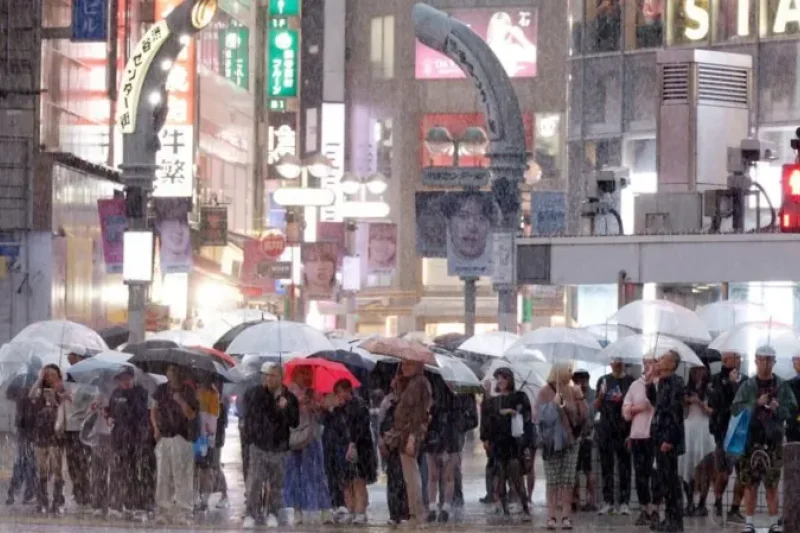
Typhoon Dujuan pounded eastern Japan with record rainfall and destructive winds, forcing nearly two million people to evacuate as the storm moved northeast away from Tokyo. People's Daily reported that power outages affected tens of thousands of households, while Daily Sabah confirmed two deaths from heavy rain and flooding across multiple prefectures.
The Japan Meteorological Agency warned that Dujuan could dump more rain in one day than Japan's entire average September rainfall, with gusts reaching 194 km/h even as the storm veered away from making landfall. Albanian Daily News noted power cuts affected over 50,000 people, while hundreds of flights were grounded and rail services suspended across the nation.
Rainfall Records Shatter Across Japanese Cities
Dujuan's rainwater overwhelmed several cities, surpassing typical monthly totals in single hours. The Meteorological Agency warned rainfall could exceed the entire average September rainfall by Tuesday. Multiple Japanese cities subsequently recorded rainfall records, confirming meteorologists' dire predictions about the storm's unprecedented moisture.
The extreme rainfall triggered widespread landslide dangers. A woman in her 60s in Yokosuka was feared swept away and buried alive in a landslide, while rescuers pulled a man in his 50s from debris in Chiba after he became trapped clearing another slide.
Sustained Winds Disrupt Japan's Holiday Week
Dujuan's sustained winds of about 130 km/h, with gusts reaching 194 km/h, knocked out power to tens of thousands and paralyzed transportation. Cedar News reported that hundreds of flights were cancelled while The Saturday Paper noted hundreds of additional delays disrupted travel plans.
The storm struck during Japan's five-day Silver Week holiday, when millions travel. The Tokyo Game Show, major music festivals and a baseball game were cancelled or closed early. Prime Minister Sanae Takaichi postponed a U.S. trip to manage the crisis response.
Storm Weakens But Dangers Remain in Multiple Zones
Dujuan tracked northeast away from Japan with weakening winds, prompting authorities to downgrade many evacuation alerts. However, level-four warnings—the highest danger-to-life category—remained in effect for Shinagawa Ward, Toshima Village, Niijima Village and Oshima Town.
The storm's intensity reflects broader climate trends. Meteorologists linked Pacific storm intensification to unusually warm ocean conditions, noting that climate change can increase typhoon intensity and rainfall amounts. The pattern suggests Japan may face more severe storms in coming years.
Sentiment
Mostly NegativeNEGATIVENEUTRALPOSITIVE
Publishers
20
Articles
28
Reach
48
Topics
A
AnonymousAuthor


