Imran Khan March to Islamabad
Thousands of Imran Khan Supporters Begin March to Islamabad Demanding His Release
Anonymous
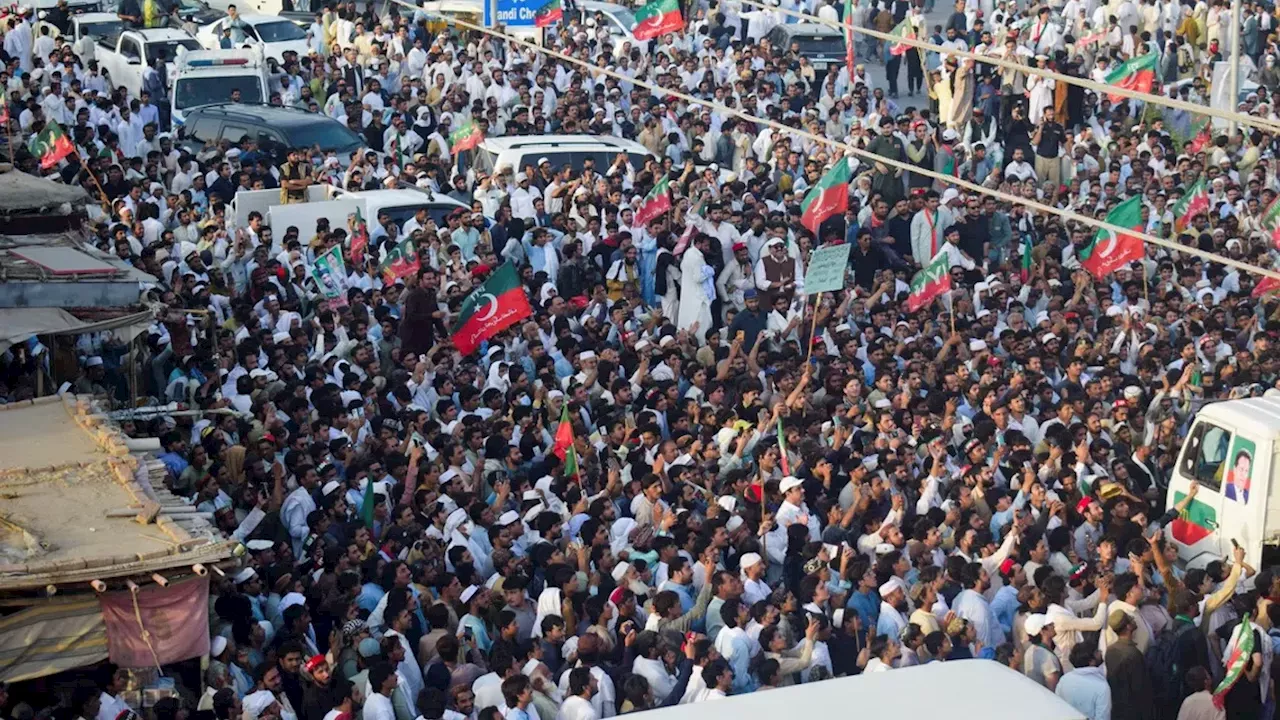
Thousands of supporters of jailed former Pakistani Prime Minister Imran Khan began marching toward Islamabad on October 4, demanding his release and challenging the government's authority. MarketScreener reported the rally started in Khyber Pakhtunkhwa province, ruled by Khan's Pakistan Tehreek-e-Insaf party, with over 5,000 protesters traveling in buses and trucks across an 80-kilometer route. The march comes after two rounds of negotiations between PTI leaders and federal officials collapsed over disagreements on counter-terrorism policy and Khan's medical evaluation.
Khan's Path From Power to Prison Cell
Imran Khan was ousted from office in April 2022 through a parliamentary vote of no-confidence. Khan blamed the military for orchestrating his removal, a charge the Pakistani army has repeatedly denied. His arrest in May 2023 on corruption and treason charges sparked violent nationwide riots that destroyed state buildings and damaged military infrastructure.
Thousands of his supporters were detained and faced military court trials. Khan, now 73, has been imprisoned at Adiala Jail in Rawalpindi since August 2023. His continued detention has kept him a powerful symbol for his party and millions of angry supporters across Pakistan.
Negotiations Fail Over Competing Demands
Prime Minister Shehbaz Sharif's government offered talks to delay the march, but discussions broke down after 12 hours and four draft proposals. According to federal officials, the core issue was Khyber Pakhtunkhwa's refusal to cooperate on national counter-terrorism strategy against rising Pakistani Taliban violence. Tallal Chaudhry, the Minister of State for Interior, said talks collapsed because the province would not align with federal security directives.
PTI's demands included Khan's immediate release, medical evaluation by his personal doctors at a civilian hospital, and freedom for his three detained sisters. The federal government linked approving these demands to the province's willingness to support counter-terrorism operations—a condition PTI rejected as political leverage.
Security Blockades Turn Islamabad Into Fortress
The federal government placed massive concrete shipping containers around Islamabad's Red Zone, which houses parliament, the prime minister's residence, and foreign embassies. Federal Interior Minister Mohsin Naqvi warned that if any protester dies, Khyber Pakhtunkhwa's Chief Minister Sohail Afridi would be responsible. The blockade extends across major transit routes, threatening trade and daily supplies traveling between Punjab and Khyber Pakhtunkhwa provinces.
Sohail Afridi, the province's Chief Minister and PTI leader, publicly urged youth to join the march. He called it a stand for "a leader who is sitting in jail." Federal authorities vowed to actively prevent protesters from entering the capital, setting the stage for a potential confrontation.
A Populist Movement Exposing Government Fractures
Khan commands genuine popular support across Pakistan, despite being imprisoned. James Dorsey, a senior fellow at Singapore's National University, told AFP that Khan represents a "populist leader with a genuine popular movement." The aggressive state blockades reflect deep fear about Khan's sustained influence over millions of Pakistanis.
The march exposes cracks in Prime Minister Sharif's coalition, which depends heavily on backing from Army Chief Field Marshal Asim Munir. Analysts warn that the demonstration reveals structural fragility in the government's control over provincial leadership and its ability to manage rising political anger without military force.
Sentiment
Mostly NegativeNEGATIVENEUTRALPOSITIVE
Publishers
47
Articles
155
Reach
202
A
AnonymousAuthor


