Patriot License Standoff
Trump Reiterates US Has Not Approved Ukraine Patriot Production License
Anonymous
Key Points
1
Trump emphasized that Patriot missile technology cannot be copied and that transferring such sensitive weapons secrets is not straightforward, underscoring caution about licensing and the risk of the technology being turned against the U.S.
2
Zelenskyy publicly claimed that President Trump had agreed to provide Ukraine with the necessary licenses for Patriot production following their White House meeting, signaling a potentially shifting or optimistic stance on licensing.
3
Trump argued that the pace of U.S. weapons production needs to accelerate, stating that the United States has already 'given away almost all of it' and implying production timelines could influence licensing decisions.
4
Zelenskyy has engaged directly with Patriot manufacturers, with discussions involving Lockheed Martin and RTX about co-production possibilities, underscoring the commercial and industrial dimensions of any licensing agreement.
5
Analyses frame Trump’s cautious stance as part of a broader 'America First'-style approach and note that the evolving situation in Ukraine— including drone strikes against Russian supply lines—could shape future U.S. foreign-policy choices on military aid.
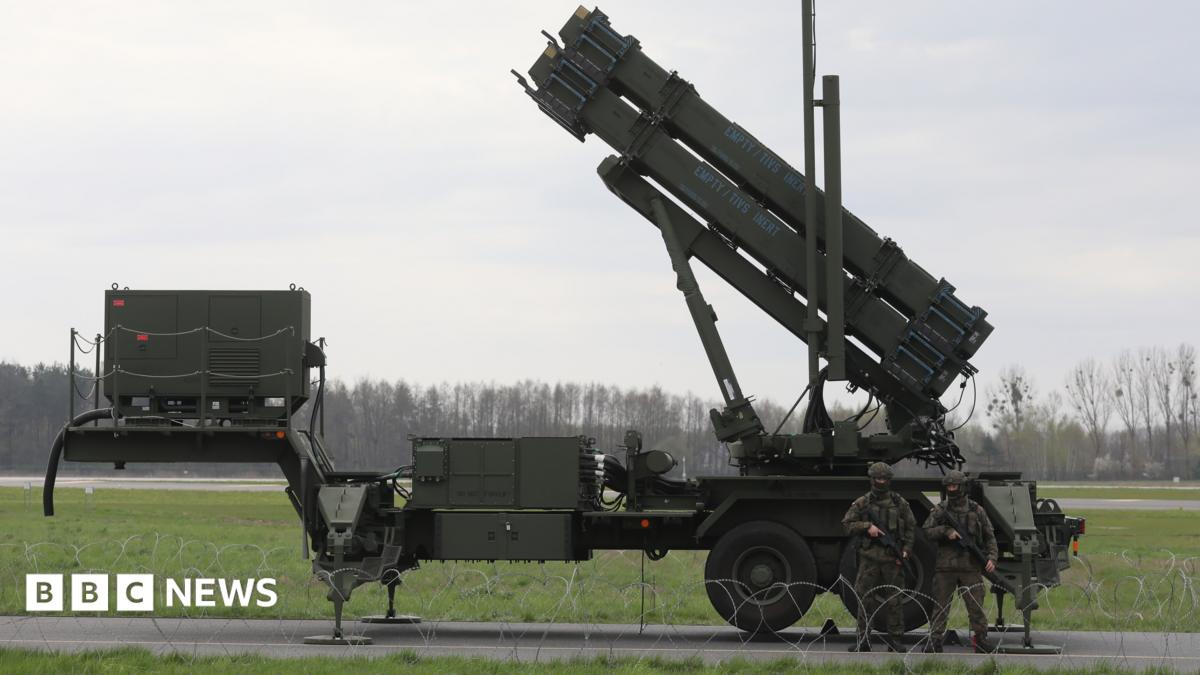
President Donald Trump said the U.S. has not approved a license for Ukraine to manufacture Patriot missile interceptors, walking back an earlier promise he made at the NATO Summit in Ankara in early July. Speaking at a Cabinet meeting on July 31, Trump was blunt: "We have not agreed to that... It's a hard thing to give away that kind of technology." BBC reported that Trump also warned such secrets "can someday turn on you."
The reversal comes just three days after Ukrainian President Volodymyr Zelenskyy left a White House meeting and told reporters that Trump had "accepted" the licensing deal. Trump's pullback has opened a visible rift between Washington and Kyiv at a moment when Ukraine desperately needs air defense to survive the coming winter, according to Yahoo News.
Trump's NATO Promise Unravels in Three Weeks
On July 7–8, at the 36th NATO Summit in Ankara, Trump made a public declaration: "We're going to give a license to you to make Patriots." It was framed as a solution to Ukraine's repeated complaints about not getting enough missiles. Representative Mike Turner praised the announcement at a Hudson Institute event on July 20, calling it a major stabilizing step for European defense.
By July 30, Trump told the Financial Times he was "not sure" about the license, saying the U.S. must be "a little bit careful of who we license to." Then, on July 31 at Camp David, he went further, flatly denying any agreement had been made. BBC noted the Patriot interceptor travels at 8,600 mph, a detail Trump used to underscore just how advanced — and sensitive — the technology is.
Zelenskyy Pushed Hard, Manufacturers Urged Caution
After his July 28 White House meeting, Zelenskyy moved quickly to lock in the deal publicly. He told outlets including Axios and Fox News that Trump had agreed. Back in Kyiv, officials framed the co-production talks with RTX (Raytheon) and Lockheed Martin as a near-done commercial arrangement that only needed routine paperwork, according to inkl.
The manufacturers were far less certain. At the Farnborough Airshow on July 22, RTX's Tom Laliberty said discussions were in "early" feasibility stages and that any move required formal U.S. government sign-off. Lockheed Martin's Tim Cahill echoed that, saying the company would support whatever policy the Trump administration finalized. Ukraine's U.S. envoy, Olha Stefanishyna, admitted that setting up domestic production could take 12 months to five years.
Ukraine Faces a Winter Air Defense Crisis Without a Fix
Russia launched as many as 30 to 40 ballistic missiles per night against Ukraine in late July 2026. In one single attack, Russia deployed 255 Shahed-type drones, with 195 intercepted. The Patriot system is currently the only platform that can reliably stop Russian ballistic missiles, including those supplied by North Korea. U.S. stockpiles are already stretched thin after being used to defend against Iranian attacks in early 2026, AOL reported.
Because domestic production is years away at best, Ukraine has shifted focus to a "queue-swap" plan. Under this idea, Ukraine would arrange long-term purchases of PAC-3 missiles and trade delivery slots with another allied country to get immediate shipments from existing production lines. Without that or a fresh supply deal, analysts warn Ukraine's energy grid and major cities face undefended ballistic missile strikes this winter.
Trump's 'America First' Logic Shapes the Whole Standoff
Trump framed his hesitation not as abandoning Ukraine, but as protecting U.S. secrets. "Very simply put, we want the war in Ukraine with Russia ended," he told the Financial Times. "I'm not looking for missiles. We're looking for peace." He also noted that the U.S. has already "given away almost all of it" and said production timelines need to speed up before any licensing can be considered, according to Yahoo News.
Critics pushed back hard. Representative Gregory Meeks (D-New York), the ranking Democrat on the House Foreign Affairs Committee, said Trump's flip-flopping weakens the U.S. on the world stage. Meanwhile, Trump's envoys Jared Kushner and Steve Witkoff are scheduled to visit Kyiv in August 2026, signaling a White House pivot from weapons transfers toward forcing a negotiated settlement to end the war.
Sentiment
Mostly NegativeNEGATIVENEUTRALPOSITIVE
Publishers
34
Articles
109
Reach
143
A
AnonymousAuthor


