Strong Demand for NSE Shares
Institutional Shareholders Retain Majority Stakes Following Massive NSE Public Offering
Anonymous
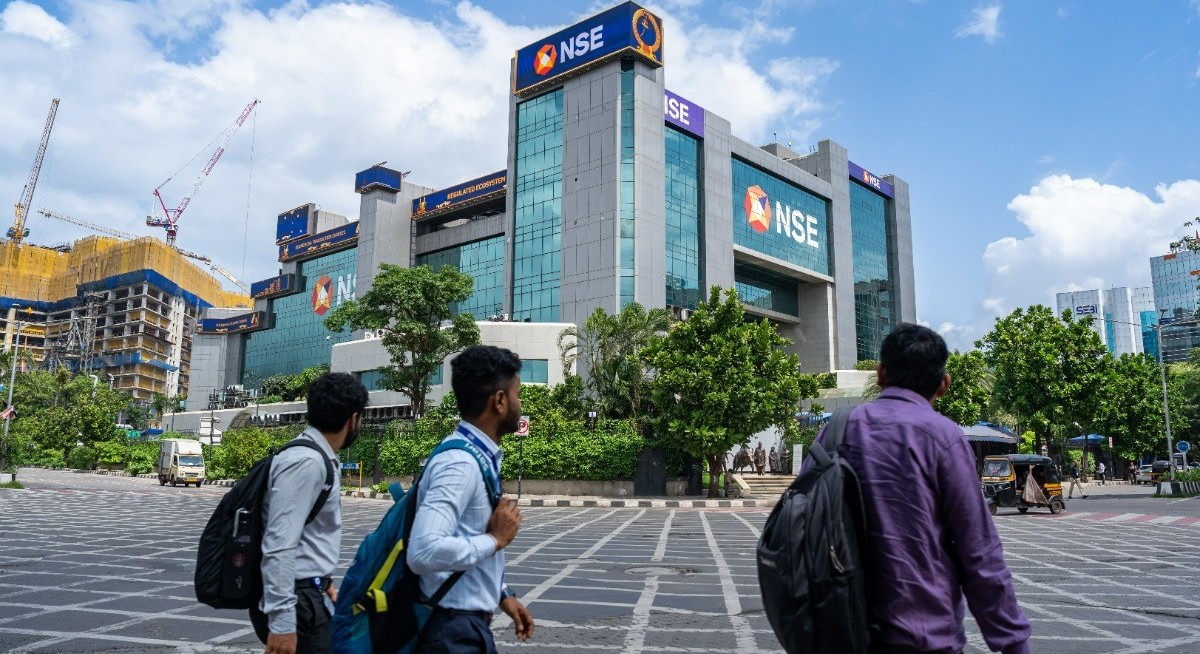
Key Points
1
The NSE offered 12.64 crore shares in the entirely offer-for-sale issue, with a price band of ₹1,700–₹1,785 per share; at the upper end, the issue was valued at about ₹22,562 crore.
2
The IPO was subscribed 5.71 times overall, while the qualified institutional buyer portion was subscribed nearly 12.7 times, underscoring especially strong demand from institutional investors.
3
Among other major foreign investors, Crown Capital offered about 11% of its pre-offer holding, while TA Asia Pacific sold roughly 6% of its stake, illustrating the limited scale of selling beyond the largest named shareholders.
4
The NSE IPO was fully subscribed on the second day of bidding and ranked as India’s second-largest public issue, behind Hyundai Motor India’s ₹27,870-crore IPO in 2024 and ahead of the ₹21,000-crore Life Insurance Corporation of India offering in 2022.
India's National Stock Exchange made its stock market debut on Thursday with shares listing at ₹1,800, up just 0.84% from the IPO's upper price band of ₹1,785. ABP Live The ₹22,569-crore offering ranked as India's second-largest IPO ever, but the muted debut masked strong institutional demand — the issue was subscribed 5.71 times overall, with qualified institutional buyers oversubscribing nearly 12.7 times.
What made this IPO unique: it was entirely an offer-for-sale, meaning NSE itself received zero proceeds. Instead, nine foreign institutions and 11 domestic institutions sold shares worth ₹22,569 crore. Moneycontrol NSE's managing director, Ashishkumar Chauhan, remarked that "what is good for India is good for NSE" as the exchange marked this milestone.
Institutional Investors Mostly Held Their Ground
The 20 major shareholders who collectively owned 36.82% of NSE before the IPO sold surprisingly little. They offloaded shares worth just 5.11% of the exchange, leaving them with 31.71% combined — about 86% of their original stakes. Rediff This show of confidence from large institutions signaled belief in NSE's long-term value.
Foreign investors held 15.96% pre-IPO and domestic institutions held 20.86%, including public-sector entities and ICICI Lombard General Insurance. Major players like Aranda Investments, Stock Holding Corporation of India, and SBI Capital Markets trimmed holdings only modestly, while Crown Capital sold just 11% of its stake and TA Asia Pacific offloaded roughly 6%.
Record Institutional Demand Drove Oversubscription
The IPO drew fierce bidding from qualified institutional buyers, with that segment oversubscribed 12.7 times. The Edge Singapore The total issue received 5.71 times subscription across all investor categories, demonstrating appetite for exposure to India's leading stock exchange operator.
The offering priced 12.64 crore shares at ₹1,700–₹1,785 per share. Gujarat Samachar Shares were fully subscribed by the second day of bidding, a testament to strong institutional confidence in the exchange's growth prospects.
NSE Ranks Second Among India's Largest IPOs
At ₹22,569 crore, the NSE offering became India's second-largest IPO in history. Hyundai Motor India held the top spot with its ₹27,870-crore offering in 2024. Rediff The Life Insurance Corporation of India's ₹21,000-crore IPO in 2022 ranked third, putting NSE just behind it.
The NSE listing also pushed the exchange's market capitalization to ₹4.53 lakh crore (about $54 billion) on its first day. This valuation reflects investor expectations that the exchange will continue dominating India's capital markets for decades to come.
Sentiment
Mostly PositiveNEGATIVENEUTRALPOSITIVE
Publishers
19
Articles
29
Reach
48
A
AnonymousAuthor


