New Regional Fuel Pipeline
Ethiopia and Djibouti Launch $160 Million Petroleum Pipeline to Ease Transport Bottlenecks
Anonymous
Key Points
1
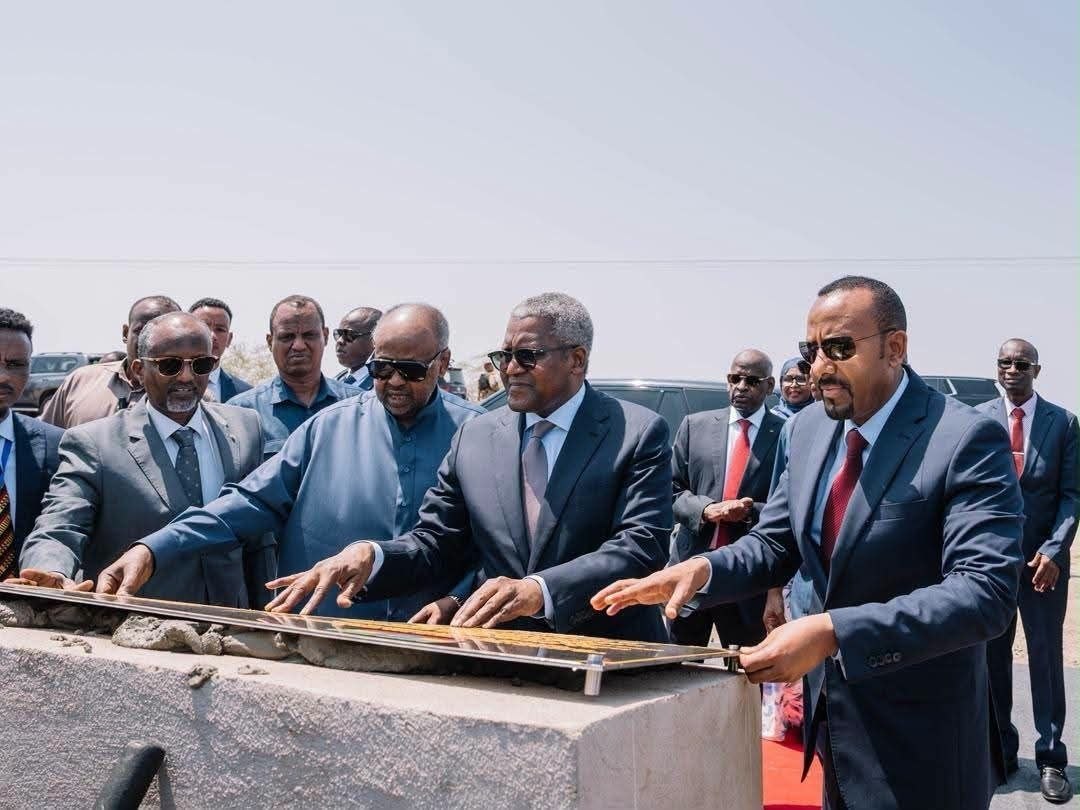
The project was formally launched with a groundbreaking ceremony at Djibouti’s Damerjog Industrial Park, attended by Ethiopian Prime Minister Abiy Ahmed, Djiboutian President Ismaïl Omar Guelleh and Aliko Dangote.
2
Djibouti’s authorities say moving fuel by pipeline could ease road congestion and reduce the environmental impact of transporting petroleum products by tanker truck.
3
The Damerjog storage terminal is planned to cover about 80 hectares, with a stated capacity of approximately 375,000 cubic metres.
4
Dangote said the Djibouti corridor carries most of Ethiopia’s import and export trade, including petroleum products, describing it as one of the region’s most strategic economic arteries.
Ethiopia and Djibouti have launched a $160 million petroleum pipeline project to move refined fuels across their border. Addis Insight reports the project will connect Damerjog in Djibouti with Dewele in Ethiopia through a 120-kilometer pipeline and storage facilities. The multiproduct system, developed by Ethiopian Investment Holdings and the Dangote Group, aims to replace reliance on tanker trucks and strengthen regional energy security.
Ethiopian Prime Minister Abiy Ahmed, Djiboutian President Ismaïl Omar Guelleh, and billionaire businessman Aliko Dangote attended a groundbreaking ceremony at Djibouti's Damerjog Industrial Park. Bloomberg notes the investment represents a major push to boost fuel reliability, cut logistics costs, and increase port activity in Djibouti while supporting businesses across both nations.
A Strategic Gateway for Regional Trade
The Djibouti corridor handles most of Ethiopia's import and export activity, making it a vital economic artery. Environews Nigeria reports that Dangote called the corridor one of the region's most strategic trade routes. The new pipeline will move petroleum products more efficiently than the current reliance on tanker trucks, which clog roads and create supply bottlenecks.
Damerjog Terminal Will Store Massive Fuel Reserves
The storage terminal at Damerjog will span approximately 80 hectares with a capacity of around 375,000 cubic metres. Addis Insight reports the facility is designed to hold refined fuels including jet fuel and gasoline. This scale of storage will give Ethiopia a strategic reserve buffer and reduce dependency on daily tanker shipments.
Environmental and Congestion Benefits
Djibouti's authorities say the pipeline will ease road congestion and cut the environmental damage from petroleum transport trucks. Fidel Post notes the project is viewed as a gamechanger for both nations. Moving fuel through an underground pipeline reduces emissions, traffic accidents, and wear on roads — benefits that extend to everyday commuters and freight operators.
Economic Gains for Both Nations
The $160 million investment will boost port revenues and create jobs in Djibouti while supporting key sectors in Ethiopia. First Post reports the project strengthens fuel supply chains that power manufacturing, agriculture, and transport across both countries. More reliable fuel access translates to lower energy costs for businesses and reduced downtime from supply shortages.
Sentiment
Mostly PositiveNEGATIVENEUTRALPOSITIVE
Publishers
15
Articles
33
Reach
48
A
AnonymousAuthor


