Green Hydrogen Initiative
Maruti Suzuki Commissions Green Hydrogen Pilot Plant in Haryana for Clean Manufacturing
Anonymous
Key Points
1
Managing Director and CEO Hisashi Takeuchi said carbon intensity could become an increasingly important factor in India’s manufacturing competitiveness, alongside cost and quality.
2
Maruti Suzuki has already commissioned a 1 MWh battery energy-storage system at its Kharkhoda facility and is developing a 10-tonnes-per-day biogas plant scheduled for commissioning in fiscal 2026-27.
3
The company’s board has approved four compressed-biogas projects with a combined budget of ₹561 crore, and Maruti has begun using compressed biogas as a process fuel.
4
The green-hydrogen initiative draws on Suzuki Motor Corporation’s resource-efficiency philosophy, “Sho-Sho-Kei-Tan-Bi,” translated as smaller, fewer, lighter, shorter and more beautiful.
5
Maruti Suzuki has not disclosed the pilot plant’s hydrogen-production capacity in tonnes per day; its public disclosure specifies the electrolyser’s 300 kW rating but not its daily output.
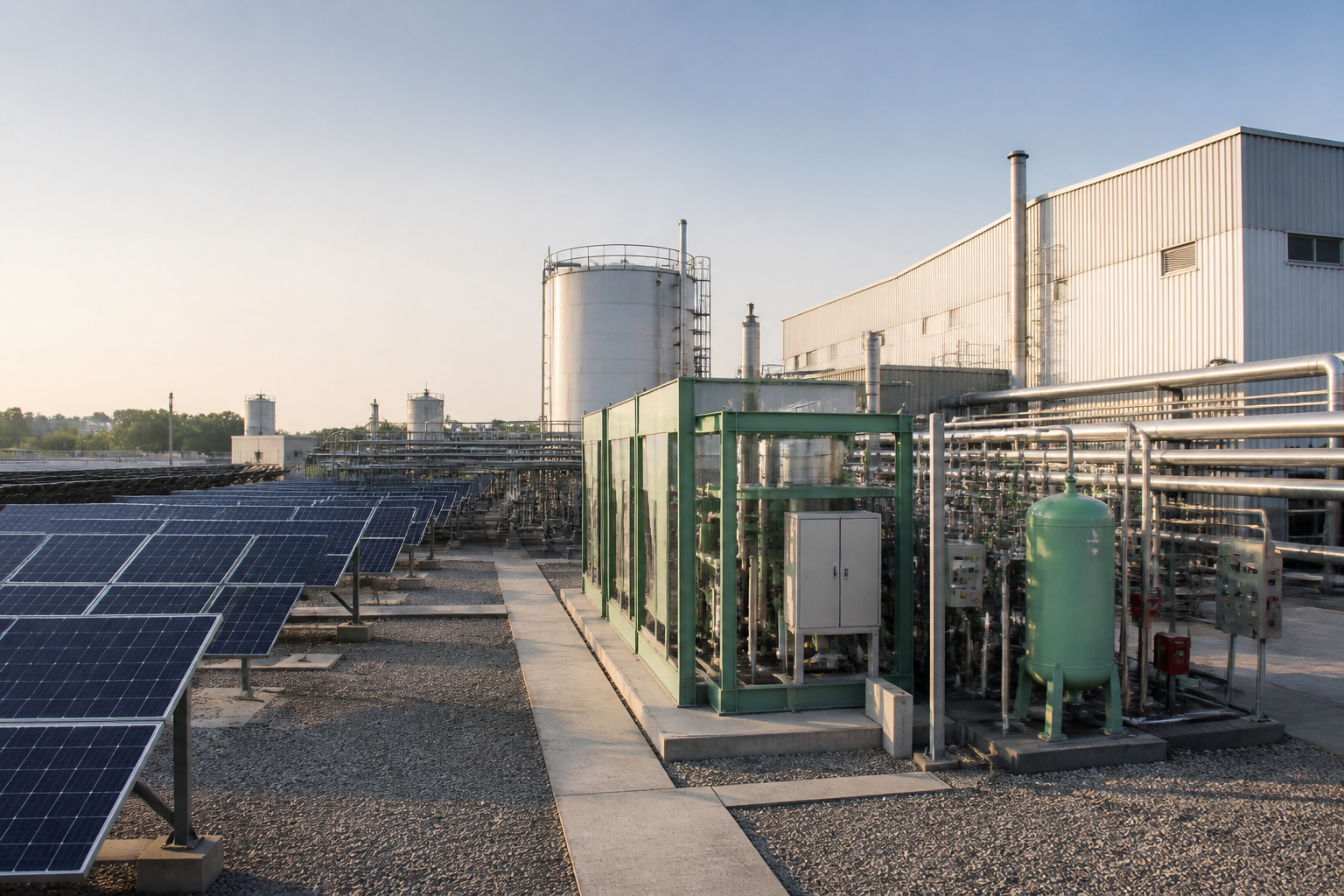
Maruti Suzuki India has switched on its first green hydrogen pilot plant at its Manesar factory in Haryana. MotoWn India reports the 300-kilowatt electrolyzer uses surplus solar power to make hydrogen gas, which the company stores and mixes with natural gas for manufacturing. The move is part of Maruti's push to cut carbon emissions from its factories by 57% by fiscal 2030-31.
CEO Hisashi Takeuchi said carbon efficiency will become as important to Indian manufacturers as cost and quality. Times Now News notes this pilot is the first step toward deploying green hydrogen across Maruti's plants in Haryana and Gujarat as part of a bigger clean-energy plan that includes solar panels, biogas, and battery storage.
How the Green Hydrogen Plant Works
The electrolyzer at Manesar converts solar power into hydrogen gas when the factory runs light on weekends and holidays. Kalkiné explains the hydrogen is then stored on-site and blended with natural gas to fuel manufacturing processes. This approach lets Maruti squeeze more value from the solar panels already on its factory roof.
The company has not yet disclosed how many tonnes of hydrogen the plant produces daily—only the 300 kW electrical rating of the electrolyzer. Thrust Zone confirms the pilot will be evaluated before Maruti decides whether to expand the technology to other sites in Haryana and Gujarat.
Maruti's Bigger Carbon-Cutting Strategy
Green hydrogen is just one piece of a larger clean-energy push. Maruti has already installed a 1-megawatt-hour battery storage system at its Kharkhoda facility and is building a 10-tonne-per-day biogas plant due to open in fiscal 2026-27. The company's board approved four compressed-biogas projects with a ₹561 crore budget and has begun using compressed biogas as process fuel.
These projects aim to slash emissions from 615,000 tonnes to 266,000 tonnes annually by fiscal 2030-31. Urban Acres notes the strategy draws from Suzuki Motor Corporation's philosophy of making things smaller, fewer, lighter, shorter, and more beautiful—a principle called 'Sho-Sho-Kei-Tan-Bi.'
Why Carbon Matters in Manufacturing Now
CEO Takeuchi signaled that carbon intensity—how much pollution a factory produces per unit—will shape which companies stay competitive in India. Cost and quality have long mattered most. But as governments tighten climate rules and buyers demand cleaner products, emissions will rank equally with price and performance.
Sentiment
Mostly PositiveNEGATIVENEUTRALPOSITIVE
Publishers
11
Articles
44
Reach
55
A
AnonymousAuthor


