Community Gorilla Conservation
Ugandan and Congolese Communities Expand Conservation Efforts to Protect Endangered Gorillas
Anonymous
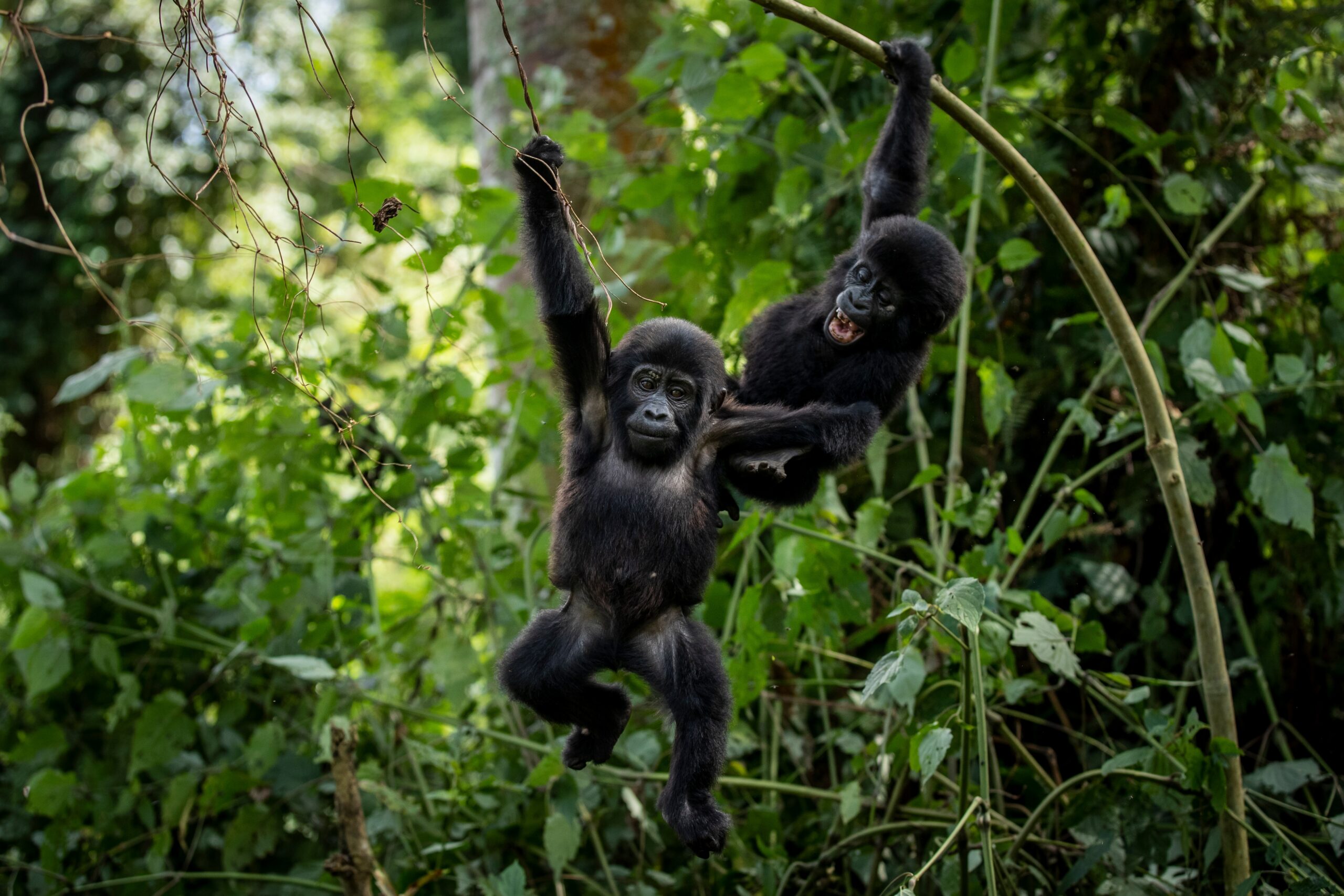
Communities around Uganda’s Bwindi Impenetrable National Park are planting useful trees outside the park to meet local needs for firewood, medicine and crafts, reducing pressure on habitat for mountain gorillas. Bwindi holds about 450 mountain gorillas, and tourism supports local jobs and conservation as their population recovers while forest habitat remains limited. Conservation efforts also connect human and wildlife health: Ugandan veterinarian Gladys Kalema-Zikusoka helped protect gorillas from disease by promoting measures such as mask use during the COVID-19 pandemic and argues that improving neighbors’ well-being is essential to protecting the animals. In the Democratic Republic of the Congo, the Dian Fossey Gorilla Fund said formal recognition of another 445 square kilometers of community-managed forest brings legal recognition to 91% of its Nkuba Conservation Area, strengthening habitat protection for critically depleted Grauer’s gorillas.
Key Points
1
In Bwindi, members of the Batwa Indigenous community helped guide the tree-planting project by selecting species used for medicine, timber and firewood.
2
Ugandan veterinarian Gladys Kalema-Zikusoka said about 40,000 tourists visit Bwindi each year, creating a risk of disease transmission; a respiratory virus likely brought by a tourist killed two Rwandan gorillas in 2009.
3
During the COVID-19 pandemic, mask requirements for people coming close to gorillas helped prevent infection: no gorilla tested positive for COVID-19, and masks also reduced transmission of influenza between humans and gorillas.
4
The IUCN’s Green Status assessment classifies Grauer’s gorillas as Critically Depleted, reflecting population declines and lost range; the assessment measures progress toward ecological recovery across a species’ historical range, complementing the Red List’s extinction-risk classification.
5
The Nkuba Conservation Area was established in 2012 by the Dian Fossey Gorilla Fund and local communities as a primary-forest landscape in eastern DRC.
Sentiment
Mostly PositiveNEGATIVENEUTRALPOSITIVE
Publishers
8
Articles
85
Reach
93
A
AnonymousAuthor


