Ebola Slows in DRC
DRC Ebola Cases Decline in Some Areas While Outbreak Remains Widespread
Anonymous
Key Points
1
The outbreak is the second-deadliest Ebola epidemic on record, surpassed only by the 2014–2016 West African outbreak.
2
The outbreak’s geographic reach is extensive: cases span from Ituri in the northeast to Sud-Ubangi in the northwest, covering a distance roughly equivalent to that between Geneva and Dublin and crossing two time zones.
3
Ituri remains the epicenter, accounting for 78% of confirmed infections, despite early signs of reduced transmission around Bunia and Wani.
4
Sud-Ubangi became the sixth Congolese province to report Ebola after cases appeared near the borders with Congo-Brazzaville and the Central African Republic; the outbreak is the DRC’s 17th since Ebola was first identified in 1976.
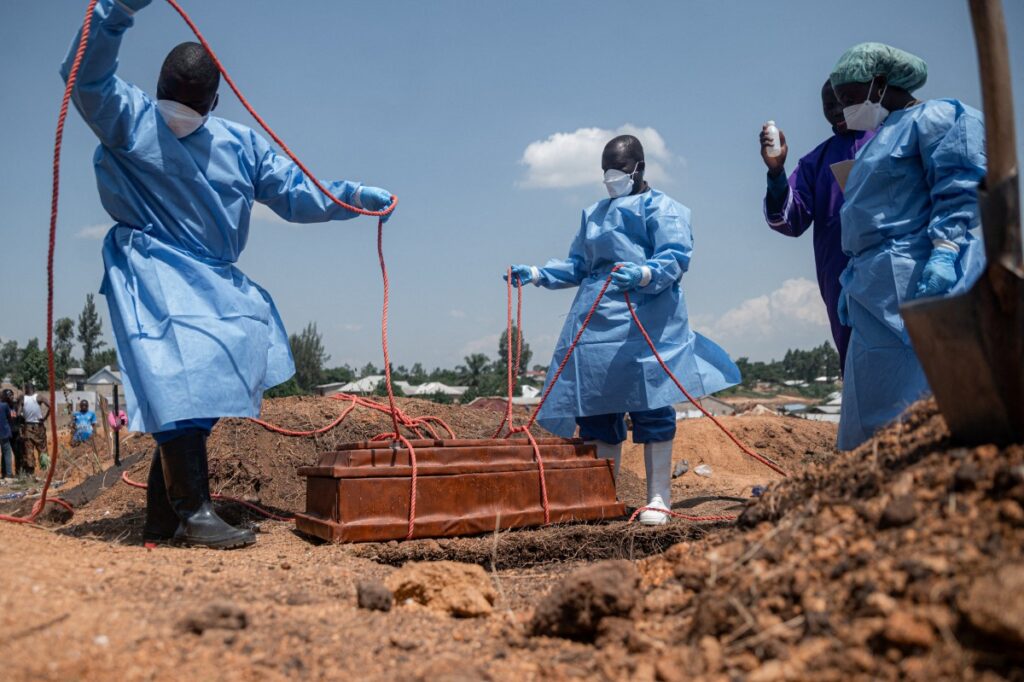
Ebola cases in the Democratic Republic of Congo are declining in some areas, dropping from about 120 daily cases in mid-August to roughly 80 by September 13. Yet the WHO warns the outbreak remains far from over, with 7,258 confirmed cases and 3,510 deaths across multiple provinces. WHO Director-General Tedros Adhanom Ghebreyesus called it "too early to declare a turning point," citing weak contact tracing and cases still appearing outside known transmission chains.
This is the second-deadliest Ebola outbreak on record, surpassed only by the 2014-2016 West African epidemic. The virus spans from Ituri province in the northeast to Sud-Ubangi in the northwest—a distance equivalent to Geneva to Dublin. Health officials face critical shortages: about 5,000 health workers and 1,600 treatment beds are missing, and no approved vaccine exists for the Bundibugyo variant driving this outbreak.
Ituri Remains the Outbreak Epicenter Despite Early Progress
Ituri province accounts for 78% of all confirmed Ebola cases, making it the geographic heart of the epidemic. Early signs of slowing transmission appeared around Bunia and Wani, and health officials removed six zones from the active list after 42 days without new cases. However, WHO experts warn that cases continue rising in other eastern regions, preventing any premature declarations of victory.
Virus Spreads Across Six Provinces and Multiple Borders
The outbreak has crossed into six Congolese provinces, including Sud-Ubangi, which reported its first cases near the borders with Congo-Brazzaville and the Central African Republic. This geographic spread makes containment harder. Cases now span roughly two time zones and cover terrain as wide as the distance between Geneva and Dublin. Each province poses unique logistics and surveillance challenges for response teams.
Critical Gaps in Health Infrastructure and Vaccine Supply
The DRC faces severe shortages that hamper containment. About 5,000 health workers are missing, and the country needs 1,600 more treatment beds. Unpaid workers risk protocol breaches. Most critically, the Bundibugyo variant driving this outbreak has no approved vaccine. The Ervebo doses supplied target the Zaire variant instead—a mismatch that leaves populations unprotected. Clinical trials for a better match are underway but remain months away.
Contact Tracing Failures and Cases Beyond Known Chains
Even as daily case numbers drop, weak contact tracing remains a major vulnerability. Health teams struggle to trace every infection, and cases continue appearing outside known transmission chains. This pattern suggests hidden transmission reservoirs that could reignite the outbreak. WHO officials emphasize that sustainable response requires months of continued surveillance, contact tracing, and preventive measures—not a short sprint to zero cases.
Sentiment
Mostly NegativeNEGATIVENEUTRALPOSITIVE
Publishers
34
Articles
294
Reach
328
A
AnonymousAuthor


