Nuclear Energy Renaissance
Four US Firms Activate First Advanced Micro-Reactors in Decades, Meeting Deadline
Anonymous
Key Points
1
Executive orders in May 2025 set concrete licensing targets: 18-month timelines to license new reactors and 12-month timelines to re-license existing ones, along with accelerated reactor testing and licensing processes and directives to restart retired nuclear plants.
2
Aalo Atomics plans to move forward with submitting its commercial licensing applications to the Nuclear Regulatory Commission, signaling progress toward bringing its design to market.
3
The administration signed a pact with Saudi Arabia to help develop a civilian nuclear program, with U.S. assistance conditioned on Saudi joining the Abraham Accords.
4
U.S. nuclear leadership framing includes a contrast to where most reactors have historically been built; officials said much of global reactor construction has been done by Russia and China, underscoring a push to reassert U.S. leadership.
5
Industry and regulatory timeline context emphasized that review and deployment timelines have been dramatically shortened from six years or longer, marking a major shift in how quickly new reactor designs can progress to deployment.
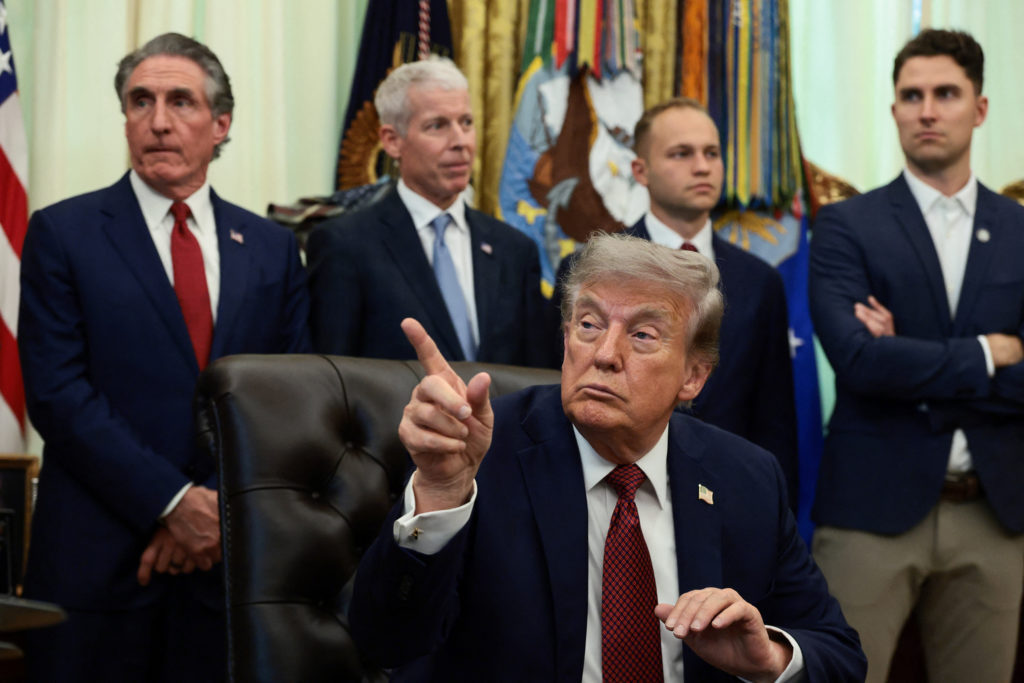
President Trump hosted nuclear startup executives at the White House this week to celebrate a historic milestone: four American companies reached "criticality" — the point at which a reactor sustains a nuclear chain reaction — under a Department of Energy pilot program, according to Washington Examiner. The achievement marks the first new advanced reactors activated in the United States in decades, and all four companies met a July Fourth deadline set by the administration.
The four companies — Antares Nuclear, Deployable Energy, Aalo Atomics, and Valar Atomics — are all privately funded micro-reactor developers. Aalo Atomics reportedly hit criticality in the early hours of July 4. Trump called the moment a nuclear renaissance and said the U.S. is once again leading the world in next-generation power, per PBS.
How Trump's Executive Orders Rewrote the Reactor Timeline
Before this push, getting a new reactor licensed in the U.S. took six years or longer. Trump signed executive orders in May 2025 that slashed those timelines dramatically. New reactors must now be licensed within 18 months. Re-licensing existing reactors must happen within 12 months. The orders also directed the government to accelerate reactor testing and restart retired nuclear plants, according to Washington Examiner.
Trump framed the speed-up as essential to keeping up with rising power demand — especially from artificial intelligence data centers. "America is building again," he said, per The Post Millennial. His administration has set a goal of quadrupling U.S. nuclear capacity by 2050. Officials noted that most reactor construction in recent decades has been done by Russia and China, and said the U.S. needed to reassert its leadership.
Aalo Atomics and Peers Eye Commercial Licensing Next
Reaching criticality in a pilot program is just the first step. The companies must still apply to the Nuclear Regulatory Commission, or NRC, for full commercial licenses before they can sell power. Aalo Atomics said it plans to submit its commercial licensing application to the NRC soon, signaling it is ready to move from testing to the market, according to PBS.
The micro-reactors built by these four startups are designed to be small and deployable — meaning they can be shipped and set up in remote locations or near data centers. That flexibility is a key selling point as tech companies race to find reliable power sources for AI infrastructure.
Critics Warn of Safety Risks From Faster Approvals
Not everyone is cheering. Some Democratic lawmakers pushed back on the administration's approach, warning that cutting review timelines could reduce public input and weaken NRC oversight. The NRC is the independent agency that sets safety rules for U.S. nuclear plants. Critics argue that moving faster does not mean moving safer, especially with new, unproven reactor designs, per PBS.
The tension reflects a long-running debate: nuclear power produces no carbon emissions, making it attractive for climate and energy security goals, but accidents at plants like Chernobyl and Fukushima have made the public wary of rushed oversight. The administration has not publicly addressed how it plans to balance speed with safety standards under the new timelines.
Saudi Nuclear Pact Ties Civilian Power to Abraham Accords
The domestic nuclear push is also linked to a new international deal. The Trump administration signed an agreement with Saudi Arabia to help the kingdom develop a civilian nuclear program, according to Spectrum News. U.S. assistance, however, comes with a condition: Saudi Arabia must join the Abraham Accords, the set of normalization agreements between Arab nations and Israel first brokered during Trump's first term.
The pairing of nuclear cooperation with a geopolitical demand is unusual. It signals that the administration sees nuclear energy as both an economic tool and a foreign policy lever. Supporters say it could expand U.S. influence in the Middle East. Critics warn it adds political risk to what should be a straightforward energy partnership.
Sentiment
Mostly PositiveNEGATIVENEUTRALPOSITIVE
Publishers
12
Articles
12
Reach
24
Topics
A
AnonymousAuthor


