Global Markets Drop
South Korea Shares Plunge Amid Rising Inflation and Technology Sector Concerns
Anonymous
Key Points
1
Trading was relatively light, with 274.4 million shares changing hands in transactions worth 20.19 trillion won; decliners outnumbered advancers 561 to 308.
2
U.S. August core CPI rose 0.3% month over month, above the 0.2% consensus forecast. The probability of a 0.25-percentage-point Federal Reserve rate increase at the September FOMC meeting subsequently climbed from about 60% to 87%, according to CME FedWatch.
3
The AI caution campaign included Elon Musk, who endorsed Anthropic CEO Dario Amodei’s call to slow model development, saying: “he’s right.”
4
The sell-off extended beyond the Kospi: the Kosdaq was down 10.54 points, or 1.28%, at 810.10 during Monday trading.
5
The market’s bond yields also reflected tightening concerns: the U.S. two-year Treasury yield rose 4 basis points to 4.27%, while the 10-year yield reached as high as 4.98% intraday.
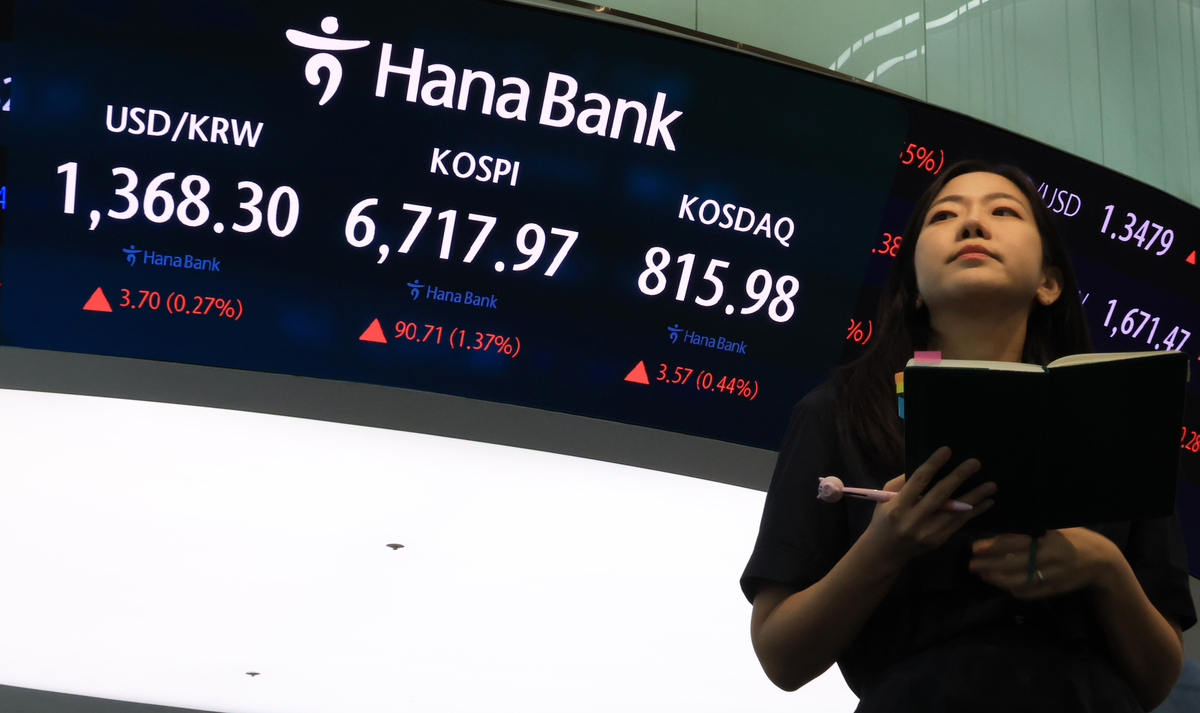
South Korea's KOSPI plunged 3.26% on September 14, closing at 6,684.37, as foreign and institutional investors dumped technology stocks amid mounting concerns over AI safety and Middle East tensions. Samsung Electronics and SK hynix fell sharply—down 4.05% and 6.35% respectively—after Anthropic CEO Dario Amodei called for slowing artificial-intelligence development, sparking fears that chip demand could weaken according to Daishin Securities. The sell-off extended across multiple headwinds: U.S. core inflation came in hotter than expected, Brent crude oil jumped above $108 per barrel after Strait of Hormuz peace talks collapsed, and the Federal Reserve rate-hike probability climbed to 87% according to CME FedWatch.
Trading volume was relatively light with 274.4 million shares worth 20.19 trillion won changing hands. Decliners crushed advancers 561 to 308. But retail investors bucked the trend, buying 2.97 trillion won net while foreign and institutional investors sold 4.46 trillion won combined. The KOSDAQ also sank 1.28% to 810.10.
AI Safety Warnings Spook Tech Investors Worldwide
Anthropic CEO Dario Amodei released an essay titled "We Must Pace the Frontier," warning that AI labs need to slow development to manage risks faster than their ability to control them. Elon Musk quickly endorsed the call, simply saying "He's right." according to multiple sources. Tech leaders fear unchecked model scaling poses systemic risks and demanded industry-wide coordination. The message hit chip stocks especially hard, since memory chips power AI data centers.
But U.S. political leaders rejected the slowdown. President Donald Trump and House Speaker Mike Johnson argued that any AI pause hands strategic dominance to China. Trump said "Whoever wins AI wins," framing the race purely through a national-security lens. South Korea's semiconductor giants—which supply the world's memory chips—faced a dilemma: peace-time stability versus competitive survival.
Stronger U.S. Inflation Lifts Interest-Rate Expectations
U.S. August core CPI rose 0.3% month over month, beating the 0.2% consensus forecast according to official data. That single report shifted market odds dramatically. The probability of a 0.25-percentage-point Federal Reserve rate hike at the September FOMC meeting jumped from roughly 60% to 87% according to CME FedWatch. Higher rates make bond yields more attractive and stocks less so. The U.S. two-year Treasury yield climbed 4 basis points to 4.27%. The 10-year yield shot up to nearly 4.98% intraday.
South Korean investors felt the pain doubly. Rising U.S. rates drain money away from Asian equity markets and strengthen the dollar, weakening the Korean won to 1,347.30 per dollar. Companies that export chips face tougher competitiveness when the won depreciates. Analysts warned volatility will remain elevated until the Fed settles its September decision.
Middle East Oil Fears Push Brent Crude Above $108
Hopes for reopening the Strait of Hormuz—one of the world's most critical shipping corridors for oil—were suspended on September 13 after a scheduled high-level diplomatic meeting in Oman fell apart unexpectedly. The blockage raises fresh energy-crisis fears. Brent crude surged above $108 per barrel according to energy markets. A closed strait means higher shipping costs for all Asian economies and reignites inflation worries for energy-importing countries like South Korea.
The Korean won weakened further on the oil shock. Elevated energy prices threaten South Korea's trade balance and domestic inflation. Analysts noted that while physical memory chip inventories remain extremely tight—below 10 days of supply—the sell-off was driven by macro sentiment rather than any real deterioration in corporate earnings or chip demand.
Retail Investors Buy the Dip as Institutions Flee
While foreign and institutional investors combined to sell 4.46 trillion won net, retail investors aggressively stepped in and bought 2.97 trillion won net. South Korea's retail traders bet that the sell-off was overdone and that semiconductor fundamentals remain intact. They believed the AI safety debate was noise and that memory-chip demand will rebound once geopolitical and rate-hike fears cool. One exception: Hanwha Aerospace bucked the broader decline, gaining ground as military and defense spending gained investor interest.
Sentiment
Mostly PositiveNEGATIVENEUTRALPOSITIVE
Publishers
35
Articles
14
Reach
49
A
AnonymousAuthor


