Peatland Rice Farming
Dutch farmers harvest their first rice crop in a peatland climate trial.
Anonymous
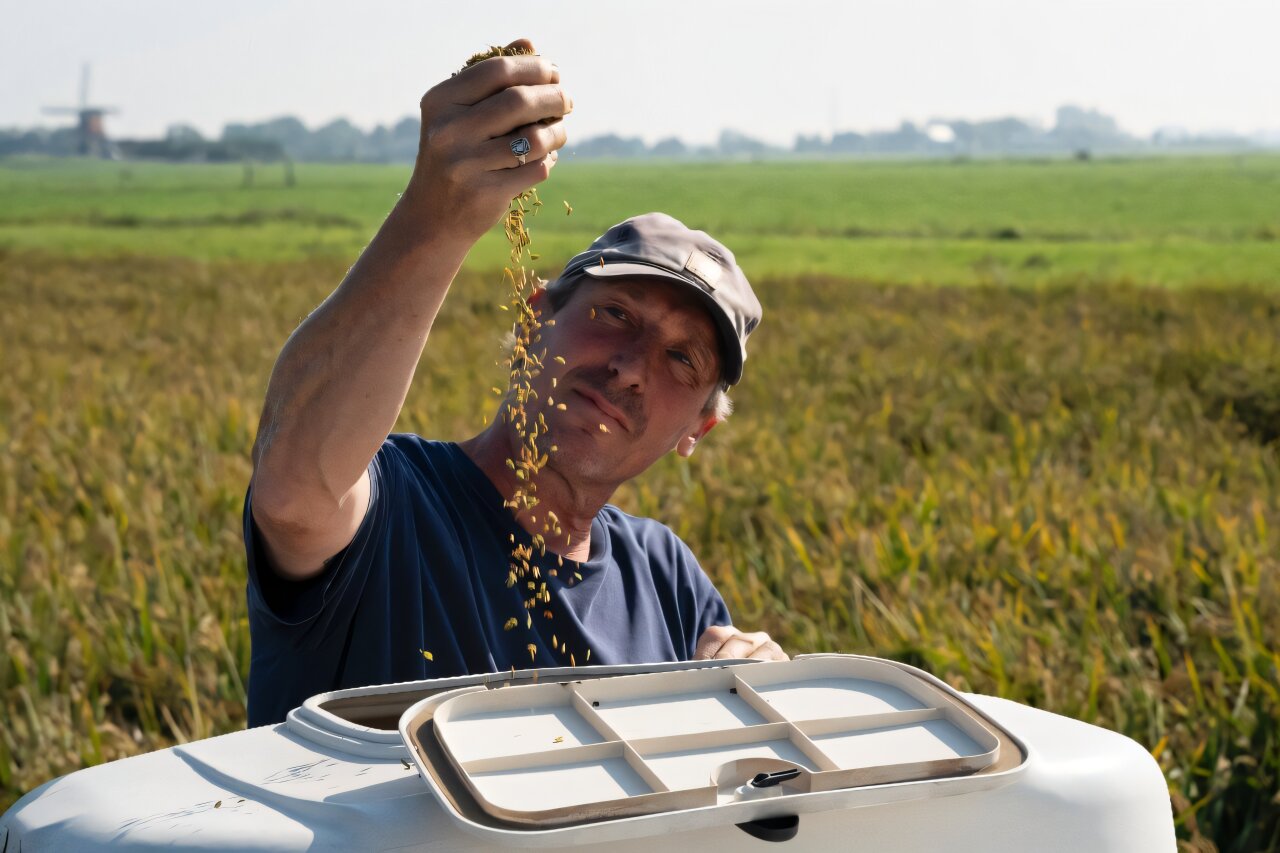
Dutch farmers have harvested rice for the first time in the country, testing whether the crop can thrive in its warming, wet climate and offer an alternative to cattle farming. The 0.6-hectare pilot near Amsterdam and The Hague is testing about 30 varieties, with organizers aiming for a harvest of roughly three tonnes. Researchers also hope keeping peat fields wet for rice cultivation could slow the soil’s degradation and sinking, while reducing emissions from drained peatlands. The project remains experimental, but its organizers say it demonstrates new ways to use waterlogged land as climate change reshapes Dutch agriculture.
Key Points
1
Peatlands make up about one-tenth of the Netherlands. In the most affected areas, subsidence can reach several centimetres a year, and emissions from Dutch peat soils are estimated at 2–3% of the country’s total greenhouse-gas emissions.
2
The pilot brings together researchers from Wageningen University & Research and Leiden University, who are assessing the climate effects of keeping the fields wet, including comparing carbon dioxide and methane emissions.
3
Land van Ons chairman Philippe Terheggen said the development was also unsettling: it showed what has become possible “now the climate has changed.”
Sentiment
Mostly NegativeNEGATIVENEUTRALPOSITIVE
Publishers
8
Articles
14
Reach
22
Topics
A
AnonymousAuthor