Last Polio Patient
Martha Lillard, Last U.S. Polio Patient to Use Iron Lung, Dies at 78
Anonymous
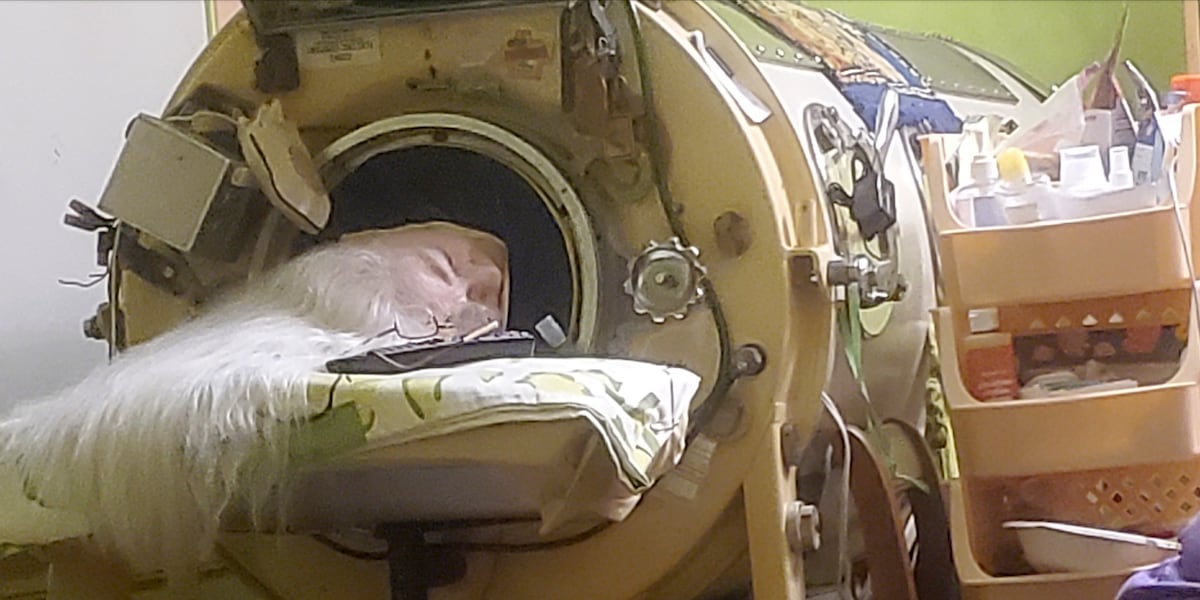
Martha Lillard, the last U.S. polio patient to rely on an iron lung, died on June 26 at age 78 in Shawnee, Oklahoma, according to Hawaii News Now. Her death certificate lists chronic pulmonary failure and post-polio syndrome as the official causes. But her sister says long-haul COVID-19 is what ultimately killed her.
Lillard contracted polio at age 5 in 1953 and spent the next 73 years sleeping inside a large steel cylinder that breathed for her. After fellow iron lung survivor Paul Alexander died in March 2024, Lillard was the last of her kind in the country. She married her longtime partner, Baha Salh, just four months before her death.
A Fifth Birthday Party That Changed Everything
On June 8, 1953 — her fifth birthday — Lillard celebrated at Joyland amusement park in Oklahoma. Nine days later, she woke up unable to move. "I couldn't lift my head off the pillow," she told NPR's Radio Diaries in 2021. "I couldn't breathe. I couldn't move my arms or legs. I was paralyzed all over."
Doctors placed her in a negative-pressure ventilator — the iron lung. The machine is a sealed steel cylinder. The patient lies inside with only their head sticking out. Bellows change the air pressure, forcing the lungs to expand and contract. Lillard spent six months in acute care and then used the machine every night for the rest of her life. Doctors told her family she would not live past 20.
How the Iron Lung Became a Machine for One
At the peak of the U.S. polio epidemic in 1952, the disease infected 57,628 people. Hospital wards were lined with iron lungs. Then Jonas Salk's vaccine arrived in 1955, and cases dropped by 90% within two years. By 1979, the U.S. declared polio eliminated. The machines slowly disappeared — but Lillard kept hers.
In 2004, Philips Respironics stopped making parts and servicing iron lungs entirely. Lillard had to find independent mechanics to keep her machine running. Modern ventilators push air through a tube or mask, but Lillard found the iron lung more comfortable for her body. She told Gizmodo in 2017: "I am heartbroken when I meet anti-vaccine activists... I would just do anything to prevent somebody from having to go through what I have."
A 22-Year Online Romance, Then a Wedding at 78
After the September 11 attacks in 2001, Lillard went online to understand what was happening in the world. She joined a chat room and met Baha Salh, a man from Mallawi, Egypt. They talked online for 22 years. In February 2026, Salh finally got a visa to travel to Oklahoma. The two married in Shawnee.
Her sister Cindy McVey told The Associated Press: "They were really soulmates. He's extremely brokenhearted." McVey also said Lillard's determination never wavered, even as her health fell apart in her final months. "She had the enthusiasm and the drive to continue living and make the best of her life," McVey said.
COVID-19 Claimed Both of America's Last Iron Lung Survivors
Lillard's lung capacity had already dropped below 25% before she contracted COVID-19 — twice. Her family says long-haul COVID finished what polio started. Paul Alexander, the only other American still using an iron lung, died in March 2024, also from COVID-19 complications. Both men survived polio for more than 70 years, according to WIBW.
Public health advocates warn Lillard's death carries a broader lesson. Pediatric polio vaccination rates are falling in parts of the U.S. Experts say if rates drop below 85%, imported cases could spark local outbreaks again. Lillard spent her final years urging people to vaccinate. With her gone, an era has ended — and so has the last living warning it produced.
Sentiment
NeutralNEGATIVENEUTRALPOSITIVE
Publishers
45
Articles
45
Reach
45
Topics
A
AnonymousAuthor


