Etihad Cancels Delhi-Abu Dhabi Flight, Stranding 200
Etihad Cancels Delhi-Abu Dhabi Flight, Stranding 200
Anonymous
Key Points
1
Flight EY217 was scheduled to arrive in Abu Dhabi at 11:15 p.m. local time, following the 9:15 p.m. departure from Delhi.
2
Etihad operates up to four nonstop flights a day between New Delhi and Abu Dhabi; the route covers about 2,288 kilometers and typically takes approximately three hours and 40 minutes. EY217 is the final scheduled departure from Delhi at around 9:15 p.m.
3
Abu Dhabi serves as an onward connection point for Etihad passengers, with the airline listing more than 90 destinations linked to the UAE capital, including extensive services across the Indian subcontinent.
4
Separately, King Khalid International Airport in Riyadh experienced delays and cancellations after regional air-traffic conditions deteriorated; Flightradar24 classified the disruption at level 5.0, its highest category for extensive delays and multiple cancellations.
5
The separate Riyadh disruption followed reports of Houthi missiles and drones near the Saudi capital, with smoke and flames reported near the airport; Saudi-led coalition forces said they had intercepted one missile. The reports did not establish a connection between those events and the Etihad cancellation.
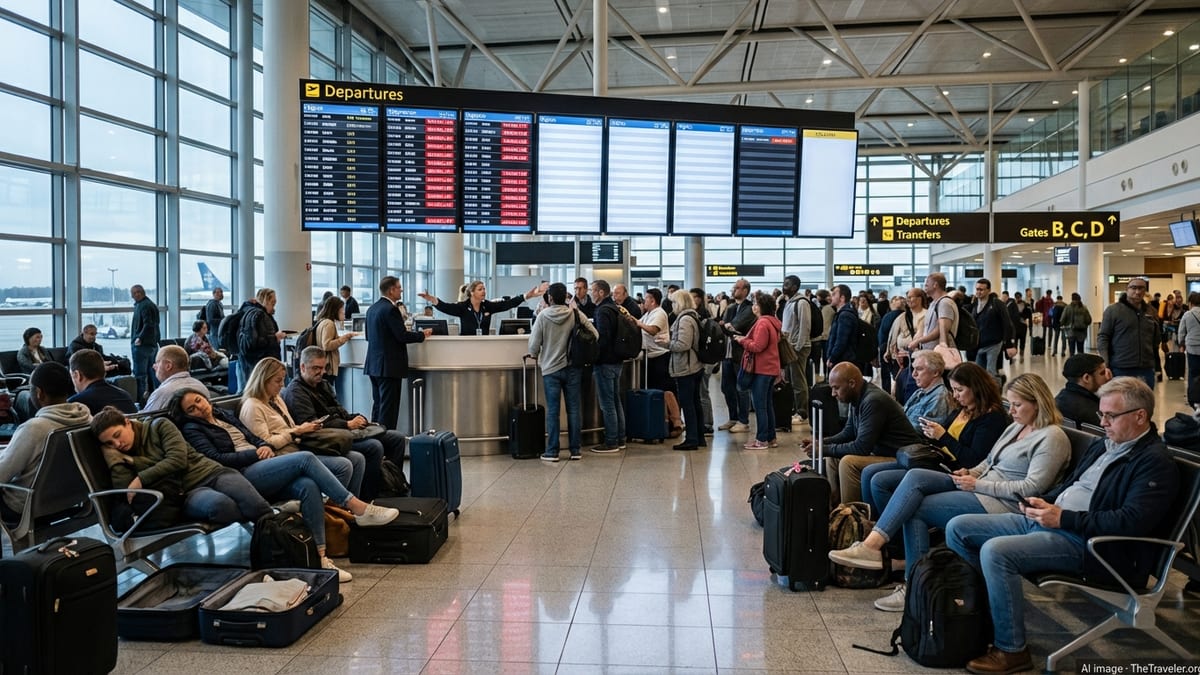
Etihad Airways canceled flight EY217 from New Delhi to Abu Dhabi on Saturday evening, leaving about 200 passengers stranded after they were deboarded due to a technical problem with the assigned Boeing 787-9 aircraft The Traveler. The flight, scheduled to depart at 9:15 p.m., never operated, and passengers spent several hours at the airport before learning the cancellation would stand and were forced to arrange their own alternative travel.
The cancellation occurred as a separate regional air-traffic disruption unfolded. King Khalid International Airport in Riyadh experienced level 5.0 delays — the highest disruption category — following reports of Houthi missiles and drones near the Saudi capital The Traveler. The two incidents were not directly connected, though both disrupted Gulf aviation on the same night.
A Night of Chaos at New Delhi Airport
Flight EY217 is Etihad's final scheduled departure from New Delhi each day, normally departing at 9:15 p.m. and arriving in Abu Dhabi at 11:15 p.m. local time The Traveler. The route covers 2,288 kilometers in roughly three hours and 40 minutes. Etihad operates up to four nonstop flights daily between the two cities, making the Delhi-Abu Dhabi corridor a critical link for Middle Eastern connections.
Passengers boarded the aircraft but were deboarded after airline staff identified the technical fault. Etihad disclosed no specifics about the problem. After waiting several hours, the 200 travelers were informed the flight would not operate. Many faced scrambling to find seats on other carriers or rebook on Etihad flights the following day The Traveler.
Abu Dhabi's Role as Gateway to 90+ Destinations
Abu Dhabi serves as Etihad's primary hub for onward connections across the Middle East, Asia, and beyond. The airline lists more than 90 destinations linked to the UAE capital, with extensive networks spanning the Indian subcontinent and the wider Gulf region The Traveler. A cancellation on the Delhi-Abu Dhabi route therefore disrupts not just direct passengers but also those connecting to dozens of other cities.
Saturday's cancellation particularly affected evening travelers who rely on EY217's late departure to reach Abu Dhabi in time for connecting flights early Sunday. The absence of any immediate rebooking on the same aircraft meant passengers faced multi-hour delays or overnight stays in Delhi. Etihad did not immediately publicize compensation or assistance details.
Riyadh's Separate Disruption Linked to Houthi Reports
Separately, King Khalid International Airport in Riyadh experienced severe disruptions Saturday evening after reports of Houthi missiles and drones near the Saudi capital. Flightradar24 classified the disruption at level 5.0 — its highest category for extensive flight delays and multiple cancellations The Traveler. Saudi-led coalition forces said they intercepted one missile; smoke and flames were reported near the airport.
The Riyadh disruption was geographically and operationally separate from the Etihad Delhi cancellation, which stemmed solely from the aircraft's technical fault The Traveler. However, both events unfolded simultaneously across the Gulf aviation system, creating a night of widespread travel chaos. The reports did not establish any direct link between the Houthi activity and the Etihad mechanical issue.
Sentiment
Mostly NegativeNEGATIVENEUTRALPOSITIVE
Publishers
17
Articles
19
Reach
36
A
AnonymousAuthor


