Robots for Space Stations
Honda and Redwire are developing advanced robotic systems for commercial space stations.
Anonymous
Key Points
1
Honda’s robotic hand uses actively controlled joints and force and tactile sensing in its fingertips and palm, enabling it to detect contact and manipulate delicate samples and small objects precisely.
2
Honda says the hand has completed durability testing under varied fingertip loads, while Redwire’s STAARK arm has demonstrated autonomous tracking and grasping of moving objects.
3
Beyond laboratory handling, the proposed system could also support inventory management, cargo movement and inspections aboard commercial stations.
4
The companies say automation could reduce station operating costs and make research facilities more heavily used, supporting a greater volume of scientific and commercial research.
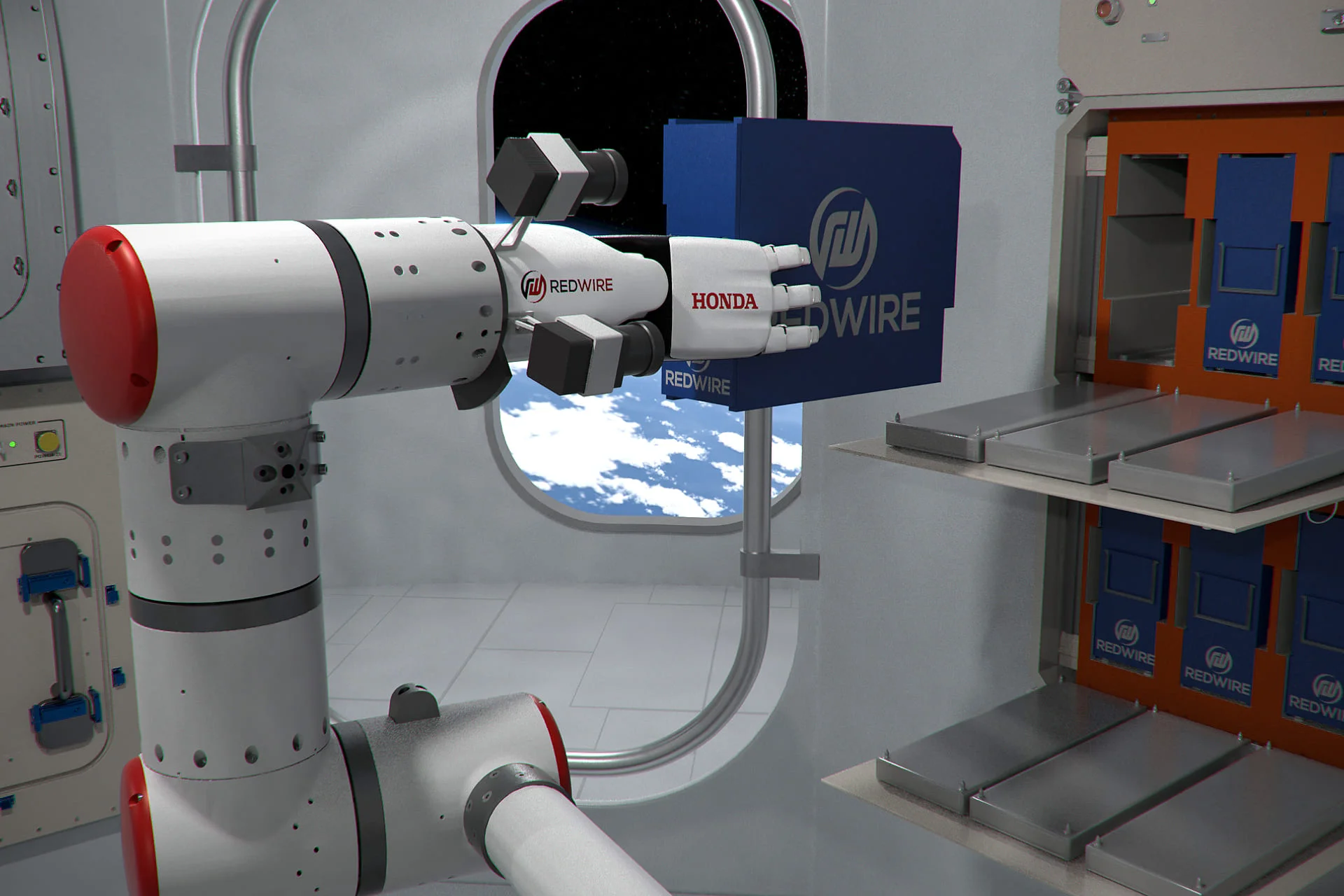
Honda and Redwire are building a robot system for future commercial space stations. The system pairs Honda's dexterous multi-fingered hand with Redwire's STAARK arm. The AI Insider reports it could handle routine research tasks like transferring samples and operating lab equipment. The companies plan to discuss the system with station developers at the International Astronautical Congress in Antalya, Türkiye, October 5-9.
Commercial space stations are designed for smaller crews with shorter stays. Automation could reduce crew workload and operating costs. It could also boost how much research these stations can handle. The robot system represents a step toward fully autonomous research facilities in orbit.
Honda's Hand Features Active Sensing and Precise Grip
Honda's robotic hand uses actively controlled joints with force and tactile sensing in its fingertips and palm. Market Screener reports the hand can detect contact and manipulate delicate samples and small objects with precision. The company has completed durability testing under varied fingertip loads. This sensor-rich design lets it handle fragile materials that traditional robotic grippers cannot safely manage.
Redwire's Arm Tracks and Grasps Moving Objects
Redwire's STAARK arm has demonstrated autonomous tracking and grasping of moving objects in testing. The arm integrates with the company's experiment-locker technology for sample storage and handling. Together, these systems create a complete robotic lab setup that needs minimal human supervision. The autonomous grasping capability means the robot can work even when crew members are busy with other tasks.
Beyond Lab Work: Cargo, Inventory, and Station Inspections
The proposed robot system could do much more than handle research samples. The companies say it could support inventory management, move cargo between modules, and conduct inspections aboard commercial stations. Each of these tasks currently falls to astronauts. Automation frees crew time for higher-level scientific work and problem-solving.
Cutting Costs While Increasing Research Output
Commercial space operators want to reduce operating expenses while boosting revenue. Robots that handle routine work could achieve both goals. Lower crew costs mean lower per-mission expenses. More time spent on research—not maintenance and logistics—means more science gets done. Market Screener notes the companies believe automation will make research facilities more heavily used and support greater volumes of scientific and commercial research.
Sentiment
Mostly PositiveNEGATIVENEUTRALPOSITIVE
Publishers
11
Articles
27
Reach
38
A
AnonymousAuthor


