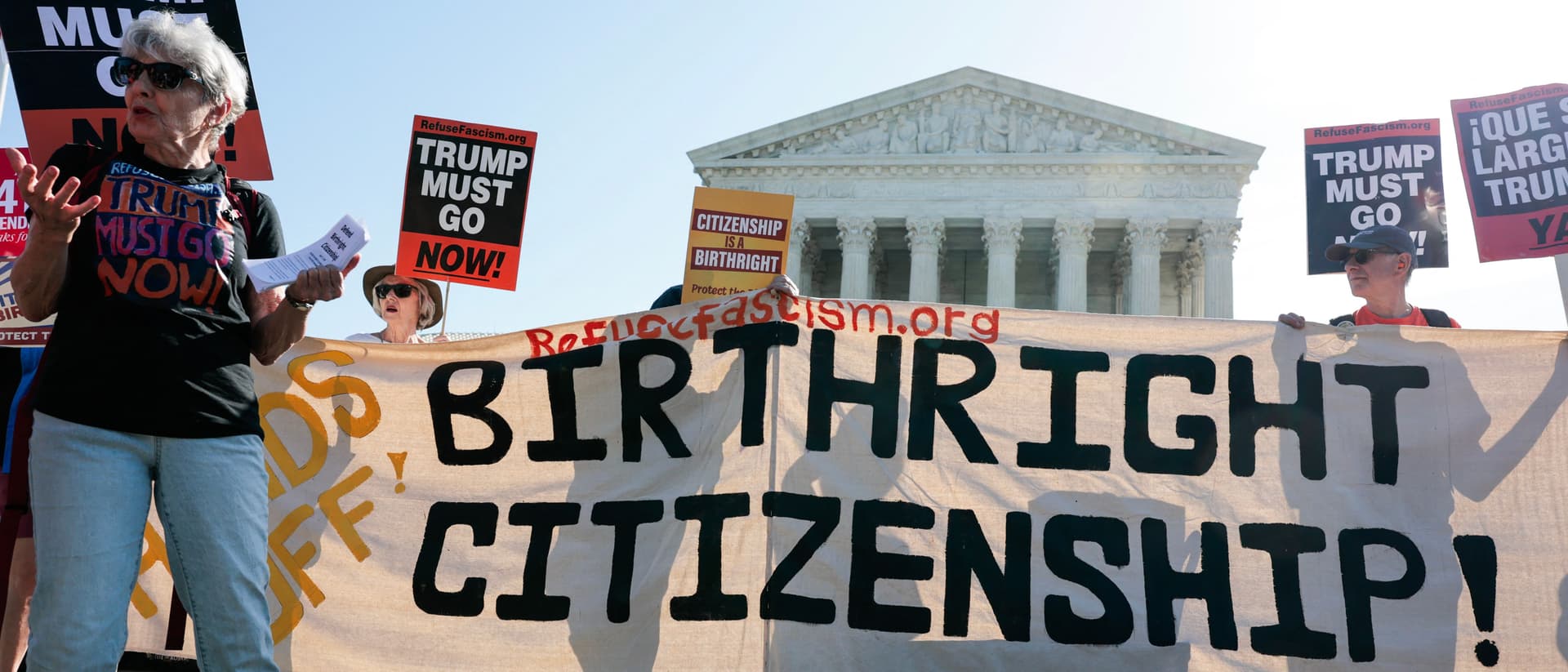
Trump policy reversed
US Judge Overturns Trump-Era Policies Allowing Immigration Arrests in Courthouses
Anonymous

A federal judge in California has struck down two of the Trump administration's most aggressive immigration enforcement tools. On June 23, 2026, U.S. District Judge P. Casey Pitts issued a 71-page ruling that nationwide vacates — legally wipes out — policies allowing ICE arrests at immigration courthouses and extending the time detainees can be held in short-term facilities, according to Courthouse News.
Judge Pitts, a Biden appointee, called the policy shift an "irrational departure" from prior law. He found that both ICE and the Justice Department failed to explain why they reversed decades of practice protecting courthouses as safe spaces, The Guardian reported. The ruling applies to every U.S. immigration courthouse — not just those in California.
How Trump's Courthouse Arrest Policy Was Born
For decades, federal policy treated courthouses as "sensitive locations." ICE agents were told to stay away unless someone posed a national security or public safety threat. That changed the moment Trump took office. On January 21, 2025 — just one day after the inauguration — ICE issued a directive authorizing civil arrests of noncitizens at immigration courthouses, according to Newsweek.
Then, on June 24, 2025, the administration issued a "Nationwide Hold Room Waiver," stretching the maximum time ICE could hold detainees in short-term facilities from 12 hours to 72 hours. The lead plaintiff in the case, Carmen Aracely Pablo Sequen, is an asylum-seeker from Guatemala. ICE agents arrested her in a courthouse hallway immediately after a routine hearing in San Francisco, Newsweek reported.
Judge Rules ICE Actions 'Arbitrary and Capricious'
Judge Pitts grounded his ruling in the Administrative Procedure Act — a 1946 law that requires federal agencies to give sound reasons before changing major policies. He found that ICE never acknowledged the "chilling effect" courthouse arrests have on court attendance. In other words, when immigrants fear being grabbed in a hallway, they stop showing up. That harms the entire justice system, according to Waco Tribune.
The judge also ruled that the 72-hour detention extension violated the Fifth Amendment because hold room conditions were "punitive," according to CBS News. ICE must now go back to the 12-hour limit immediately. If the administration wants to reinstate any courthouse arrest policy, it must go through a formal public rulemaking process and provide clear, reasoned justifications.
White House Calls Ruling 'Naked Judicial Activism'
The administration hit back fast. DHS General Counsel James Percival condemned the ruling in sharp terms. "A district judge ordering otherwise is naked judicial activism in service of an anti-border agenda," he said, according to Crossroads Today. The Trump administration is expected to appeal the decision to the Ninth Circuit Court of Appeals.
Advocacy groups celebrated. Nisha Kashyap, an attorney for the plaintiffs, said the ruling was "tremendously significant." She argued the administration had turned courts into "hunting grounds." Between January 20 and October 15, 2025, ICE arrested roughly 75,000 people with no criminal record, according to data from NBC News and UC Berkeley. The daily detention population hit a record 73,400 people in mid-January 2026.
What the Ruling Means Going Forward
This ruling is a vacatur — not just an injunction. That distinction matters. An injunction pauses a policy. A vacatur kills it. The courthouse arrest directive and the 72-hour hold room waiver are now legally void across the entire country, OA Now reported. No judge in any jurisdiction can enforce either policy as written.
Legal analysts say the ruling creates a major obstacle for the administration's mass deportation goals. Courthouses were one of the most efficient arrest points because agents knew exactly when and where a target would appear. Without that tool, ICE must rely on field operations. The administration's reported target was 3,000 arrests per day — a pace that drove the use of courthouse sweeps in the first place, according to the ACLU of Northern California.
Sentiment
NeutralNEGATIVENEUTRALPOSITIVE
Publishers
8
Articles
8
Reach
8
A
AnonymousAuthor