Uncertain Swedish Coalition Talks
Sweden Faces Uncertain Government Formation Following an Exceptionally Close Parliamentary Election
Anonymous
Key Points
1
The election also included contests for Sweden’s 21 regional and 290 municipal councils. In those elections, non-Swedish citizens aged 18 or older who have been registered as residents for at least three years can vote or stand as candidates—unlike in the national parliamentary election, which requires Swedish citizenship.
2
The Centre Party’s potential kingmaker role is complicated by its leader, Elisabeth Thand Ringqvist, ruling out cooperation with the Sweden Democrats, while also rejecting a government that depends on their support. That could make coalition-building especially difficult for both blocs.
3
The apparent late surge by the right contrasted sharply with polling earlier in the campaign: a Statistics Sweden poll in May gave the opposition a 12-point lead, while final-week Ipsos and Infostat surveys put the gap at just 0.3 and 0.8 percentage points. The 2022 election also showed why late projections can be misleading: the right won despite trailing in most final-week polls.
4
Sweden’s tougher migration policy was not solely a product of the current conservative government. A 2016 cross-party agreement introduced tighter asylum and migration rules under Social Democratic Prime Minister Stefan Löfven, after the 2015 refugee crisis, before Kristersson’s government promised a broader “paradigm shift.”
5
The German AfD example cited in the coverage went beyond proposals to restrict irregular migration and welfare support: its Saxony-Anhalt platform called for sharply reducing immigration by health professionals and virtually banning such workers from outside Europe, including doctors and nurses.
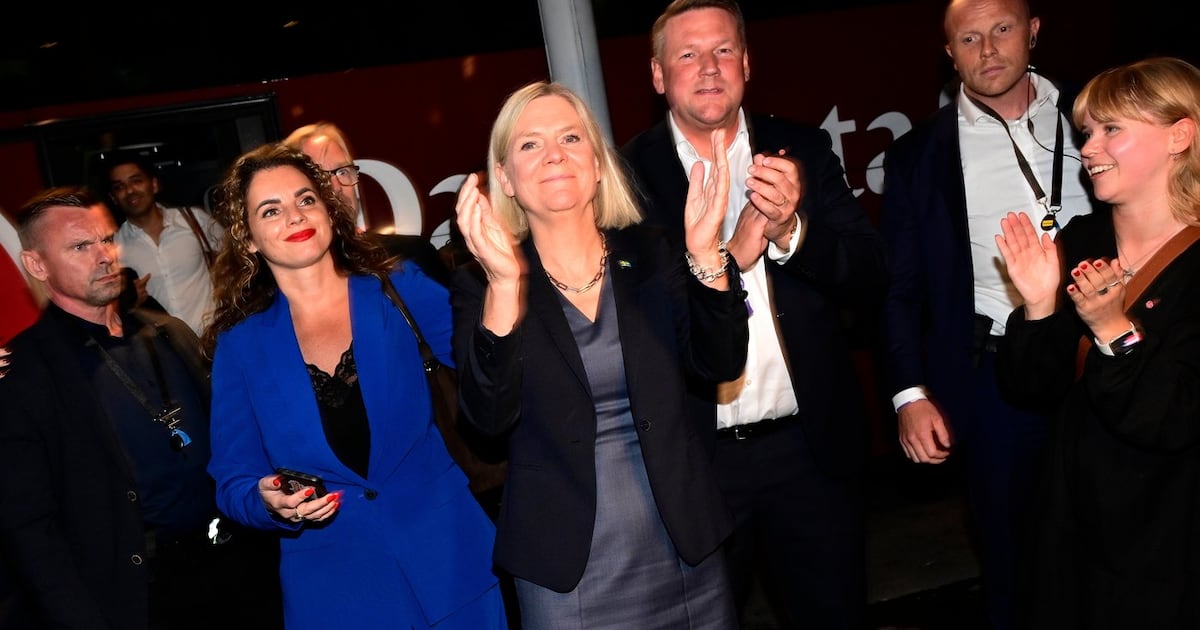
Sweden's election delivered a razor-thin result that leaves government formation deeply uncertain. The Guardian reported that former Prime Minister Magdalena Andersson's left-leaning opposition narrowly leads Prime Minister Ulf Kristersson's centre-right Tidö bloc by roughly three seats, pending final counts of overseas and early ballots. The Social Democrats remain the largest single party but recorded their weakest result in more than a century, while the far-right Sweden Democrats lost 11 seats and can no longer guarantee the governing coalition a majority.
Both blocs now face steep coalition hurdles. Andersson must bridge ideological gaps among left-wing parties, while Kristersson would need renewed support from the Sweden Democrats—a party voters just penalized. The wild swing caught many by surprise: Statistics Sweden showed the opposition leading by 12 points in May, but final-week surveys from Ipsos and Infostat shrunk that gap to just 0.3 and 0.8 percentage points. Immigration and gang crime dominated the campaign, reflecting Sweden's dramatic shift from accepting 160,000 asylum applications in 2015 to a strict "paradigm shift" under today's conservatives.
Social Democrats Hit Historic Low Despite Leading
Andersson's Social Democrats won the most seats but face a bitter irony: this is their weakest national result in over 100 years. Euractiv noted the party's decline reflects broader erosion of traditional left-wing support across Europe. The opposition bloc includes Andersson's Social Democrats, the Greens, the Left Party, and the moderate Liberals—a coalition spanning vastly different economic visions that makes unified governance difficult.
The narrow 0.3-point margin over Kristersson's bloc means every regional variation matters. Briefs Finance reported the opposition leads by approximately 28,000 votes with final ballots still uncounted, but such thin margins have historically shifted in Sweden's 2022 election, when the right trailed in final polls yet won anyway. Final results are expected Thursday, September 16, after counting close to 300,000 advance votes.
Sweden Democrats' Collapse Fractures the Right
The far-right Sweden Democrats lost 11 seats, gutting the Tidö bloc's 2022 parliamentary majority. Wikipedia and Euractiv both documented the party's slide from kingmaker to liability. The loss undercuts Kristersson's ability to govern alone—he needs either Andersson's support (ideologically impossible) or a return to Sweden Democrat backing (politically toxic after voters rejected them).
The Liberals staged an unexpected recovery, clearing Sweden's 4% national threshold for Riksdag seats. The Guardian quoted Liberal leader Simona Mohamsson calling it a "historic comeback." Her party's survival transforms the math: smaller parties like the Liberals and Centre Party—which can veto governing arrangements—now hold outsized negotiating power in coalition talks.
Centre Party Kingmaker Refuses Both Camps
Elisabeth Thand Ringqvist, leader of the Centre Party, has created a political puzzle. Briefs Finance reported that she ruled out cooperating with the Sweden Democrats while also rejecting any government dependent on their support. This leaves her party unable to fully join either bloc—making it potentially the deciding voice without a clear path to actual power-sharing.
Ringqvist told Expressen through party secretary Hannes Hervieu that voters rejected both "a shift to the left on economic policy" and "significant influence for the Sweden Democrats." Her party's leverage is real, but so is the trap: the Centre Party can block coalitions without clear alternatives to offer. Coalition negotiations could drag for weeks or months as parties search for viable combinations.
Migration Policy Tightens Amid European Far-Right Surge
Immigration and gang crime dominated Swedish campaign debate, reflecting the nation's 180-degree turn since 2015. Euractiv documented how Sweden accepted 160,000 asylum applications that year before cross-party agreement in 2016 tightened rules under Social Democratic Prime Minister Stefan Löfven. Kristersson promised an even stricter "paradigm shift," making deportations faster and support for asylum seekers more limited. Cases like detained Ghanaian asylum seeker Samuel Asiamah illustrated the human cost of tighter enforcement.
Sweden's rightward shift mirrors broader European trends. The Friday Times reported that far-right parties across the continent, especially Germany's AfD, now advocate sharp cuts to both irregular migration and skilled-worker immigration. The AfD's Saxony-Anhalt platform calls for restricting health professionals from outside Europe—including foreign doctors and nurses. Sweden's election reflects Europe's growing consensus that immigration must be curtailed, regardless of a party's left-right identity.
Sentiment
Mostly NegativeNEGATIVENEUTRALPOSITIVE
Publishers
63
Articles
156
Reach
219
A
AnonymousAuthor


