Trilateral Defence Alliance Agreement
Pakistan, Saudi Arabia, and Turkiye Agree on Rapid Military Force Deployment
Anonymous
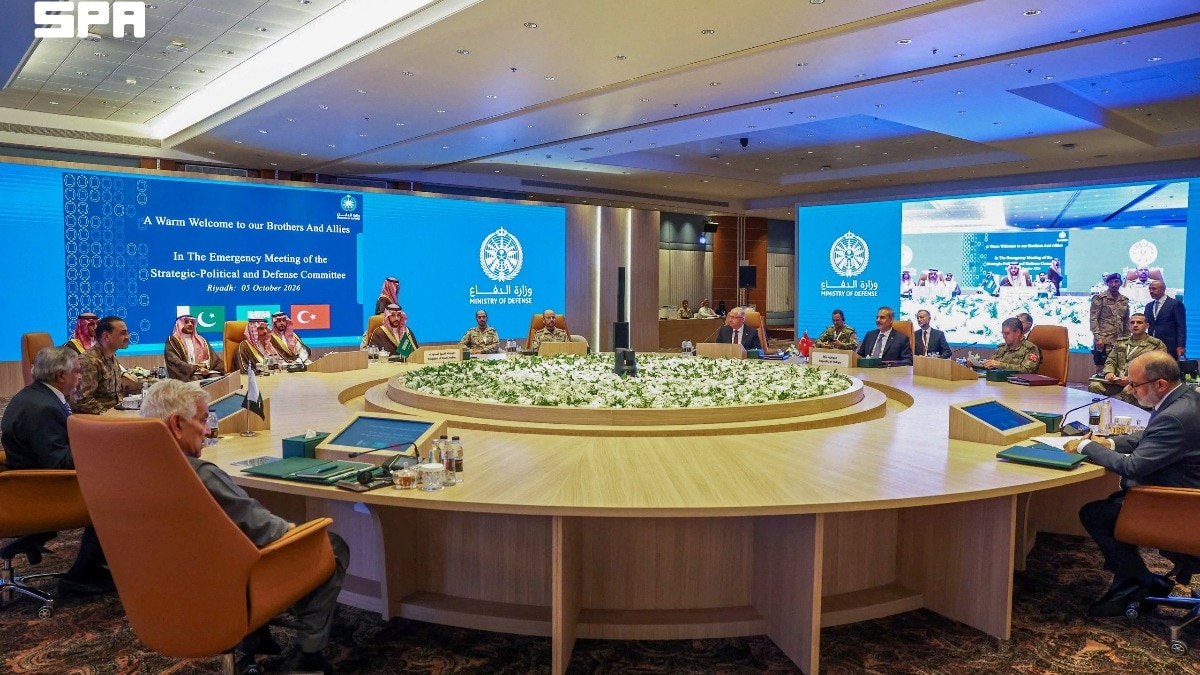
Pakistan, Saudi Arabia, and Türkiye have agreed to rapidly deploy military forces to the kingdom following an emergency meeting in Riyadh on October 5, 2026. India Today reported the three nations activated the Makkah Defence Alliance, a mutual defense pact signed in August that treats any armed attack on one member as an attack on all. The decision comes as Yemen's Houthi rebels intensify strikes on Saudi infrastructure and capture strategic territory including the Red Sea port of Mokha.
Saudi Defence Minister Prince Khalid bin Salman stated the emergency meeting reflects a unified stance to "confront the sinful aggressions that targeted the Kingdom and the Holy Sanctuaries, activating collective deterrence." ABP Live reported that Pakistan and Türkiye will deploy troops and military capabilities, though no timeline or troop numbers were disclosed. The activation marks the first time the three-nation pact has moved from paper agreement to operational implementation.
Houthi Attacks Trigger Defense Alliance Activation
Yemen's Houthi rebels have launched an escalating campaign against Saudi Arabia over the past months. Xinhua reported the group declared a maritime ban on Saudi shipping in July 2026 and struck tankers and energy facilities. In September, the Houthis captured Mokha and gained control of the Bab el-Mandeb Strait, a critical chokepoint for global shipping. These attacks—including missile and drone strikes near Islam's holiest cities—prompted the emergency meeting and formal activation of collective defense measures.
The Makkah Pact: NATO-Style Alliance for the Middle East
The three nations signed the Makkah Defence Alliance in August 2026, building on a bilateral 2025 agreement between Pakistan and Saudi Arabia. India Today noted the pact is modeled on NATO's Article 5, meaning an attack on one member triggers collective defense obligations. The agreement represents the Middle East's first institutional trilateral military alliance, binding the three countries to "move immediately to the practical implementation of the collective defence commitments" under their national laws.
Pakistan and Türkiye Mobilize Military Capabilities
Pakistan will deploy troops and air defense systems under the new agreement. Analysts noted that Pakistan previously stationed around 8,000 troops, a squadron of JF-17 fighters, and an HQ-9 air-defense system in Saudi Arabia under prior bilateral arrangements. Turkish Foreign Minister Hakan Fidan confirmed discussions on supporting Saudi defenses, stating that "Saudi Arabia has adopted a very constructive approach to resolving the issue" through dialogue. Le Monde reported both nations pledged to deploy troops and military capabilities as part of the rapid response.
Initial deployments will likely focus on air defense, intelligence sharing, and symbolic deterrence within Saudi borders rather than direct ground operations inside Yemen. Pakistani Deputy PM Ishaq Dar attended the Riyadh meeting alongside Turkish and Saudi officials to finalize deployment arrangements. The three nations face structural constraints—Pakistan shares a border with Iran, and Türkiye maintains diplomatic ties with Tehran—making direct escalation with Iranian-backed Houthi forces less likely.
Yemeni Government Launches Counteroffensive for Territorial Control
On the same day as the alliance activation, Yemen's government launched a major military campaign to reclaim Houthi-held territory. Rashad al-Alimi, chairman of Yemen's Presidential Leadership Council, announced the broad offensive targeting areas captured during Yemen's 12-year conflict. ABP Live reported that Yemeni government forces, backed by Saudi Arabia, retook the strategic port city of Mokha on October 5, regaining control of crucial Red Sea access and the Bab el-Mandeb Strait.
Sentiment
Mostly NegativeNEGATIVENEUTRALPOSITIVE
Publishers
105
Articles
84
Reach
189
A
AnonymousAuthor


