Mecca Air Alert
Saudi Arabia issues unprecedented air-raid alert for Mecca amid escalating Houthi attacks.
Anonymous
Key Points
1
A Houthi assault the previous day reportedly wounded 13 people in Saudi Arabia, while the group’s broader attacks set oil facilities ablaze and injured 73 people, according to reports cited by OneIndia.
2
Air traffic bound for Medina’s Prince Mohammad bin Abdulaziz International Airport was reportedly halted during the heightened alert, adding an aviation disruption to the security measures around the holy cities.
3
Saudi Arabia’s East-West pipeline repairs could affect about 4% of global oil supplies for three to four weeks; the kingdom has crude stored at Yanbu, but analysts warned that port stocks could run out before the pipeline is restored.
4
Steven Cook of the Council on Foreign Relations described Saudi Arabia’s confrontation with the Houthis as a “grave miscalculation” that left the kingdom in an “extraordinarily strategically vulnerable position,” while also questioning the reliability of the United States as a regional security partner.
5
The Houthis claimed responsibility for a new large-scale assault involving “dozens of ballistic missiles and drones” aimed at King Khalid Air Base in Khamis Mushait, in southern Saudi Arabia.
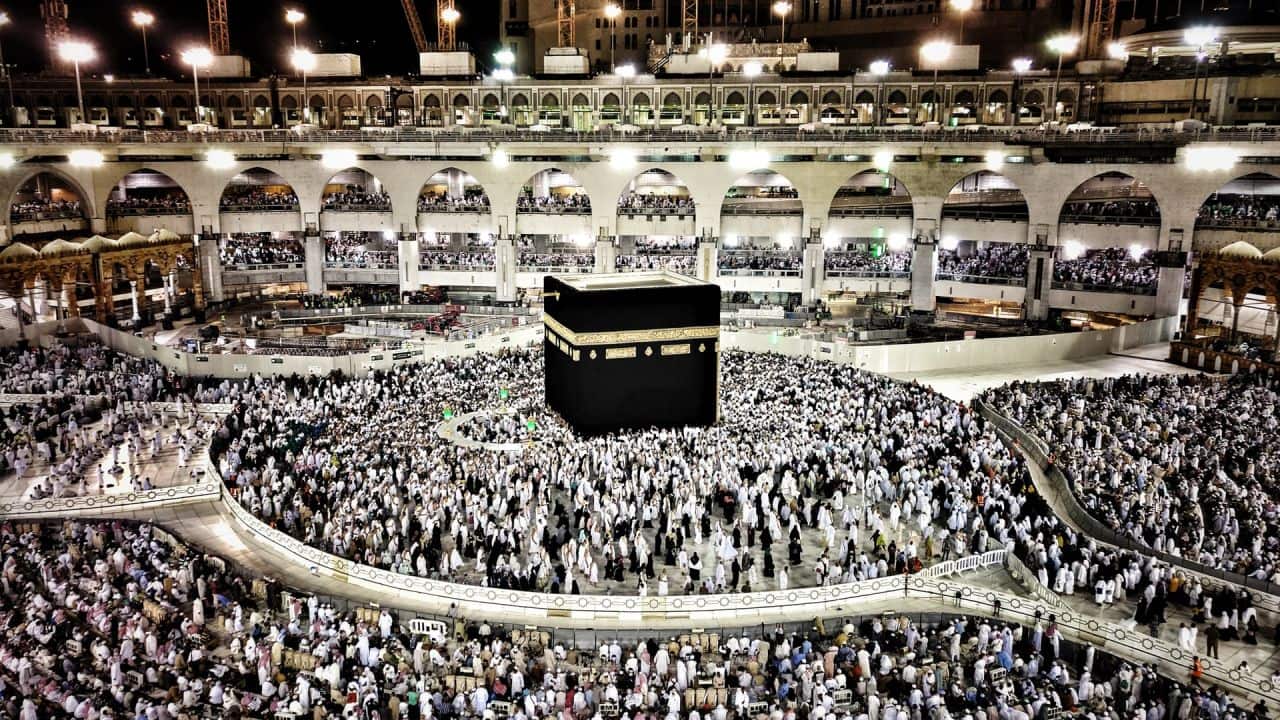
Saudi Arabia issued its first-ever air-raid alert for Mecca on Tuesday night after its air defenses intercepted a Houthi drone south of the holy city. The alert, also issued in Jeddah, Taif, and four other regions, was lifted within minutes, but the incident marks a historic escalation in the Yemen-based Houthis' campaign against the kingdom Times of Israel. The attack wounded 73 people across Saudi Arabia in recent days and exposed vulnerabilities in one of the world's most critical oil-producing nations Varthabharat.
The confrontation reflects broader strains on Saudi Arabia's military and economy. Crown Prince Mohammed bin Salman's government faces uncertainty about U.S. support and sustainability of its energy exports, especially after Houthi attacks damaged the kingdom's 1,200-kilometer East-West oil pipeline, disrupting roughly 4% of global daily oil supplies Council on Foreign Relations analysis. Global crude prices jumped above $107 per barrel, while analysts warned that repair delays could drain Saudi storage reserves at Yanbu port.
Houthis Deny Targeting Islam's Holiest City
The Houthi movement immediately rejected claims it targeted Mecca as a 'worn-out lie,' according to Hazem al-Assad of the Houthi Politburo Moneycontrol. Houthi military sources told SABA News they categorically deny any threat directed at the holy city. Instead, the group blamed Saudi Arabia for conducting over 50 airstrikes inside Yemen during the same 24-hour period, framing the incident as part of their defense against coalition aggression.
The dispute over the drone's intended target highlights the conflict's propaganda battle. Saudi Major General Turki al-Malki declared that 'the security of the Two Holy Mosques and pilgrims is a red line,' describing the attempt as deliberate provocation designed to inflame Muslim sentiment worldwide Times of Israel. The Organisation of Islamic Cooperation condemned the attack for threatening civilian sites and holy sanctuaries, with Pakistan's Prime Minister calling it a 'dastardly and heinous' act.
Pipeline Damage Threatens 4% of Global Oil Supplies
Iran-aligned groups attacked Saudi Arabia's East-West pipeline on Friday, September 11, forcing a complete shutdown of the 1,200-kilometer system. The disruption affects 7 million barrels per day of throughput capacity, roughly 4% of global daily supply Moneycontrol. Repairs are expected to take three to four weeks, creating a critical window where Saudi Arabia's stored crude at Yanbu port could run out before operations resume.
Global oil markets responded immediately. Brent crude prices spiked above $107 per barrel following the pipeline closure and Mecca alert News Karnataka. The combination of infrastructure damage and uncertainty about Houthi escalation has heightened concerns about wider energy-market disruption, especially as the Red Sea remains a contested battleground with Houthi forces now controlling key chokepoints like the Bab al-Mandeb Strait.
Strategic Vulnerability Raises Questions About U.S. Partnership
Steven Cook of the Council on Foreign Relations described Saudi Arabia's military posture against the Houthis as a 'grave miscalculation' that left the kingdom in an 'extraordinarily strategically vulnerable position' Council on Foreign Relations. Cook questioned whether Crown Prince Mohammed bin Salman's government can rely on the United States as a dependable regional security partner amid wider Middle East instability involving Iran and Israel.
The Mecca alert also disrupted civilian aviation. Air traffic bound for Medina's Prince Mohammad bin Abdulaziz International Airport was halted during the heightened alert Varthabharat. The U.S. Embassy in Riyadh responded by updating travel guidance, urging American citizens to 'reconsider travel' to Saudi Arabia. These moves signal deepening concerns about the kingdom's ability to protect both holy sites and critical infrastructure against asymmetric threats.
Sentiment
Mostly NegativeNEGATIVENEUTRALPOSITIVE
Publishers
40
Articles
249
Reach
289
A
AnonymousAuthor


