New iPhone 18 Pro
Apple Unveils iPhone 18 Pro and Pro Max With Advanced AI Capabilities
Anonymous
Key Points
1
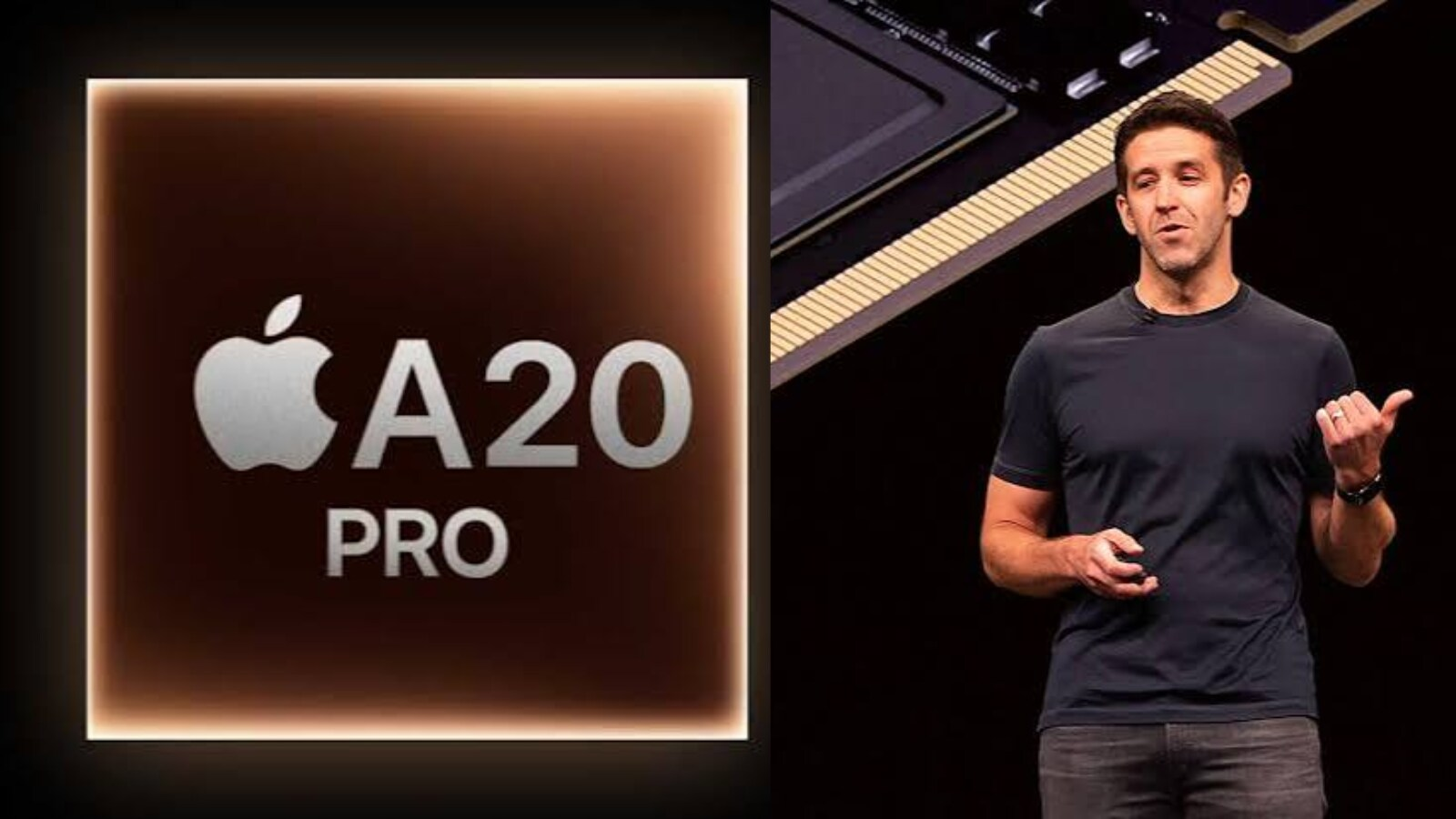
The A20 Pro chip is reported to deliver 50% more memory bandwidth, up to 40% higher graphics performance from its seven-core GPU, and twice the AI-processing capacity through a new Neural Engine.
2
The redesigned Siri can use personal context from apps such as Mail and Messages, interpret what users see through the camera, and take actions within third-party apps including WhatsApp, Audible and Outlook. Apple is also introducing a dedicated Siri app whose conversations sync privately through iCloud.
3
Apple is adding image-authentication support, including compatibility with Google’s SynthID standard and a separate Apple-developed authentication standard for identifying images that were not created with AI.
4
The phones’ camera software adds post-recording cinematic effects at up to 60 frames per second, 4K Dolby Vision HDR in Time-lapse mode, and updated Audio Mix algorithms for improved voice isolation and music handling.
5
The launch event also included AirPods 5 and new Apple Watch models, while Apple did not confirm the widely anticipated foldable iPhone.
Apple unveiled the iPhone 18 Pro and iPhone 18 Pro Max on September 9, with prices jumping to $1,199 and $1,299 respectively—a $100 increase over the prior generation. CNET reports both models ship with a 2-nanometer A20 Pro chip, a vapor-cooling chamber three times larger than before, and a new six-blade mechanical variable aperture camera. Preorders open September 12, with retail availability starting September 18.
The phones deliver up to 36 hours of video playback on the Pro and 45 hours on the Pro Max, plus storage up to 2TB and iOS 27 with context-aware Siri and on-device Apple Intelligence features. Mobile Syrup notes the A20 Pro delivers 50% more memory bandwidth, up to 40% higher graphics performance, and double the AI-processing capacity. No standard iPhone 18 was announced, making this launch focused entirely on premium Pro models.
Chip Power Meets Aggressive Thermal Control
The A20 Pro's 6-core CPU runs 20% faster, while its 7-core GPU delivers up to 40% higher graphics performance. Interesting Engineering reports the chip also doubles AI-processing capacity through a new dual 16-core Neural Engine. Apple paired these gains with a vapor chamber three times larger than the previous generation to prevent thermal throttling during sustained workloads like video processing and gaming.
Mechanical Aperture and Manual Camera Control
The 48-megapixel main camera now uses a six-blade mechanical variable aperture—a first for iPhones. This allows the lens to adjust how much light enters, improving low-light performance and giving photographers optical control in bright conditions. Interesting Engineering notes the camera adds post-recording cinematic effects up to 60 frames per second, 4K Dolby Vision HDR in time-lapse mode, and updated voice isolation algorithms.
Context-Aware Siri Ships in English Beta
iOS 27 introduces a redesigned Siri that understands personal context from Mail and Messages, interprets what users see through the camera, and acts within third-party apps like WhatsApp, Outlook, and Audible. However, this capability rolls out in English beta only initially, with other languages coming later. Apple also added a dedicated Siri app whose conversations sync privately through iCloud.
The phased rollout reflects Apple's strategy of prioritizing reliability and language coverage over immediate global launch. Apple's emphasis on the Neural Engine shows the company is tying advanced AI features directly to specialized processor hardware, meaning older devices cannot access these capabilities.
Image Authentication and On-Device Apple Intelligence
Apple introduced support for image authentication, including compatibility with Google's SynthID standard and a separate Apple-developed standard to identify images that were not AI-generated. This allows the iPhone 18 Pro to verify unedited photos through hardware-signed metadata. On-device Apple Intelligence runs locally on the A20 Pro, with advanced capabilities using private cloud computing that Apple plans to charge for in the future.
Sentiment
Mostly PositiveNEGATIVENEUTRALPOSITIVE
Publishers
366
Articles
305
Reach
671
A
AnonymousAuthor


