Germany's F-35 Jet Delivery
Germany receives its first F-35 fighter jet as the European defense project collapses.
Anonymous
Key Points
1
German Defense Minister Boris Pistorius said, “We want and need to maintain nuclear sharing,” arguing that the F-35 is currently “the only aircraft in the world” capable of fulfilling Germany’s NATO nuclear-sharing mission.
2
The first eight German F-35A aircraft will remain in the United States for pilot and technician training, while deliveries to Büchel are scheduled to begin in 2027 and the overall delivery is expected to be completed by 2029.
3
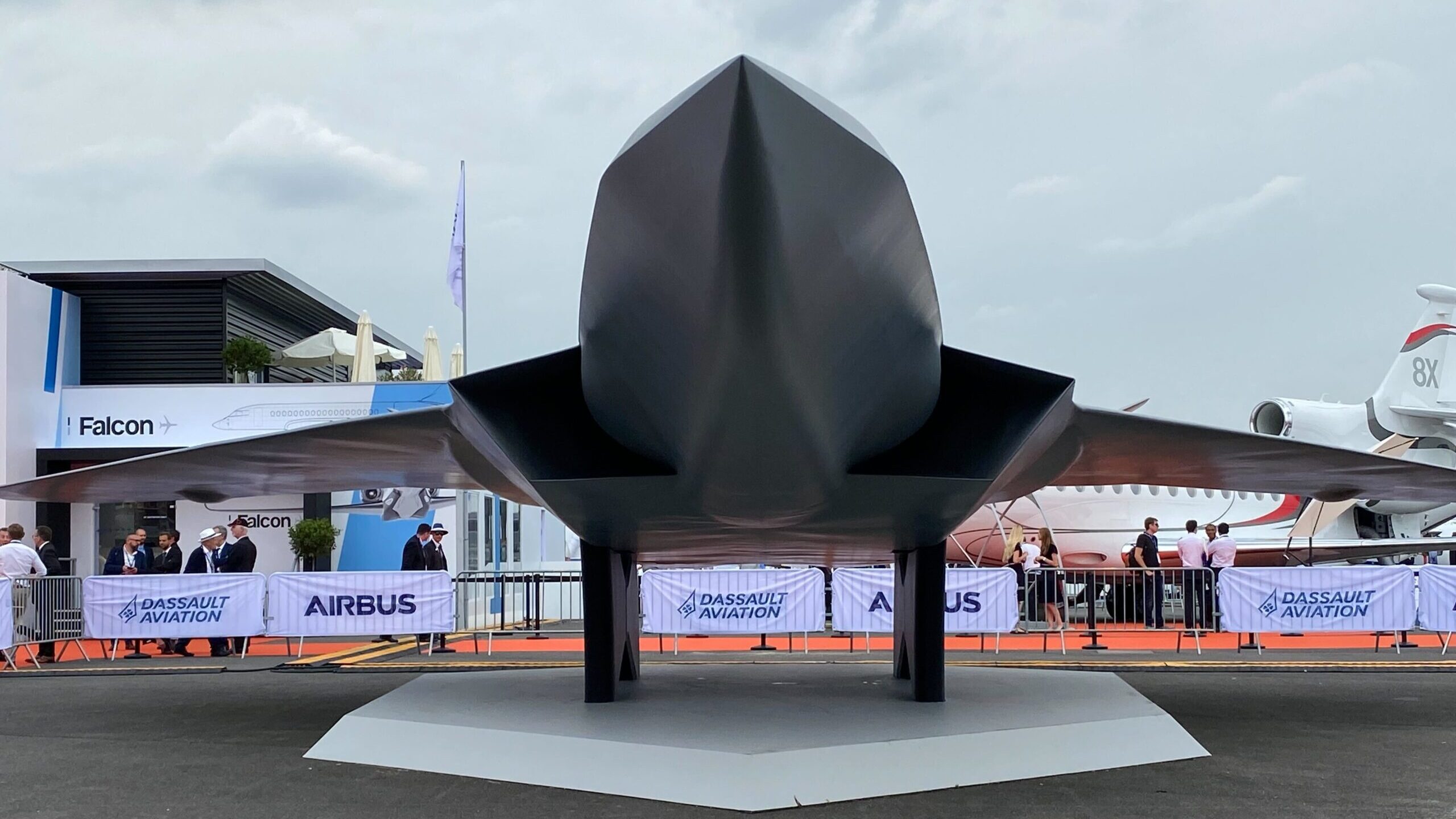
The FCAS program reportedly broke down partly because France and Germany wanted different aircraft: France favored a lighter, carrier-capable fighter, while Germany sought a heavier aircraft optimized for air superiority; disputes also emerged over control between the countries’ leading defense companies.
4
Pistorius highlighted the F-35A’s stealth, advanced data-collection and processing systems, and ability to operate alongside other military platforms as key reasons for selecting the aircraft.
5
Germany’s purchase is also intended to address longstanding concerns about Bundeswehr readiness and equipment, with the F-35’s multirole design supporting air-to-air combat, ground attack and intelligence missions.
Germany took delivery of its first F-35A stealth fighter jet at Lockheed Martin's facility in Fort Worth, Texas, on September 18, 2026, marking a historic shift in the Luftwaffe's air-defense strategy. The purchase of 35 aircraft—worth roughly €10 billion—will replace Germany's aging Tornado fleet and lock Berlin into NATO's nuclear-sharing mission for decades to come, according to Star-Telegram.
The handover comes as the Franco-German-Spanish Future Combat Air System (FCAS) collapsed due to deep disagreements over design requirements and industrial control. German Defense Minister Boris Pistorius said the F-35 is currently "the only aircraft in the world" capable of fulfilling Germany's NATO nuclear role, cementing the American jet as Berlin's sole path forward for sixth-generation air power.
From FCAS Dreams to American Stealth Reality
The Franco-German-Spanish FCAS program promised a sovereign European fighter jet by the 2040s. But France wanted a lighter, carrier-capable design while Germany demanded a heavier air-superiority platform. Disputes over which country's defense contractor would lead the project—Airbus or Dassault Aviation—deepened the rift. By 2026, the partnership lay in ruins, leaving Germany with no European alternative and no time to wait.
The F-35A emerged as the only immediate solution. Berlin needs to replace its 80 Tornado jets, which have been in service since the late 1970s and are structurally aging out. More critically, Germany must maintain its role in NATO's nuclear-sharing arrangement, storing U.S. B61 thermonuclear bombs at Büchel Air Base. No other aircraft currently meets both demands.
Training the Luftwaffe on American Fifth-Generation Fighters
The first eight F-35As will not fly to Germany immediately. Instead, they will remain in the United States at Ebbing Air National Guard Base in Fort Smith, Arkansas, where German pilots and technicians will log thousands of hours learning the jet's advanced stealth systems, data-fusion architecture, and multirole capabilities. Training is expected to last through 2027.
Once training concludes, the initial F-35As will deploy to Büchel Air Base in western Germany starting in late 2027. The entire fleet of 35 jets is scheduled to arrive by 2029, with full operational capability expected around 2030. This timeline gives the Luftwaffe a fully modernized nuclear-capable air force roughly one decade from now.
Why the F-35 Wins Over Eurofighter and European Alternatives
Pistorius highlighted the F-35's stealth profile, advanced sensor fusion, and ability to operate seamlessly with NATO allies as decisive factors. The jet can perform air-to-air combat, ground attack, and intelligence gathering—replacing multiple aging platforms. "The F-35 represents the world's most advanced combat aircraft," Pistorius said at the handover ceremony.
Germany's Eurofighter Typhoons will absorb some Tornado missions while the F-35s phase in. But the Eurofighter lacks stealth and the advanced data-sharing systems that bind NATO air forces together. With 19 allied nations already operating F-35s, German pilots can train alongside American, British, and Polish colleagues—a strategic advantage no independent European fighter offers.
Germany Eyes More F-35s While Exploring Sixth-Generation Alternatives
The 35-jet order solves Germany's immediate readiness crisis but leaves a longer-term vacuum. Berlin is reviewing whether to purchase an additional 15 F-35As or join alternative sixth-generation programs like the UK-Italy-Japan GCAP initiative. Each path carries trade-offs: more F-35s lock in American dependence; joining GCAP spreads development costs but delays capability until the 2040s.
German military leadership welcomes the F-35 as a stopgap that brings Luftwaffe standards into alignment with NATO. But European defense analysts warn that the FCAS collapse signals a broader erosion of Europe's sovereign defense-industrial base. Airbus and Dassault Aviation failed to overcome national rivalries, ceding the fighter-jet market to American contractors for another generation.
Sentiment
Mostly PositiveNEGATIVENEUTRALPOSITIVE
Publishers
31
Articles
63
Reach
94
A
AnonymousAuthor


