Treasury Yield Hits 5%
Stock Futures Slip as Treasury Yield Tops 5% Ahead of Fed Decision
Anonymous
Key Points
1
Fed funds futures implied a 92%–92.5% probability of a 25-basis-point increase, which would raise the federal funds target range from 3.5%–3.75% to 3.75%–4%; a Reuters poll found that 86 of 101 economists expected the increase, the first since July 2023.
2
AJ Bell’s Dan Coatsworth said the 5% Treasury yield could prompt investors to question “what’s the point in holding risky equities when they can get 5% on low-risk government bonds,” while cautioning that the level is a psychological warning sign rather than a guaranteed trigger for an equity sell-off.
3
The bond selloff extended internationally: Japanese 10-year yields moved above 3% to a three-decade high, Australian yields rose more than 7 basis points, and the Bank of England was reportedly considering halting sales of 20- and 30-year gilts to relieve pressure on long-dated debt.
4
The deterioration in bond-equity diversification was reflected in South Korean-listed funds: the ACE US S&P500 Bond Mixed 50 Active ETF fell 6.03% in a month, compared with a 1.65% decline in the S&P 500, while the KODEX 200 US Bond Mixed 50 ETF dropped 5.8% versus a 1.91% fall in the KOSPI 200.
5
Concerns about the AI sector went beyond one-day share-price declines. Anthropic CEO Dario Amodei called for a coordinated slowdown in AI development to better understand its risks, while current President Donald Trump dismissed fears that AI could wipe out humanity as a hoax and said the United States needed to win a technological race against China. Analysts said the debate could lead investors to reassess the pace, scale and monetization timeline of AI companies’ capital spending.
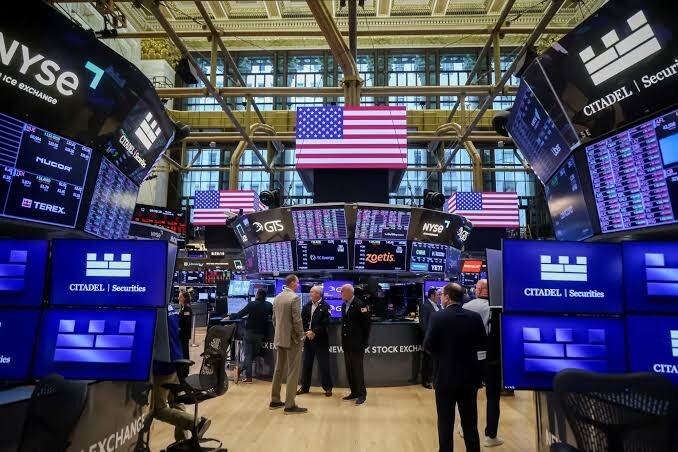
U.S. stock futures slipped as the 10-year Treasury yield climbed above 5% for the first time since 2007, raising questions about whether safe government bonds now offer better returns than stocks Yahoo Finance. The move came as investors braced for a Federal Reserve rate decision, with markets pricing in a 92% probability of a quarter-point increase to 3.75%–4% Reuters.
The simultaneous slide in stocks and bonds has upended traditional investing strategies, as inflation and fiscal concerns now push both assets lower together Business Standard. Rising oil prices from Middle East supply disruptions added to the pain, leaving markets grappling with stagflation fears.
Treasury Yields Hit Highest Level in 17 Years
The 10-year Treasury yield surpassed 5.0%, marking its highest point since July 2007 Yahoo Finance. The 30-year yield also climbed sharply as investors dumped longer-dated bonds. AJ Bell strategist Dan Coatsworth warned the 5% level could push investors to ask: why own risky stocks when safe government bonds pay 5%? AJ Bell
The bond selloff extended globally. Japanese 10-year yields moved above 3% to a three-decade high, while the Bank of England reportedly considered halting long-term gilt sales to ease pressure on debt markets.
Fed Set to Raise Rates as Market Bets Mount
Federal Reserve funds futures implied a 92% to 92.5% probability of a 25-basis-point rate hike, the first since July 2023 Reuters. A Reuters poll showed 86 of 101 economists expected the increase. The decision would lift the federal funds target range from 3.5%–3.75% to 3.75%–4%.
Markets were closely watching updated Fed projections for clues about future rate paths. Investors worried that higher rates could choke off corporate profits and consumer spending.
Oil Surge and Tech Weakness Hammer Mixed Portfolios
Rising oil prices, driven by Saudi Arabia's closure of a pipeline bypassing the Strait of Hormuz, fueled inflation concerns Bastille Post. The Dow Jones fell 328 points to 52,093.11, while the Nasdaq dropped 0.69% as semiconductor and artificial-intelligence stocks weakened Yahoo Finance. Tech weakness deepened anxieties about AI sector valuations.
Mixed bond-equity portfolios suffered disproportionately. South Korean-listed funds tracking U.S. bonds and stocks fell 5.8% to 6.03% in one month, far outpacing declines in pure stock indexes, as both asset classes moved downward together.
AI Debate Adds Uncertainty to Tech Sector Outlook
Anthropic CEO Dario Amodei called for a coordinated slowdown in AI development to better understand risks, while President Donald Trump dismissed AI extinction fears as a hoax and stressed the need to win the tech race against China Reuters. The conflicting signals rattled investor confidence in AI spending timelines.
Analysts warned the debate could force investors to reconsider the pace and scale of AI capital spending. Questions about whether massive AI investments will pay off soon enough have begun weighing on semiconductor and software stocks.
Sentiment
Mostly NegativeNEGATIVENEUTRALPOSITIVE
Publishers
19
Articles
78
Reach
97
A
AnonymousAuthor


