Japan Ramps Up Defense
Japan Dramatically Expands Defense Capabilities Citing China and Russia as Key Indo-Pacific Threats
Anonymous
Key Points
1
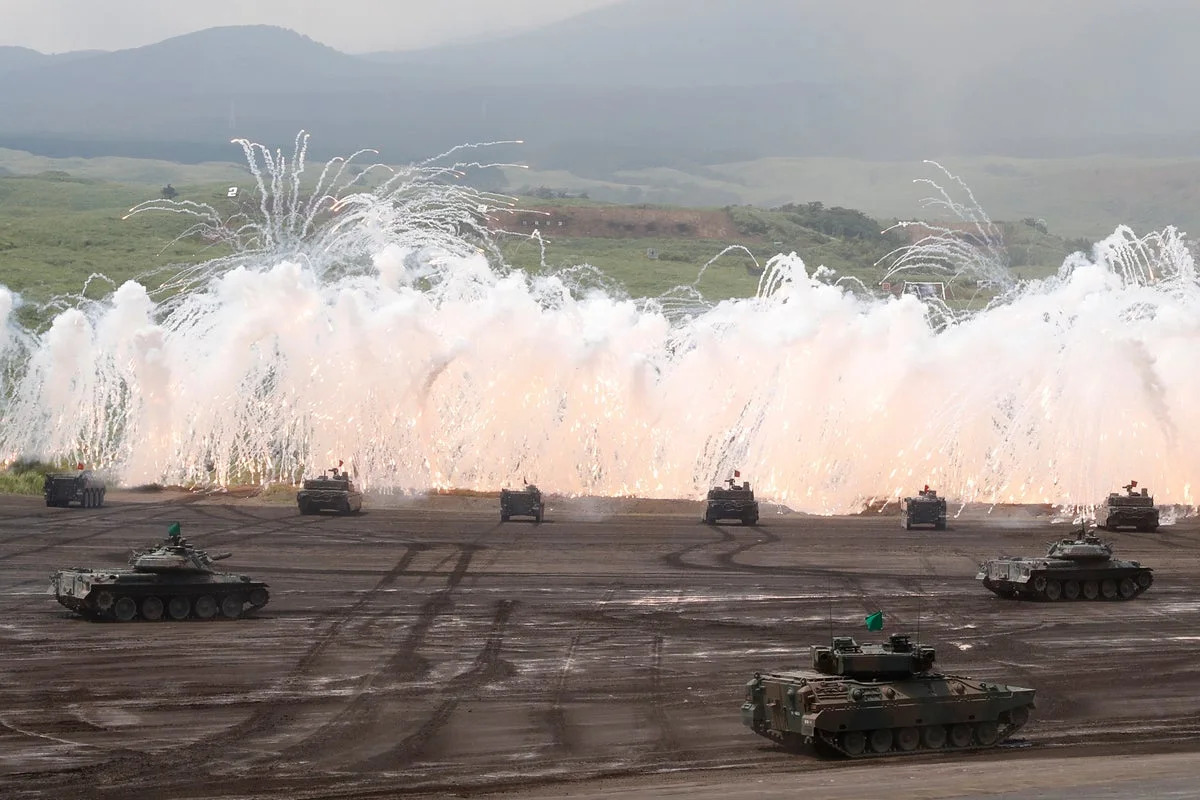
Resolute Dragon drills on Kyushu featured observers from Australia, France, and the Philippines, signaling deeper alliance engagement and experience-sharing aimed at defending disputed territories.
2
The 598-page Defense White Paper is the longest edition to date and, for the first time, includes links to short videos explaining Japan’s defense policy to a broader audience.
3
The white paper cites Ukraine’s use of low-cost drones and missiles as a model of modern warfare, underscoring the need for drones and AI-enabled operations and stockpiling for prolonged conflicts.
4
Air-defense scramble data show 595 sorties in the year to March 31, 2026 (366 against Chinese aircraft and 214 against Russian planes), illustrating sustained high activity and regional pressure.
Japan is building combat drones and expanding its military at a historic pace, citing what it calls a "new era of crises" driven by China, Russia, and North Korea. The country's Defense White Paper — its longest ever at 598 pages — warns that the security environment in the Indo-Pacific is growing harsher and more volatile, according to Yahoo News.
Defense Minister Shinjiro Koizumi said Japan faces an "urgent" need to boost its forces. The government is not just spending on weapons — it is framing the buildup as a driver of jobs and economic growth at home, according to Archynetys.
China Named Japan's Biggest Strategic Challenge
Japan's Defense White Paper names China as the country's greatest strategic challenge. Chinese military activity near Japan has surged. Japan scrambled fighter jets 366 times against Chinese aircraft in the year ending March 31, 2026 — and 214 times against Russian planes — for a total of 595 sorties, according to Yahoo News.
Japan is responding by deploying missiles on its outer islands and developing counter-strike options. These moves mark a sharp break from Japan's postwar policy of limiting its military to strictly defensive roles, according to AOL News.
Drones and AI Lead Japan's New Way of War
The white paper points to Ukraine's war as a blueprint. Ukraine's use of cheap drones and precision missiles has reshaped how Japan thinks about modern conflict. Tokyo now wants AI-enabled drone operations and large stockpiles to sustain a long fight, according to Yahoo News.
Japan plans to develop its own combat drones as part of this shift. The government also wants to close gaps in its domestic arms production base. To support that goal, Tokyo has lifted long-standing restrictions on weapons exports, according to AOL News.
Military Spending Recast as an Economic Engine
Japan is selling the buildup to its public in a new way. The government argues that higher defense spending creates factory jobs, boosts technology industries, and strengthens the economy. The 598-page white paper even includes short videos to explain defense policy to ordinary citizens — a first for Japan, according to Archynetys.
Defense Minister Koizumi has pushed hard on this message. He wants the public to see military investment not as a cost, but as a source of national strength and prosperity. The framing reflects how urgently Tokyo wants domestic support for its long-term defense plans, according to 24 News HD.
Japan Deepens Alliances With the US, Australia, and Philippines
Japan is not building up alone. The "Resolute Dragon" military drills on the southern island of Kyushu brought together observers from Australia, France, and the Philippines. The exercises focus on defending disputed territories and sharing battlefield experience across allied forces, according to Yahoo News.
Minister Koizumi has urged a sense of crisis in strengthening the US-Japan alliance. Tokyo is also deepening ties with the Philippines and Australia. High-frequency joint exercises are now a regular feature of Japan's security strategy, according to 24 News HD.
Sentiment
Mostly PositiveNEGATIVENEUTRALPOSITIVE
Publishers
14
Articles
54
Reach
68
Topics
A
AnonymousAuthor


