Bedford Train Crash Investigation
Bedford Train Accelerated Past Red Signal Before Fatal Crash, Report Finds
Anonymous
Key Points
1
The train’s data recorder showed it acknowledged and passed the red signal at about 58 mph; the report noted that encountering a red signal was unusual on that section of track.
2
The last available footage from Burton’s train was recorded about 600 metres from the crash. A curve in the tracks meant investigators could not establish from the footage whether the trains were on the same line, and they said a driver may have faced the same visibility limitation.
3
The RAIB said the sequence of braking likely reflected Burton detecting the other train ahead and responding to it.
4
The stationary train was the Nottingham-to-London St Pancras service, while the train that struck it was travelling from Corby to London St Pancras.
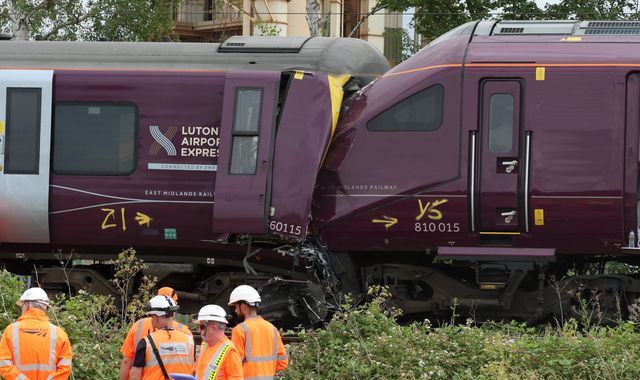
An East Midlands Railway train driver acknowledged a red signal but kept accelerating anyway, reaching 76 mph before smashing into a stationary train near Bedford on June 19, RAIB. Driver Shaun Burton, 60, died in the crash. More than 160 passengers were hurt, and 102 went to the hospital. Investigators are still trying to figure out why the driver passed the red signal and whether poor visibility, broken brakes, or missing safety systems played a role.
Driver Accelerated Through Red Signal at 58 mph
Data from the train's recorder showed the driver saw the red signal and passed it at about 58 mph, then kept speeding up RAIB. Hitting a red signal was very unusual on this stretch of track, investigators said. The train reached 76 mph before the driver finally hit the brakes roughly 600 metres away from the crash.
Stationary Train Stopped After Brake System Failed
The train Burton's engine hit was the Nottingham-to-London St Pancras service Northampton Chronicle. That train had stopped unexpectedly because its automatic warning system malfunctioned and applied the brakes, which triggered the red signal behind it RAIB. The crash happened when Burton's train, heading from Corby to London St Pancras, struck it at roughly 50 mph.
Visibility Limits May Have Hidden the Stopped Train
Video from Burton's train stopped recording about 600 metres before impact RAIB. A curve in the tracks blocked the camera's view, making it impossible to tell if both trains were on the same line from the footage. Investigators said Burton may have faced the same vision problem—he could not see the stationary train ahead until it was too late to stop safely.
Questions Raised About Missing Train Protection System
A lawyer for crash victims raised concerns that this section of track lacked an automatic train protection system Seaside Radio. Such systems can slow or stop trains that pass red signals. RAIB said the final braking likely happened because Burton spotted the other train ahead and reacted to it. The full investigation into the crash's causes is still underway.
Sentiment
Mostly NegativeNEGATIVENEUTRALPOSITIVE
Publishers
14
Articles
42
Reach
56
A
AnonymousAuthor


