New F2 2027 Car
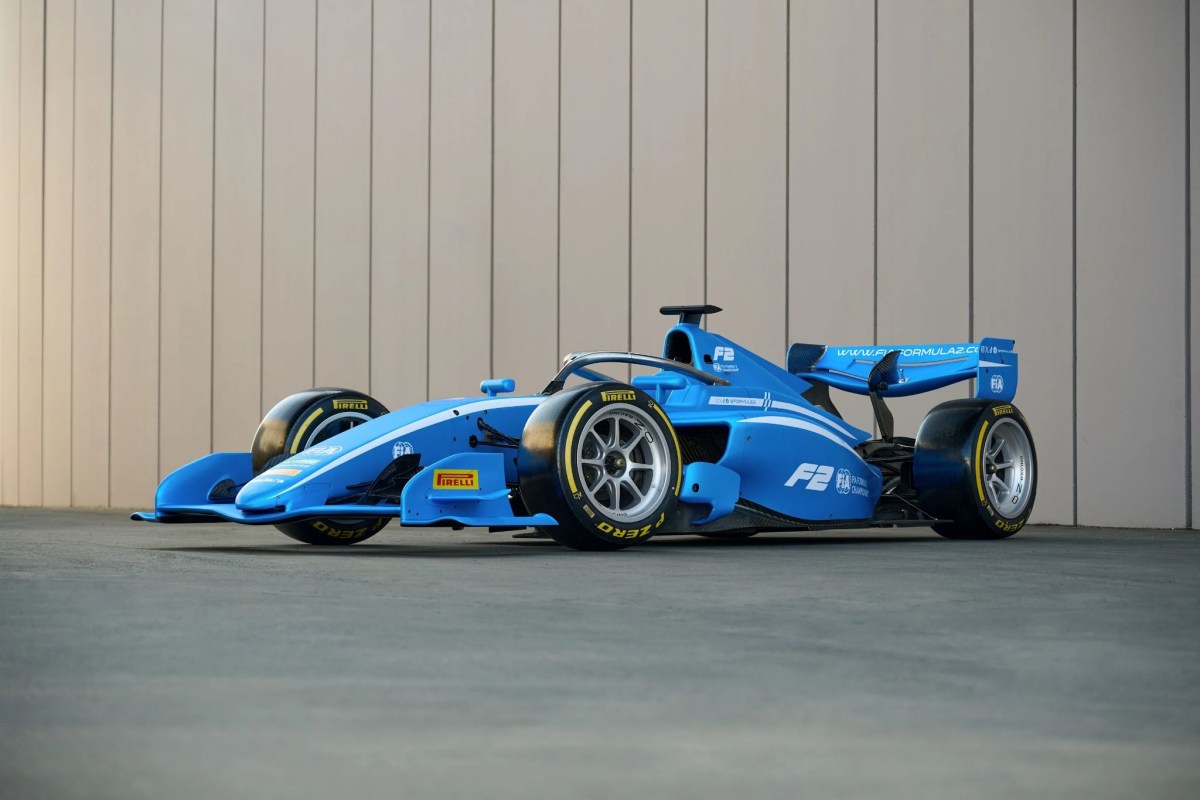
Formula 2 reveals its new 2027-29 car featuring an F1-inspired design and onboard starter.
Anonymous
Key Points
1
The revised aerodynamic package is expected to add 25 points of downforce and three points of drag, helping cars follow one another more easily while promoting closer racing.
2
Hewland’s redesigned gearbox will incorporate an externally adjustable, non-hydraulic ramp differential to accommodate the new onboard starter.
3
Most of the car’s braking performance, steering effort and cockpit ergonomics will remain functionally unchanged from the 2026 configuration, preserving continuity for teams and drivers.
4
The Mecachrome power unit will continue producing 620 horsepower, according to Grande Premio, while remaining a 3.4-liter turbocharged engine.
5
Teams are scheduled to receive their first chassis kits in December 2026, followed by a second allocation in January 2027 ahead of preseason testing.
Formula 2 unveiled its next-generation car for the 2027-29 seasons at Monza, keeping the proven Dallara chassis and 3.4-liter Mecachrome turbo engine to hold down costs RMC Motori. The major change: a new onboard starter system that lets drivers restart after a spin or stall without pit crew help, integrated into a redesigned Hewland gearbox Read Motorsport. Fresh aerodynamic wings inspired by Formula 1 design will help cars follow each other more closely and deliver better racing Feeder Series.
The series is keeping its drag-reduction system and rejecting F1's active aerodynamics, staying focused on its role as the ultimate training ground for future Formula 1 drivers F1i. Teams will get their first chassis kits in December 2026, with a second batch arriving in January 2027 before preseason testing begins Grande Premio.
New Wings and Aerodynamics Designed for Closer Racing
The redesigned front and rear wings add 25 points of downforce and three points of drag compared to the current car Feeder Series. This setup makes it easier for drivers to follow one another at high speed, a key step toward producing the tight, thrilling racing that F2 fans want to see. The series ditched the idea of copying F1's complex active aerodynamic systems, opting instead to keep the simpler drag-reduction system Grande Premio.
Onboard Starter Eliminates Need for Outside Help
For the first time in F2, drivers can restart their engines without a pit crew jumpstart. The new onboard starter integrates into a completely redesigned Hewland gearbox Read Motorsport. The gearbox also features a non-hydraulic, externally adjustable ramp differential to accommodate the starter system Feeder Series. This means drivers who spin or stall can get going again quickly without losing several positions.
Engine Power Stays Constant While Costs Remain Under Control
The Mecachrome power unit keeps producing 620 horsepower as a 3.4-liter turbocharged engine Grande Premio. By holding the engine, chassis, and most mechanical components steady, F2 avoids triggering massive spending wars among teams. The series continues using Pirelli tires and Aramco sustainable fuel, reinforcing F2's mission to prepare drivers for the environmental and technical demands of modern F1.
Braking, Steering, and Cockpit Setup Stay Largely the Same
Braking performance, steering effort, and cockpit ergonomics remain functionally unchanged from the current 2026 car Feeder Series. This stability helps teams and drivers transition smoothly without relearning the car's fundamental behavior. The focus is on evolution, not revolution—keeping what works while adding the onboard starter and new aerodynamics to improve racing quality.
Sentiment
Mostly PositiveNEGATIVENEUTRALPOSITIVE
Publishers
22
Articles
13
Reach
35
Topics
A
AnonymousAuthor


