World Cup Privatization Debate.
FIFA plans to sell World Cup stakes for billions, retaining control amidst UEFA opposition.
Anonymous
Key Points
1
A formal vehicle named FIFA Forward Enterprise (FFE) would consolidate FIFA's commercial rights and raise external capital; the plan envisions private investors owning roughly 20–30% of FFE, with the 211 member associations collectively holding about 20%, while FIFA would retain a majority stake. The venture is valued at around $20 billion and could attract up to $4.2 billion in external investment, subject to member approvals.
2
The structure would cover top competitions in both men's and women's football, including the World Cup and the Club World Cup, with 211 member associations holding stakes that collectively amount to about 20% of the new enterprise.
3
If implemented, the global football calendar could be altered, with the Men's and Women's World Cups potentially expanded or held more frequently than every four years, and the Club World Cup facing similar changes.
4
UEFA strongly criticized the plan, saying it crosses a line and stressing that the soul and governance of football are not assets to trade, with concerns over zero transparency regarding who would benefit financially.
5
The investor group is expected to be led by Thrive Eternal (linked to Thrive Capital’s Joshua Kushner), with JP Morgan named as the financial adviser on the project.
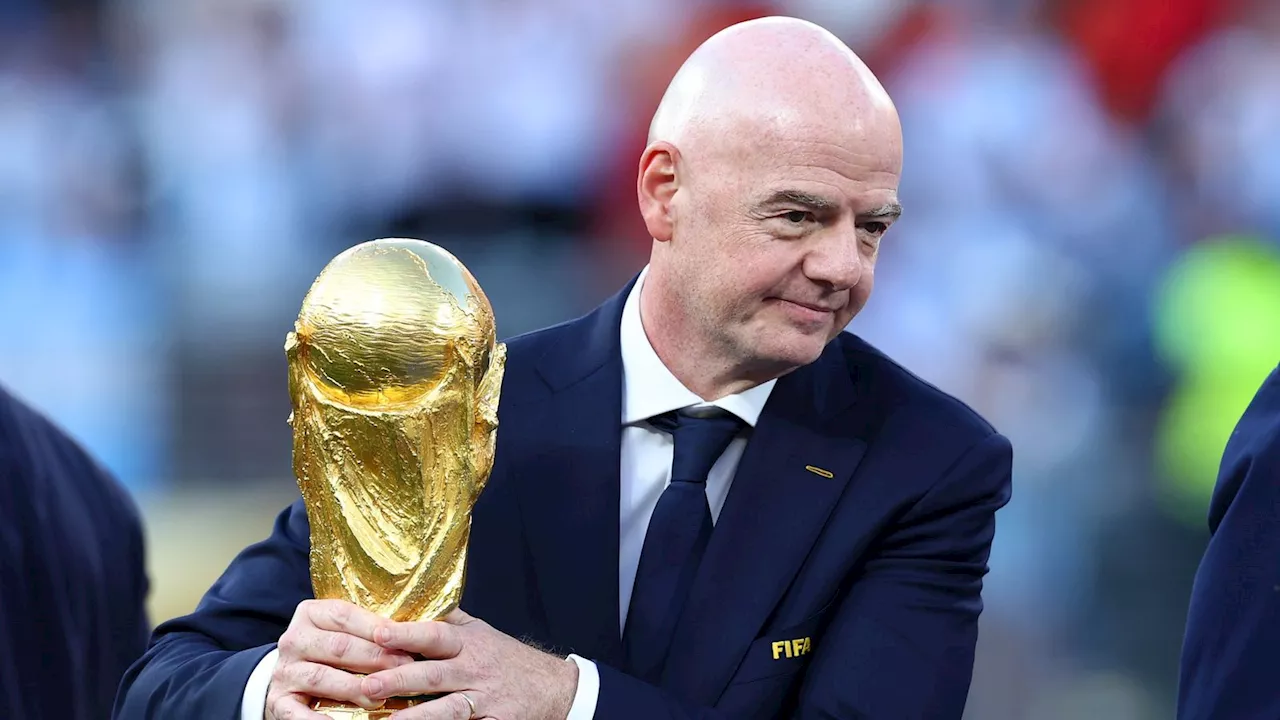
FIFA president Gianni Infantino is pushing a plan to sell minority stakes in the World Cup and other top competitions to private investors, according to The Sun and TalkSport. The new vehicle, called FIFA Forward Enterprise (FFE), would be valued at around $20 billion and raise up to $4.2 billion in outside investment.
Under the plan, private investors would own roughly 20–30% of FFE, and FIFA's 211 member associations would collectively hold about 20%, while FIFA keeps a majority stake. UEFA immediately fired back, saying the move crosses a line football's governing bodies should never cross, according to Head Topics.
How the $20 Billion FIFA Forward Enterprise Would Work
FFE would bundle FIFA's commercial rights — including the Men's and Women's World Cups and the Club World Cup — into a single company. External investors would buy in, giving FIFA a fresh pile of capital. Yahoo News reported the venture could attract up to $4.2 billion from private buyers.
The investor group is expected to be led by Thrive Eternal, a firm linked to Thrive Capital's Joshua Kushner. JP Morgan is named as the financial adviser on the deal. FIFA says the money raised could fund more than $10 billion in development programs over four years, according to TalkSport.
Infantino's Post-Presidency Payday Raises Eyebrows
The plan could hand Infantino a very lucrative exit. Reports say he could become commissioner of FFE once his FIFA presidency ends in 2031. The Sun reported the role could pay more than $50 million per year.
Critics say that is a glaring conflict of interest. Infantino would be building the very company he plans to run after leaving office. FIFA has not denied the reports. It says external funding would boost global football development, but it has not addressed the commissioner claim directly.
UEFA Calls It a Line Football Must Never Cross
UEFA did not hold back. The body said the soul and governance of football are not assets to trade. It raised sharp concerns over what it called zero transparency about who would actually benefit financially from the deal, according to Head Topics.
The core fear is control. If private investors own 20–30% of FFE, they gain a stake in decisions about scheduling, broadcasting, and competition formats. That could mean more frequent World Cups or an expanded Club World Cup — changes UEFA and many clubs strongly oppose. Leagues, clubs, and fan groups are still debating whether this modernizes football or sells off its soul.
What Happens Next for Member Associations and the Vote
FIFA says it will consult all 211 member associations before any deal goes through. Each association would hold a small slice of FFE — collectively about 20% of the company. That gives them a stake, but critics note FIFA retains majority control and could push the plan through regardless.
Yahoo News reported that the plan still needs member approval to move forward. No vote date has been set. The debate over whether private money can enter football's top tier without distorting the game is now the central fight in world football governance.
Sentiment
Mostly NegativeNEGATIVENEUTRALPOSITIVE
Publishers
21
Articles
17
Reach
38
A
AnonymousAuthor


