Central Bank Leadership Uncertainty
Bank Indonesia Governor Resigns, Sparking Investor Unease and Central Bank Independence Concerns
Anonymous
Key Points
1
Analysts warned the resignation could unsettle investors and cautioned that the sustainability of central-bank independence will hinge on who succeeds Warjiyo; concerns were raised that if Prabowo Subianto's deputy Thomas Djiwandono takes over, markets may view the appointment as politicized rather than technocratic.
2
Tempo reports that Senior Deputy Governor Destry Damayanti will temporarily carry all duties and authorities of the BI governor during the transition, with Warjiyo's resignation described as for personal reasons; the move is to be executed under the Bank Indonesia Law.
3
Indonesia is pursuing a seven-point stabilization plan to support the rupiah through the second half of 2026, including measures such as tightening dollar purchase limits and enhanced bond market operations as part of a broader intervention program approved by President Prabowo Subianto.
4
currency volatility context: the rupiah briefly weakened to over 17,600 per dollar in mid‑May 2026, with officials attributing the weakness to seasonal demand and signaling confidence that stabilization would materialize in July and August; BI has stressed its interventions, including FX purchases and bond-market support, to cushion the currency.
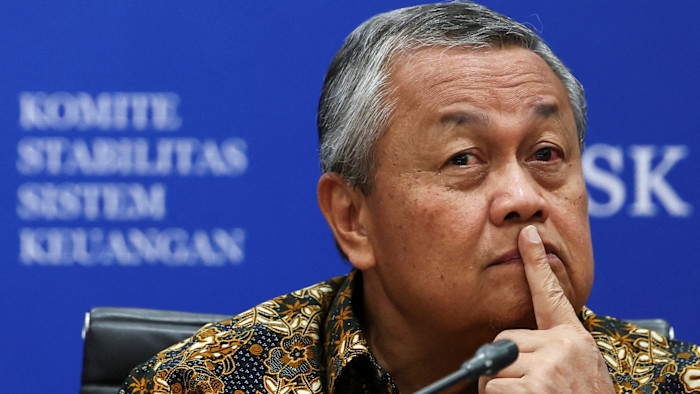
Bank Indonesia Governor Perry Warjiyo resigned on July 27, 2026, citing personal reasons, in a surprise exit that rattled investors and raised fresh questions about the central bank's independence. President Prabowo Subianto accepted the resignation, according to Financial Times and South China Morning Post.
Senior Deputy Governor Destry Damayanti will serve as acting governor during the transition, MarketScreener reported. The sudden leadership change comes as Indonesia battles a weakening rupiah and navigates a fragile economic recovery.
Destry Steps In as Interim Governor Under BI Law
State Secretary Minister Prasetyo Hadi confirmed the resignation and said Destry will temporarily carry all duties and powers of the governor, according to Financial Times. The handover will be executed under the Bank Indonesia Law. Warjiyo's exit was described simply as for personal reasons, with no further details given by officials.
South China Morning Post noted that the move caught markets off guard. Destry's appointment as acting governor is meant to ensure policy continuity while the government runs a formal process to name a permanent successor. That process has not yet begun publicly.
Analysts Fear Political Appointment Could Undermine BI Independence
The resignation has put central bank independence back in the spotlight. Analysts warned that the key question is who follows Warjiyo as permanent governor, according to South China Morning Post. If President Prabowo's deputy, Thomas Djiwandono, gets the role, markets may see it as a political move rather than a technocratic one.
Central bank independence matters because it signals to investors that interest rate decisions are driven by economics, not politics. A politicized appointment could shake confidence in Indonesia's monetary policy at a sensitive time. Analysts said the sustainability of BI's credibility will hinge on that choice.
Rupiah Weakness Adds Pressure to Leadership Transition
Indonesia's currency has been under strain this year. The rupiah briefly hit over 17,600 per dollar in mid-May 2026, one of its weakest levels in recent memory. Officials blamed seasonal dollar demand and said they expected the currency to stabilize in July and August.
To shore up the rupiah, Indonesia launched a seven-point stabilization plan approved by President Prabowo. The plan includes tighter limits on dollar purchases and stronger bond market operations. Bank Indonesia has also stepped up direct foreign exchange purchases and bond market support to cushion the currency through the second half of 2026.
Markets Watch as Indonesia Seeks Policy Continuity
The timing of the resignation adds risk to an already delicate moment. Indonesia is managing currency volatility while trying to attract foreign investment. Any sign that BI's independence is weakening could push investors away. MarketScreener noted that Destry's role as acting governor is designed to prevent a policy vacuum.
For now, the government and BI have tried to project calm. Officials have framed the rupiah's weakness as seasonal and manageable. But with a permanent governor yet to be named, markets will be watching every signal from Jakarta closely in the weeks ahead.
Sentiment
Mostly NegativeNEGATIVENEUTRALPOSITIVE
Publishers
35
Articles
122
Reach
157
A
AnonymousAuthor


