China's Desert Battle
China’s 'Green Great Wall' and straw checkerboards combat desertification, though experts warn the fight continues.
Anonymous
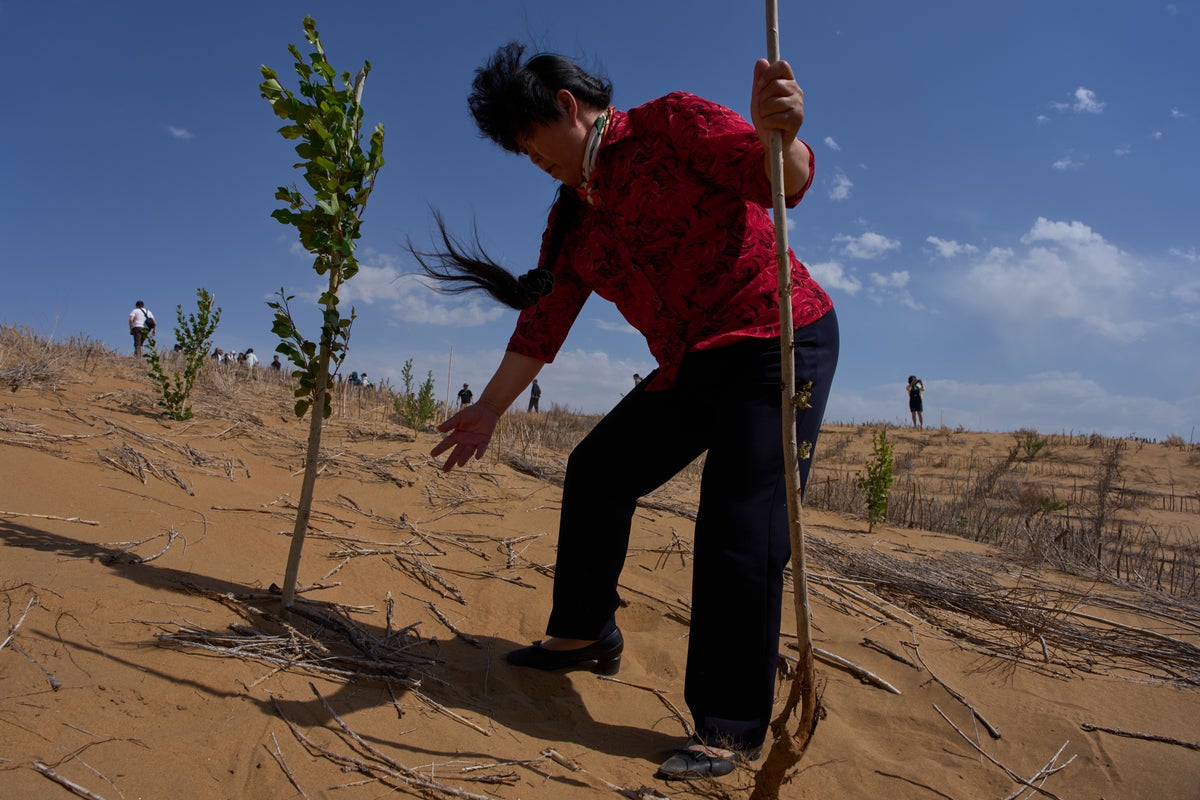
China's so-called 'Green Great Wall' has successfully slowed the spread of its northern deserts, but scientists say the battle is far from won. The program, formally called the Three-North Protective Forest Program, was launched in 1978 and has reshaped millions of acres of barren land using a surprisingly simple tool — bundles of straw pressed into the sand. The Independent reports the effort has been running for nearly half a century and counting.
At the heart of the program is a method called 'straw checkerboards.' Workers press straw into grids on the desert floor to hold the sand in place. Once the sand stops shifting, plants can take root. The technique is low-tech, labor-intensive, and it works — but scientists warn that climate change and water shortages could still undo the gains, according to Boston 25 News.
How Straw Grids Stopped a Moving Desert
The straw checkerboard method is exactly what it sounds like. Workers lay dry straw into square grids — each about one meter wide — directly on the sand. The grid breaks the wind at ground level, stopping sand dunes from drifting. Seeds are then planted inside each square. Over time, the roots bind the sand permanently, according to KIRO 7.
The technique has been used for roughly 50 years across the deserts of northern China, including the vast Kubuqi and Mu Us deserts. Satellite images show large areas that were bare sand a few decades ago are now covered with grass and shrubs. The program is one of the largest ecological restoration projects in human history, WSB-TV reported.
The Green Great Wall's Scale and Decades of Progress
The Three-North Protective Forest Program spans a planned belt of trees and vegetation stretching across northern China — from Xinjiang in the west to Heilongjiang in the east. That is a distance of more than 4,500 kilometers. The goal is to create a living barrier that blocks desert winds and sand from pushing further south toward farmland and cities, according to Dayton Daily News.
Since 1978, China has planted billions of trees under this program. Officials say the rate of desert growth has slowed significantly. Some areas have even seen deserts shrink. The program is widely seen as a model for other countries fighting land degradation, WWLTV noted.
Scientists Flag Water Stress and Climate Risks Ahead
Despite the progress, researchers are raising red flags. Many of the trees planted in the region consume far more water than the dry northern climate can reliably supply. In some areas, trees are already dying because groundwater levels have dropped. Scientists warn that planting the wrong species in the wrong places could backfire, according to The Independent.
Climate change is adding to the pressure. Rising temperatures are making northern China drier and hotter. Droughts are becoming more common. If rainfall keeps declining, even well-established vegetation could die back and expose the sand again. Researchers say the program needs to shift toward drought-resistant native plants rather than fast-growing imported tree species, KIRO 7 reported.
A Global Model With Unfinished Business
China's Green Great Wall has drawn attention from countries across Africa, Central Asia, and the Middle East — all of which face their own desertification crises. The African Union has a similar project called the Great Green Wall, which aims to restore 100 million hectares of land by 2030. China's experience offers lessons in what works and what can go wrong, Boston 25 News noted.
Back in China, officials say the program will continue through at least 2050. But scientists stress that planting more trees is not enough on its own. Managing water use, choosing the right plants, and adapting to a warming climate are all essential. The desert, researchers say, is not beaten yet.
Sentiment
NeutralNEGATIVENEUTRALPOSITIVE
Publishers
6
Articles
6
Reach
6
A
AnonymousAuthor


