Russian Vessel Seized
Norway seizes a Russian research vessel to enforce a multi-billion dollar arbitration award.
Anonymous
Key Points
1
The seizure followed a 24-hour standoff with the Norwegian Coast Guard before enforcement, illustrating a tense on-water operation rather than a routine court action.
2
The Professor Molchanov is owned by the Russian Federation and is used for commercial expedition cruises, including voyages to Svalbard, highlighting its civilian role and how such vessels can become targets in asset enforcement.
3
Naftogaz says enforcement is being coordinated across multiple jurisdictions beyond Norway, specifically naming the United States, France, the United Kingdom and Finland as part of a broader international effort.
4
Russia's foreign ministry characterized the action as piracy, with spokesperson Maria Zakharova arguing that Western maritime law has effectively legalized piracy and accusing the move of undermining international norms.
5
The case sits amid longstanding friction over Svalbard, where a 1920 treaty allows Russia to maintain a settlement and coal mine, a nuance that informs local authorities’ handling of the seizure.
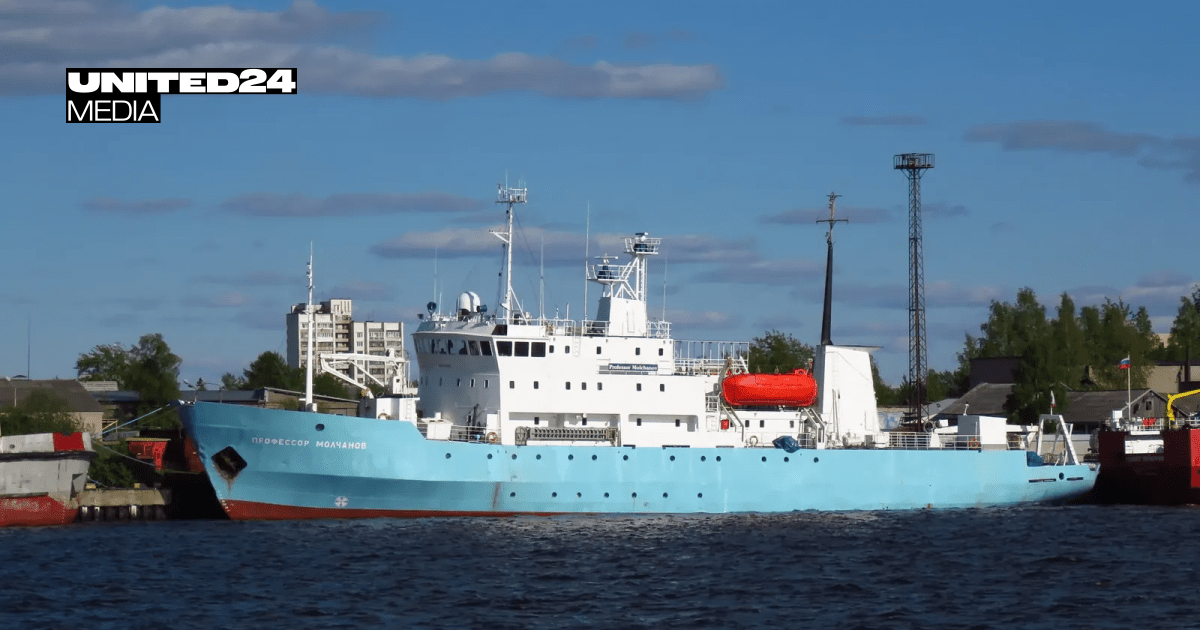
Norway has seized the Russian research vessel Professor Molchanov in the Arctic archipelago of Svalbard to enforce a $4.22 billion arbitration award won by Ukraine's Naftogaz, United24Media reported. The seizure follows Russia's expropriation of Naftogaz assets in Crimea, and marks a dramatic escalation in Western efforts to freeze Russian civilian assets globally.
Russia's Foreign Ministry denounced the move as TASS quoted spokesperson Maria Zakharova calling it "real piracy" and a betrayal of maritime law. The seizure occurred after a 24-hour standoff with the Norwegian Coast Guard, keeping the vessel docked in Barentsburg while Naftogaz pursues payment across multiple jurisdictions including the United States, France, the United Kingdom, and Finland.
The Hague Award and Asset Hunt
Naftogaz won the $4.22 billion award through The Hague arbitration court after Russia seized the Ukrainian company's Crimean assets during the 2014 annexation. The Moscow Times reported that Moscow has refused to pay, forcing Naftogaz to hunt for Russian state assets worldwide to satisfy the judgment.
The seizure of the Professor Molchanov is the first major success in this global enforcement campaign. Naftogaz confirmed it is coordinating with authorities in five countries to locate and freeze additional Russian assets, signaling a long-term strategy to recover the full amount plus interest and legal costs.
Tension Over a Civilian Research Vessel
The Professor Molchanov is a Russian Federation-owned ship used for commercial expedition cruises in the Arctic. Its seizure highlights how civilian vessels can become targets in geopolitical disputes, blurring the line between maritime commerce and state asset enforcement.
The Norwegian court order prohibits the vessel from leaving Barentsburg. WTOP noted that the 24-hour standoff with the Coast Guard was tense, underscoring how enforcement of arbitration awards now involves on-water confrontation rather than quiet legal paperwork.
Russia Accuses West of Legalizing Piracy
Moscow's Foreign Ministry argues that Western nations have effectively rewritten maritime law to permit asset seizures. Zakharova claimed the move undermines international norms and sets a dangerous precedent for how powerful nations treat weaker states' property at sea.
Norway maintains it is simply enforcing a domestic court decision and is not a party to the underlying arbitration dispute. The seizure nonetheless signals growing willingness by Arctic states to use their jurisdiction over civilian Russian vessels to punish Moscow for unpaid debts to Ukraine.
Svalbard's Unique Role in the Dispute
Barentsburg sits in Svalbard, an Arctic archipelago governed by a 1920 treaty that grants Russia rights to maintain a settlement and coal mine. This complex legal status adds layers to the seizure, forcing local Norwegian authorities to navigate both sovereignty and Russia's historical presence in the region.
The Professor Molchanov's location in Svalbard made it accessible to Norwegian enforcement but also politically sensitive. The seizure reflects broader Arctic tensions over Russian civilian and military activities near critical Western infrastructure and shipping routes.
Sentiment
Mostly NegativeNEGATIVENEUTRALPOSITIVE
Publishers
11
Articles
15
Reach
26
A
AnonymousAuthor


