Nepal Flash Floods
Glacier avalanche triggers devastating flash floods in Nepal leaving hundreds missing.
Anonymous
Key Points
1
384 tourists were unaccounted for, with 291 of them from nations including India, the United States, the United Kingdom and Malaysia.
2
The Nepali government spokesperson Sasmit Pokharel said, 'We have asked both India and China to help us with the rescue efforts.'
3
Last August, a Tibetan glacial lake overflowed in the region, killing nine people and damaging a bridge linking Nepal and Tibet, underscoring recurring risk in the area.
4
The Lhende Khola River, a Bhotekoshi tributary, flooded at peak levels and has flooded twice in 14 months, with officials saying this surge was caused by an ice-rock avalanche from a glacier on the Nepal side that blocked the river.
5
Rescue teams from India and China have been deployed to the worst-affected Rasuwa district.
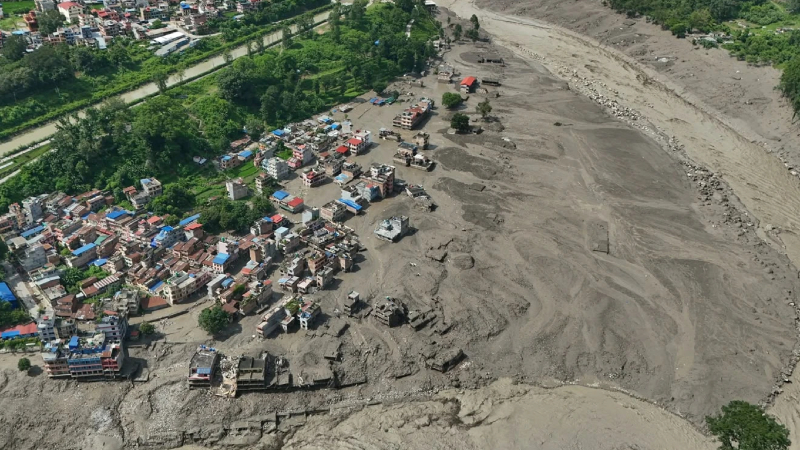
A glacier-ice and rock avalanche triggered devastating flash floods in Nepal, killing at least eight people and leaving 384 tourists unaccounted for near the Nepal-Tibet border. Yahoo News reported that hundreds of tourists from the United States, United Kingdom, India, and Malaysia remain missing after the Bhotekoshi River and its tributaries surged through multiple districts on Wednesday.
The worst damage occurred in Rasuwa district, where villages, roads, and hydropower facilities were destroyed. Bonik Barta reported that authorities have issued warnings to stay away from riverbanks as rescue teams from India and China deploy to the affected areas.
Glacier Avalanche Blocked River and Unleashed Floodwaters
Climate specialists from the International Centre for Integrated Mountain Development identified a glacier avalanche as the cause. Bonik Barta stated that an ice-rock avalanche from a glacier on the Nepal side blocked the Lhende Khola River, a Bhotekoshi tributary, causing catastrophic flooding.
The Lhende Khola experienced the most severe flooding and has surged twice in just 14 months. This flooding pattern reflects heightened risks in the warming Himalaya, where glaciers are destabilizing at accelerating rates due to rising temperatures.
International Rescue Efforts Mobilize Across Borders
Nepal's government has requested urgent help from both India and China. Government spokesperson Sasmit Pokharel said, "We have asked both India and China to help us with the rescue efforts." Rescue teams from both nations have already been deployed to Rasuwa district, the worst-affected area.
Of the 384 missing tourists, 291 are from India, the United States, the United Kingdom, and Malaysia, Yahoo News confirmed. The coordinated international response marks one of Nepal's largest cross-border rescue operations in recent years.
Recurring Glacial Disasters in the High Himalaya
This disaster echoes a similar event last August in the same region. A Tibetan glacial lake overflowed due to rising temperatures, killing nine people and damaging a bridge linking Nepal and Tibet. Richmond News noted that the August flood underscores the growing danger from climate-driven glacial hazards.
The repeated flooding in just 14 months signals an urgent crisis. Warming temperatures are destabilizing glaciers across the Himalaya, creating unpredictable and deadly avalanches and outburst floods that threaten communities and tourists in the region.
Sentiment
Mostly NegativeNEGATIVENEUTRALPOSITIVE
Publishers
17
Articles
80
Reach
97
Topics
A
AnonymousAuthor


