Election Campaign Financial Filings
BJP reports spending Rs 286.99 crore in West Bengal alone, surpassing Congress's total across five states.
Anonymous

Key Points
1
The BJP’s West Bengal filing itemised Rs 58.80 crore in lump-sum payments to candidates, Rs 6.09 crore for candidate-attributable public meetings and processions, and Rs 2.50 crore to publish candidates’ criminal antecedents.
2
The BJP’s central headquarters reported Rs 51.50 crore in travel expenses for star campaigners in West Bengal.
3
At the end of the election cycle, the BJP reported a closing balance of Rs 7,689.06 crore in bank balances and cash in hand, after receiving Rs 1,494 crore during the election period.
4
In West Bengal, Congress reported spending Rs 42.08 crore: Rs 12.96 crore on general campaigning and Rs 29.12 crore on candidates and related expenses. The CPI(M)’s state unit reported Rs 8.23 crore in expenditure.
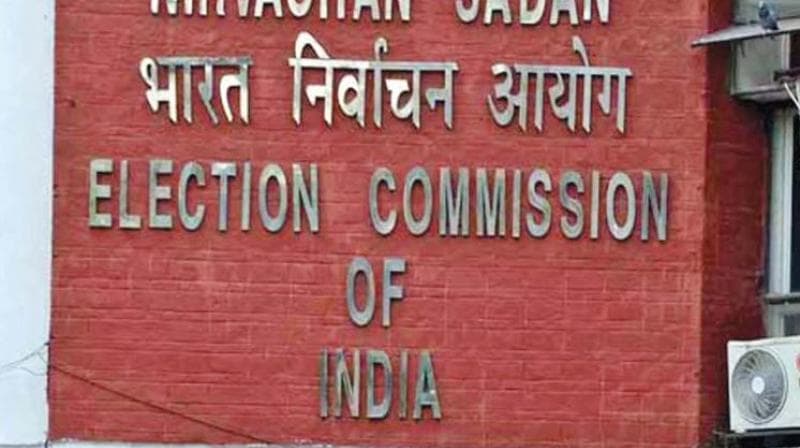
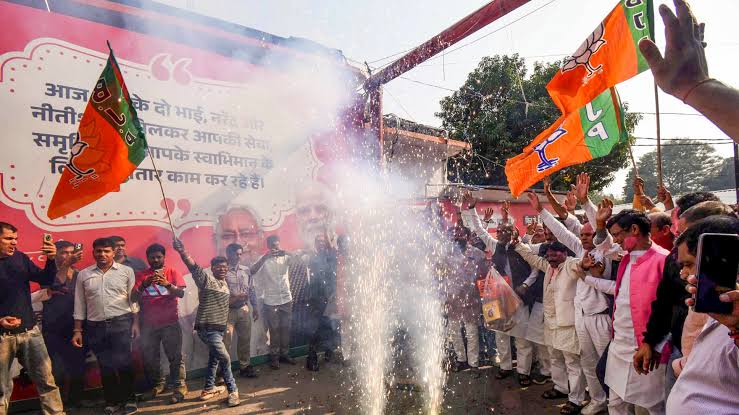
The BJP spent Rs 529.4 crore across five 2026 Assembly elections, with West Bengal alone consuming Rs 286.99 crore—nearly double the Congress party's total Rs 248.55 crore budget for all five states combined, according to Election Commission filings released in September. The party's dominant spending in Bengal translated into a landslide victory: 207 of 293 seats, establishing the BJP's first state government in Kolkata.
In West Bengal, the BJP itemized Rs 217.16 crore for general campaigning and Rs 69.83 crore for candidate payments and media advertising. Times of India reported that party central headquarters alone disbursed Rs 51.50 crore on star-campaigner travel in the state. The spending disparity underscores a widening financial gulf: the BJP closed the election cycle with Rs 7,689.06 crore in bank reserves.
How BJP's Bengal Spending Dwarfed All Rivals
The BJP's Rs 286.99 crore West Bengal outlay exceeded the Congress party's entire five-state total by Rs 38.44 crore. Madhyama Online found that BJP spending in Bengal alone surpassed Congress's combined budget across West Bengal, Assam, Kerala, Tamil Nadu, and Puducherry. Congress reported just Rs 42.08 crore in West Bengal—32% less than the BJP—while the Trinamool Congress, ousted after 15 years in power, had not publicly released its expenditure filings by publication date.
Outside Bengal, the BJP spent Rs 96.27 crore in Assam and won 82 seats, retaining state power. In Kerala, where the BJP spent Rs 82.67 crore, the Congress-led alliance won 63 seats and displaced the Left government, despite Congress spending only Rs 105.34 crore there. Tamil Nadu saw the DMK report Rs 193.70 crore against the BJP's Rs 51.56 crore, illustrating that higher spending does not guarantee electoral success.
Detailed Breakdown of BJP's West Bengal Campaign Costs
Within West Bengal, the BJP's Rs 286.99 crore split into granular categories. The party allocated Rs 58.80 crore in lump-sum direct payments to candidates. Media publicity consumed Rs 88.48 crore. Public meetings and processions cost Rs 6.09 crore. The party also spent Rs 2.50 crore to publish candidates' criminal antecedents as mandated by law.
Millennium Post revealed that media reports alleged the BJP made Rs 18 crore in payments to exit-poll agency CNX Media, alongside significant disbursements to content creators and YouTubers. Star-campaigner travel represented the single largest expense category: Rs 51.50 crore from party headquarters. These figures illustrate the scope of the BJP's centralized resource mobilization in a single state contest.
Congress's Tighter Budgets Across Five States
The Congress allocated resources more thinly across multiple contests. In West Bengal, the party reported Rs 42.08 crore: just Rs 12.96 crore on general campaigning and Rs 29.12 crore for candidates and related expenses. The party won only 2 seats. In Kerala, Congress spent Rs 105.34 crore—its largest state budget—split between Rs 71.30 crore for general campaigning and Rs 34.05 crore for candidate allocations, yielding 63 seats in alliance victory.
Across all five jurisdictions, Congress's total Rs 248.55 crore expenditure reflected a resource-constrained strategy. At cycle's end, the party's combined bank balances and reserves stood at approximately Rs 103 crore—a sharp contrast to the BJP's Rs 7,689.06 crore. During the election period, the BJP raised Rs 1,494 crore; the Congress's fundraising during the same window was not publicly itemized in comparable detail.
Spending Gaps Raise Questions on Electoral Equity
India's election law caps individual candidate spending but imposes no legal ceiling on party-level campaign expenditure. This asymmetry allows national parties with deep reserves to concentrate massive resources in strategic contests. The Print noted that the BJP's financial dominance reflects both electoral bond redemptions and nationwide fundraising superiority, strategies unavailable to cash-strapped rivals.
Political commentators argue the spending disparity creates an uneven playing field. Opposition advocates contend that uncapped party expenditures undermine democratic competition. Yet supporters counter that the BJP's heavy investment in West Bengal—translating into a 207-seat supermajority—demonstrates expenditure efficiency and strong voter resonance. The filings offer no mechanism to gauge spending's actual electoral impact.
Sentiment
Mostly NegativeNEGATIVENEUTRALPOSITIVE
Publishers
27
Articles
27
Reach
54
Topics
A
AnonymousAuthor