Rajasthan Urban Polls
BJP secures statewide advantage in Rajasthan urban local body election results.
Anonymous
Key Points
1
The BJP’s majority in Jaipur was relatively narrow: it won 78 of the 146 declared wards, compared with 53 for Congress and 15 for Independents, in the 150-member corporation.
2
The results exposed notable vulnerabilities for the BJP in the home turf of Chief Minister Bhajan Lal Sharma: Independents won or led in 36 of Bharatpur’s 65 wards, while the BJP had 20 and Congress seven.
3
The State Election Commission reported overall turnout of 70.01%, with 61.35 lakh of 87.63 lakh eligible voters casting ballots; turnout in the first phase, covering 162 urban local bodies, was higher at 76.41%.
4
The election process was not entirely complete: a repoll was scheduled at one polling booth in Jaipur for September 11, followed by the election of mayors and chairpersons on September 21 and deputy office-bearers on September 22.
5
The BJP’s performance came despite recent controversies involving the NEET paper-leak issue, protests by the Karni Sena over UGC regulations and criticism of the state’s government schools; the results suggested those issues had limited impact on its urban electoral prospects.
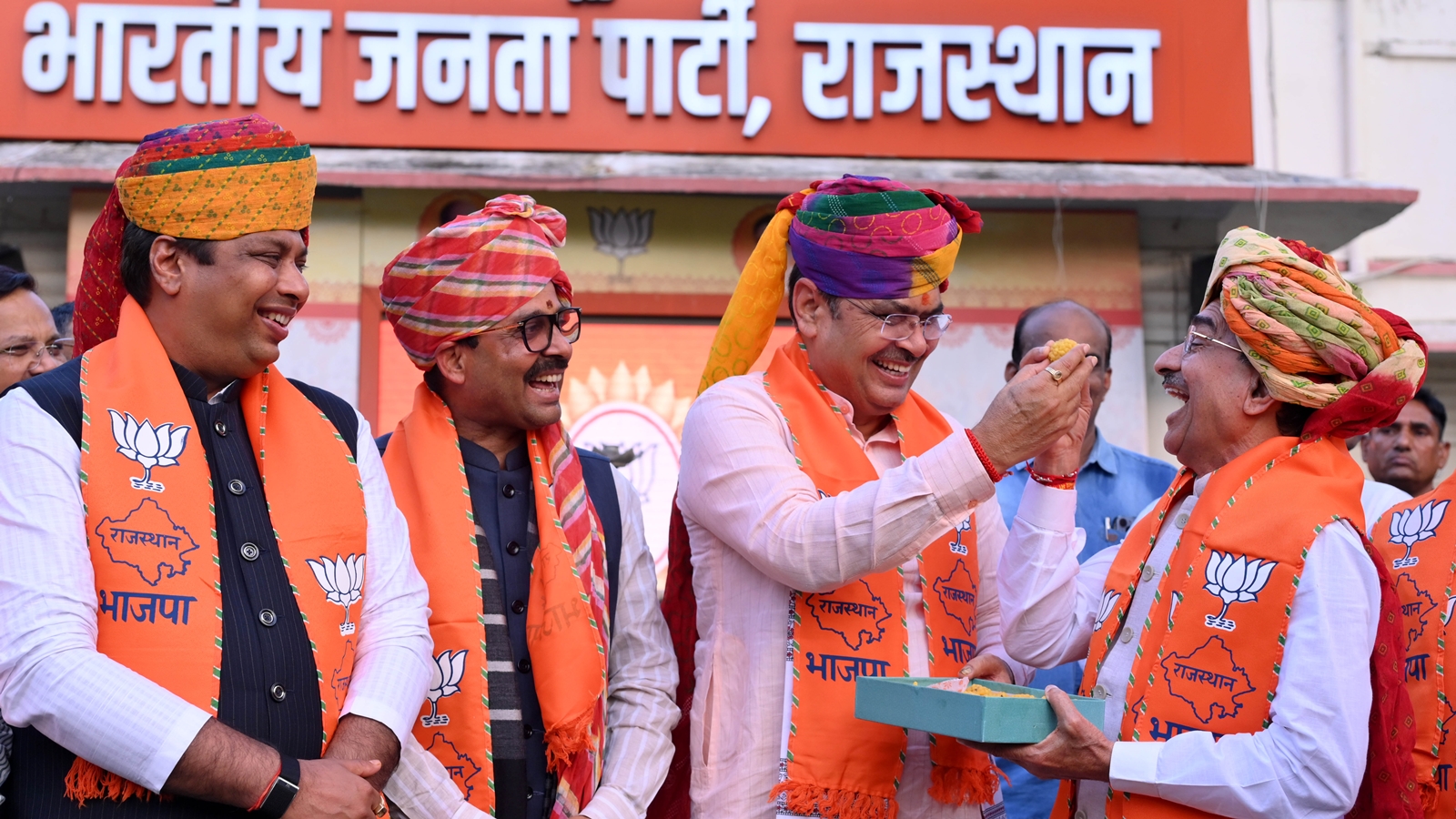
The BJP won about 4,171 wards across Rajasthan's urban elections, cementing its control of the state's cities ahead of the 2028 Assembly vote. Indian Express reported that Congress secured roughly 3,600 wards among more than 10,200 declared seats, while Independents won over 2,270—enough to become kingmakers in several municipal bodies. The results give Chief Minister Bhajan Lal Sharma a decisive midterm victory, though narrow majorities in key cities and strong Independent performances reveal cracks in the BJP's urban dominance.
Voter turnout reached 70%, with 61.35 lakh of 87.63 lakh eligible voters casting ballots across two phases in September 2026. India Today noted the BJP won majorities in Jaipur, Udaipur, Bhilwara, and Kota, while Congress held ground in Bikaner and made gains in Ajmer and Pali. Yet the outcome exposed vulnerabilities: the BJP fell short of a clean sweep, and Independents emerged as pivotal swing voters in critical municipal bodies.
Jaipur Majority Shows BJP's Narrow Urban Edge
In Rajasthan's largest city, the BJP's grip proved tighter but fragile. Free Press Journal reported the party won 78 of 146 declared wards in the 150-member Jaipur Municipal Corporation, compared with 53 for Congress and 15 for Independents. The margin signals the BJP commands the city, yet depends on a slender majority that could crumble if even a handful of councilors defect.
Independents Upend Results in Chief Minister's Stronghold
Bharatpur, Chief Minister Sharma's home turf, delivered a stunning rebuke. Independents won or led in 36 of 65 wards—more than half—while the BJP managed only 20 and Congress just 7. India Today emphasized this outcome exposed notable vulnerabilities for the ruling party in what should have been its safest ground, forcing both major parties to negotiate with Independent candidates to secure mayoral positions.
Congress Holds Ground but Fails to Reverse Losses
Congress performed better than expected in select cities but did not regain ground lost in the 2023 Assembly election. The party won Bikaner outright and made strong showings in Ajmer and Pali, Indian Express reported, yet fell 500-plus wards short of the BJP statewide. Party leaders blamed ward redrawing for inflating BJP numbers, arguing that narrow vote-share gaps with Congress were masked by electoral boundaries.
Governance Scandals Did Not Dent BJP's Urban Support
The BJP swept urban ballots despite recent turmoil: NEET paper leaks, Karni Sena protests over UGC rules, and public anger over crumbling state schools. India Today noted the results suggested those controversies had limited impact on urban voter behavior. The ruling party framed the outcome as proof that voters rejected "negative politics" and backed grassroots development, while Prime Minister Modi called it a "triumph of truth over lies."
AAP Emerges as Third Force in One Municipal Council
While the BJP and Congress dominated, smaller parties carved out localized strongholds. The Aam Aadmi Party secured a majority in Baran Municipal Council, winning 31 of 60 seats—a signal of third-party expansion in Rajasthan's urban landscape. The CPI(M) also made gains in select wards, suggesting voters in pockets of the state are open to alternatives beyond the two dominant parties.
Sentiment
Mostly PositiveNEGATIVENEUTRALPOSITIVE
Publishers
89
Articles
85
Reach
174
A
AnonymousAuthor