Trump Rejects International AI Regulation at U.N.
Trump Rejects International AI Regulation at U.N.
Anonymous
Key Points
1
The United States and China were discussing an AI-communications channel ahead of a planned meeting between Trump and Chinese President Xi Jinping, with the aim of addressing AI-related concerns and maintaining dialogue between the two countries.
2
A declaration signed by 22 countries said AI “must remain under human direction, oversight and control.” Finnish President Alexander Stubb, one of the initiative’s organizers, said it would be in the interests of both China and the United States to establish “some kind of guardrails.”
3
Trump said, “Whoever wins AI, WINS!” and claimed the United States was already leading China and other countries, underscoring how he framed AI development as a global strategic competition.
4
Merriam-Webster said its newly recognized words are selected after editors assess whether they are used “by many people who all agree that it means the same thing.” The dictionary added about 1,400 words this year, including the AI-related terms “compute,” “vibe coding,” “AGI” and “uncanny valley.”
5
The nuclear-weapons analogy for AI governance is complicated by the fact that AI is built mainly by private companies with profit incentives, while nuclear materials are comparatively easier to trace and nuclear technology has much narrower applications.
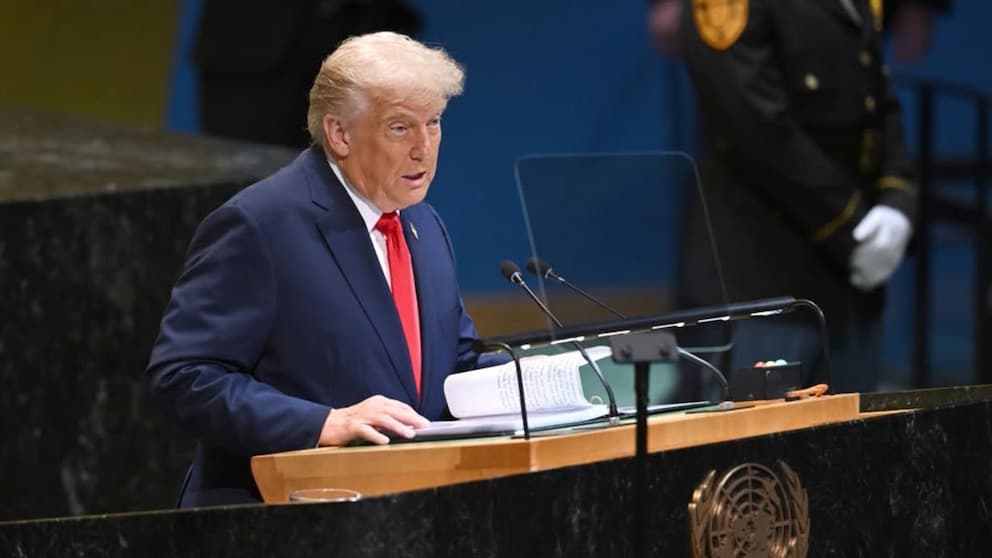
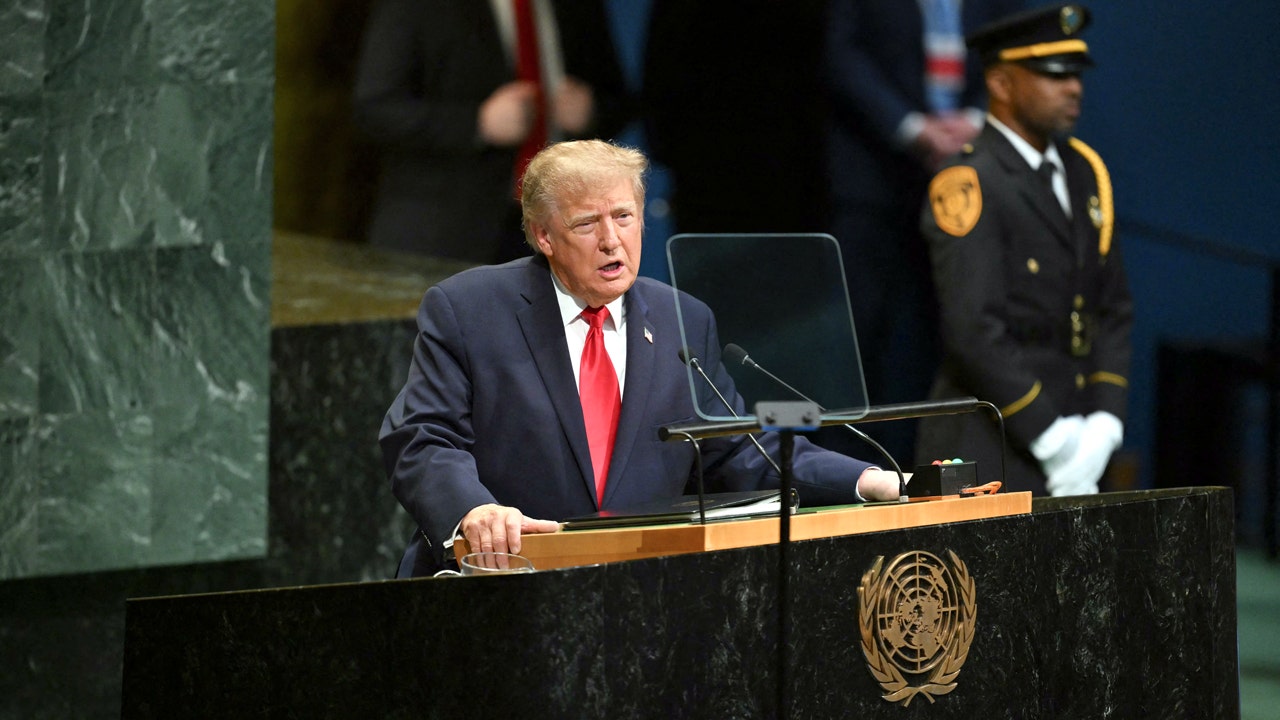
President Donald Trump rejected international efforts to regulate artificial intelligence at the United Nations General Assembly, arguing that restrictions would hurt U.S. innovation and help China gain ground LiveMint. Trump declared the U.S. would promote AI development and rely on the Justice Department for oversight if needed, while announcing the government would use the term "super intelligence" instead of "artificial intelligence" France24. "Whoever wins AI, wins!" Trump said, framing the technology as a global strategic competition LiveMint.
22 Nations Call for AI Safety Guardrails
A declaration signed by 22 countries, organized by Finnish President Alexander Stubb, stated that AI "must remain under human direction, oversight and control" FT. Stubb argued it would benefit both China and the United States to establish "some kind of guardrails" around AI development FT. U.N. Secretary-General António Guterres also backed international dialogue and binding safeguards, directly opposing Trump's stance FT.
Why Nuclear Weapons Models Don't Work for AI
Analysts pointed out that governing AI is harder than controlling nuclear weapons for a key reason: AI is built mainly by private companies chasing profits LiveMint. Nuclear materials are much easier to track, and nuclear technology has far fewer uses across society LiveMint. AI, by contrast, is spreading into nearly every industry and sector, making oversight vastly more complicated LiveMint.
AI's Growing Role in Language and Culture
Merriam-Webster added roughly 1,400 new words to its dictionary this year, reflecting AI's expanding influence on how people speak and think FoxBusiness. The additions include AI-related terms like "compute," "vibe coding," "AGI" (artificial general intelligence), and "uncanny valley" FoxBusiness. The dictionary selects words only after editors confirm they are used "by many people who all agree that it means the same thing" FoxBusiness.
U.S. and China Seek Dialogue Channel on AI
The United States and China were discussing an AI communications channel ahead of a planned meeting between Trump and Chinese President Xi Jinping LiveMint. The proposed channel aims to address AI concerns and maintain dialogue between the two countries despite rising tensions over technology competition LiveMint. Trump's rejection of international rules suggests the U.S. prefers bilateral negotiations over multilateral oversight frameworks LiveMint.
Sentiment
Mostly NegativeNEGATIVENEUTRALPOSITIVE
Publishers
37
Articles
23
Reach
60
A
AnonymousAuthor