Bahrain Base Damaged
Iranian Attacks Severely Damage U.S. Naval Base in Bahrain and Strain Defense Inventories
Anonymous
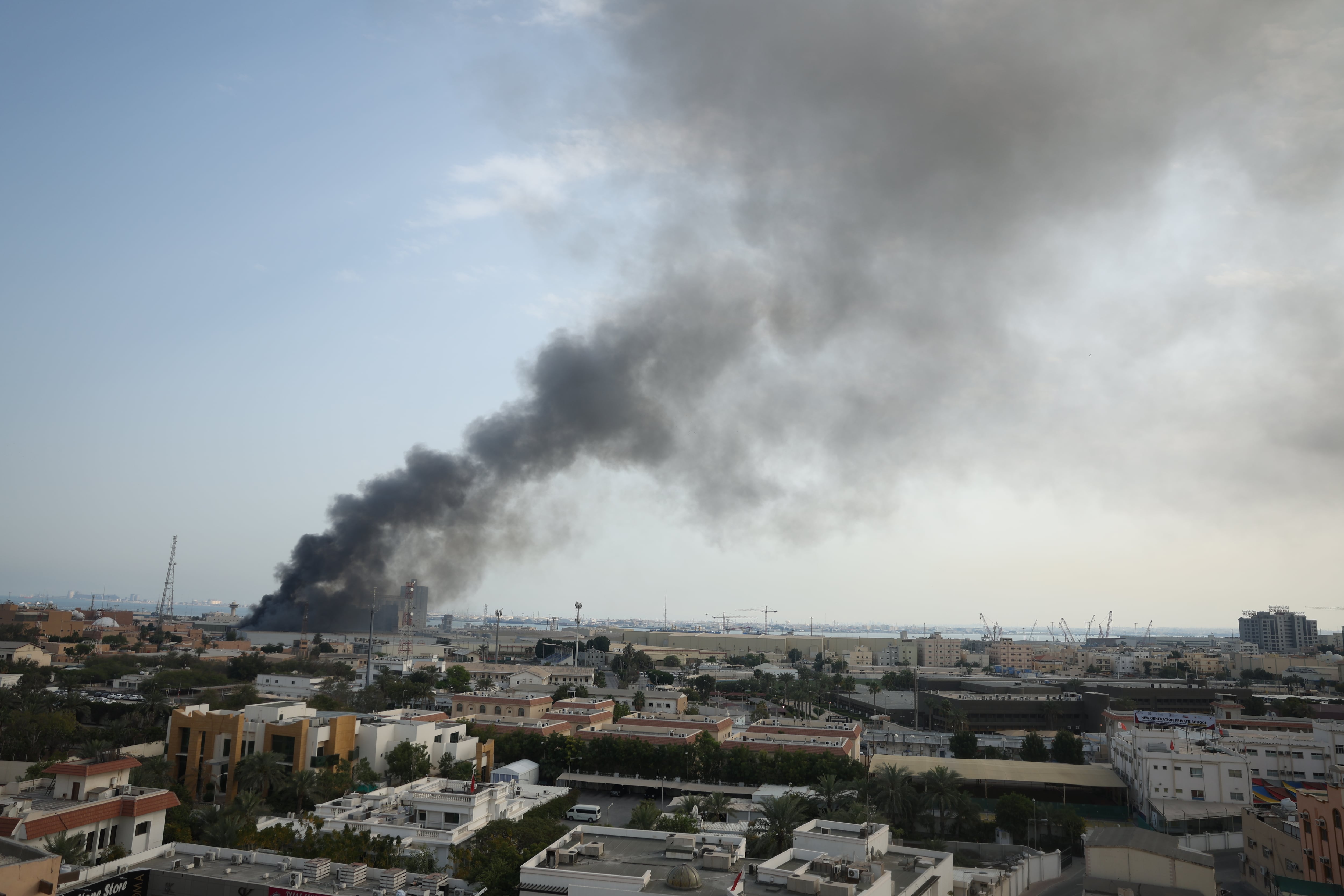
Key Points
1
The attacks on Naval Support Activity Bahrain occurred repeatedly between February and June, after U.S. and Israeli forces launched strikes against Iran on Feb. 28.
2
The USS Abraham Lincoln made its first port stop in roughly nine months only after reaching Thailand, underscoring the operational consequences of the damage at Bahrain.
3
The wider conflict had already caused substantial U.S. military losses: a Congressional Research Service report said 42 U.S. military aircraft had been lost or damaged, while 18 U.S. service members had been killed and more than 800 injured since the war began in February.
4
The Patriot-missile expenditure was part of a sharp depletion in U.S. air-defense stocks: the Center for Strategic and International Studies estimated that about 65% of the inventory had been used between February and July, leaving fewer than 850 interceptors compared with 2,330 before the war.
5
The Jordan strike followed U.S. attacks on five Iranian crude-oil carriers, which Washington said came in response to two Iranian ballistic-missile attacks on a U.S. Navy warship over the preceding two days.
Iranian attacks have severely damaged Naval Support Activity Bahrain, the U.S. Navy's Fifth Fleet headquarters and the Pentagon's main Middle East logistics hub, according to Acting Navy Secretary Hung Cao. The strikes hit the command center, at least a dozen buildings, and two satellite communications towers. No personnel died, but the USS Abraham Lincoln lost its primary port and had to sail nine months before reaching Thailand for repairs.
The damage underscores a widening conflict that has cost the U.S. military heavily. Since fighting began in February, 42 aircraft have been lost or damaged, 18 service members killed, and over 800 wounded, according to the Congressional Research Service. The strikes also exposed a critical shortage: the U.S. fired roughly 30 Patriot missiles in one attack on Jordan, while using about 65% of its entire prewar air-defense inventory between February and July.
Iran's Four-Month Campaign Against U.S. Bases
Iranian forces launched repeated strikes on Naval Support Activity Bahrain between February and June, after the U.S. and Israel attacked Iran on February 28. Each wave targeted the command headquarters, support buildings, and communications systems that coordinate Fifth Fleet operations across the Persian Gulf and Arabian Sea. The campaign forced the Navy to assess whether repairing the base costs less than replacing it entirely.
Acting Navy Secretary Hung Cao said U.S. personnel would not return soon, not even to collect personal belongings. The USS Abraham Lincoln, a nuclear-powered carrier, went without a usable port for nine months—a severe operational constraint that forced it to sail far from its patrol zone just to resupply and repair.
Aircraft Losses and Air Defense Depletion Mount
An Iranian strike on Jordan's Muwaffaq Salti Air Base damaged one A-10 attack plane and approximately eight F-15 fighters. U.S. air defenses fired roughly 30 Patriot interceptors to defend the base, but the scale of the response revealed a deeper problem: scarce missiles and dwindling stockpiles.
The Center for Strategic and International Studies reported that about 65% of the U.S. Patriot inventory was used between February and July. Before the war, the U.S. had roughly 2,330 interceptors. By July, fewer than 850 remained. The depletion forces commanders to choose: defend against today's attack or save missiles for tomorrow's threat.
Escalating Tit-for-Tat Strikes Over Shipping and Ships
The Jordan strike followed U.S. attacks on five Iranian crude-oil carriers. Washington said the U.S. Navy strikes came as retaliation for two Iranian ballistic-missile attacks on an American warship over the preceding two days. The cycle of attack and counter-attack shows no signs of slowing.
The targeting pattern reveals Iran's strategy: strike a network of U.S. assets—headquarters in Bahrain, aircraft in Jordan, warships, and tankers—to impose costs faster than the Pentagon can absorb them. Even missiles that are intercepted and planes that return to service consume resources and delay operations, making U.S. regional power projection slower and more expensive.
Sentiment
Mostly NegativeNEGATIVENEUTRALPOSITIVE
Publishers
23
Articles
51
Reach
74
A
AnonymousAuthor


