Europe's Gallium Independence
Metlen signs long-term deal for Greek gallium production, boosting Europe's critical raw materials supply
Anonymous
Key Points
1
The European Commission identified 47 strategic projects to boost EU production of critical raw materials, including in Greece, underscoring EU-level prioritization of METLEN's gallium project under the Critical Raw Materials Act.
2
METLEN is the first company in Europe to establish integrated gallium production and the first to secure a commercial agreement for European-produced gallium, placing Greece at the forefront of a new strategic industrial value chain.
3
Evangelos Mytilineos, METLEN's Executive Chairman, stated that the company is pioneering a completely new industrial chapter for Greece and Europe, rooted in in-house R&D at Aluminium of Greece and the M Metals unit.
4
China’s clampdown on critical minerals has intensified Western efforts to secure domestic supplies of gallium, a shift underscored by METLEN’s project as part of Europe’s push to diversify away from China-controlled sources.
Metlen Energy & Metals has signed a long-term deal to supply roughly 25% of its planned Greek gallium output to a leading US technology company, according to Mining Technology and Yahoo Finance. The agreement is the first major commercial gallium supply deal between a European producer and a US buyer — a milestone that underscores how urgently the West wants to break free from Chinese supply dominance.
Metlen plans to begin production in 2027, scaling up to 50 metric tons per year by 2028. The company says that output level could meet total EU demand for gallium. Financial terms of the deal were not disclosed.
Greece Becomes Europe's First Gallium Producer
Metlen is the first company in Europe to build integrated gallium production — from raw material to refined metal — all under one roof. The effort grew out of years of in-house research at the company's Aluminium of Greece facility and its M Metals unit. Executive Chairman Evangelos Mytilineos called it "pioneering a completely new industrial chapter for Greece and Europe."
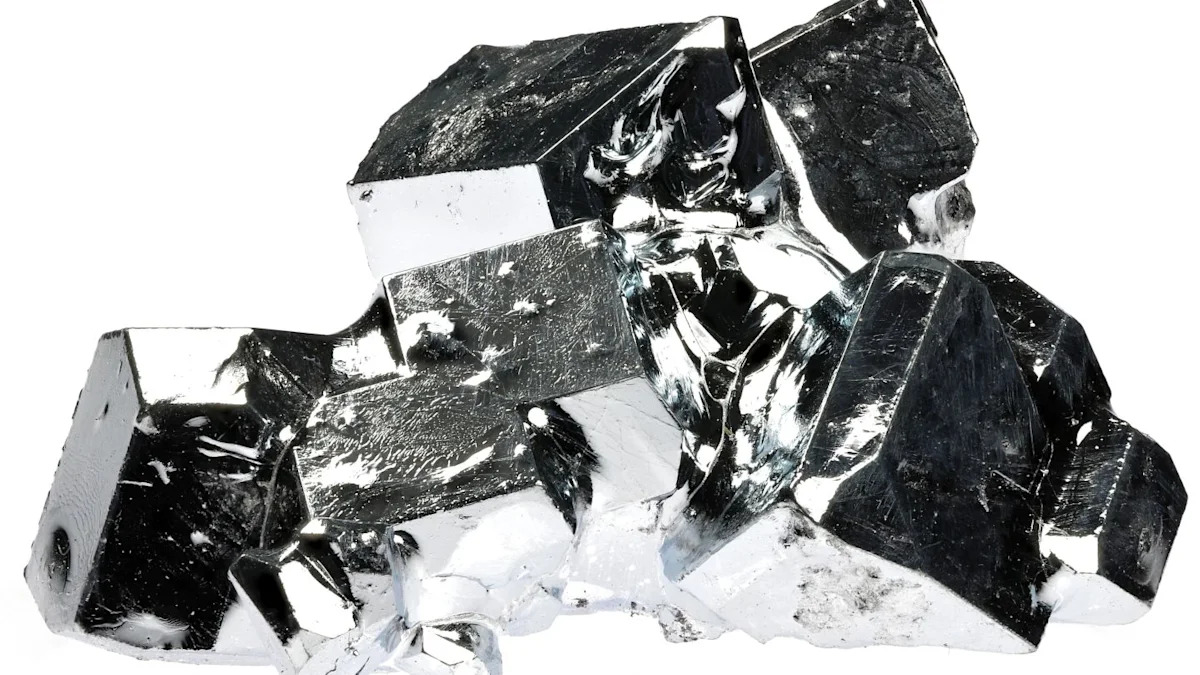
Gallium is a soft, silvery metal recovered as a byproduct of aluminum production. It is a key ingredient in semiconductors used for AI chips, telecom equipment, and defense systems. Greece's bauxite deposits — the raw material for aluminum — give Metlen a natural starting point for gallium output, according to Discovery Alert.
China's Export Curbs Pushed the West to Act
China controls roughly 80% of the world's gallium supply. In 2023, Beijing imposed export restrictions on the metal, sending alarm signals through Western governments and chipmakers. That move accelerated Europe's push to build its own supply chain, according to Discovery Alert.
Metlen's project sits squarely in that push. The European Commission designated it a Strategic Project under the Critical Raw Materials Act — one of 47 such projects chosen across the EU to reduce dependence on foreign-controlled sources. The Act is Europe's main policy tool for securing supply of minerals critical to clean energy, AI, and defense.
A 25% Slice Signals Serious US Demand
The new deal covers about 25% of Metlen's planned annual output. That means the unnamed US tech company is set to receive roughly 12 to 13 metric tons of gallium per year once full production is reached in 2028. MarketScreener reported Metlen called the deal a "major milestone" for the company.
The identity of the US buyer has not been revealed. But the sheer scale of the commitment — a long-term contract before the plant is even built — shows how serious tech firms are about locking in secure, non-Chinese gallium supplies for their semiconductor and chip operations.
What Comes Next for Europe's Gallium Ambitions
Metlen's project is set to ramp up in two stages. Production kicks off in 2027, then climbs to the full 50 metric tons per year target in 2028. The company says that level is enough to cover all EU demand. With 75% of output still uncommitted, more supply deals are likely to follow, according to Mining Technology.
The broader stakes go beyond one company. Gallium is essential for the chips that power 5G networks, military radar, and AI data centers. Europe has struggled for years to secure its own supply of such materials. Metlen's deal shows that domestic production — not just policy — may finally be catching up with that ambition.
Sentiment
Mostly PositiveNEGATIVENEUTRALPOSITIVE
Publishers
11
Articles
36
Reach
47
A
AnonymousAuthor


