Psychedelic Pop Artist Peter Max Dies at 88
Psychedelic Pop Artist Peter Max Dies at 88
Anonymous
Key Points
1
For the 1994 World Cup poster, Max depicted a scissor-kicking soccer player in outer space alongside an American flag containing a heart. He said the heart was meant to represent Americans and that the space imagery reflected the approaching year 2000.
2
Max described his artistic philosophy as deliberately optimistic: “I don’t discuss in my paintings negative things, I don’t dwell on it in my mind and don’t dwell on it in my canvasses.”
3
His commitment to animal welfare was rooted in personal experience: Max said he became an animal activist after leaving his cat behind in Shanghai, recalling, “I cried for hours and hours.” He later became vegetarian and then vegan.
4
In his later years, Max lived with advanced dementia and had not been seen publicly for many years. His daughter, Libra Max, also sought to overturn a court-appointed guardianship, alleging that it had depleted his finances and isolated him; her brother, Adam Max, supported the guardian.
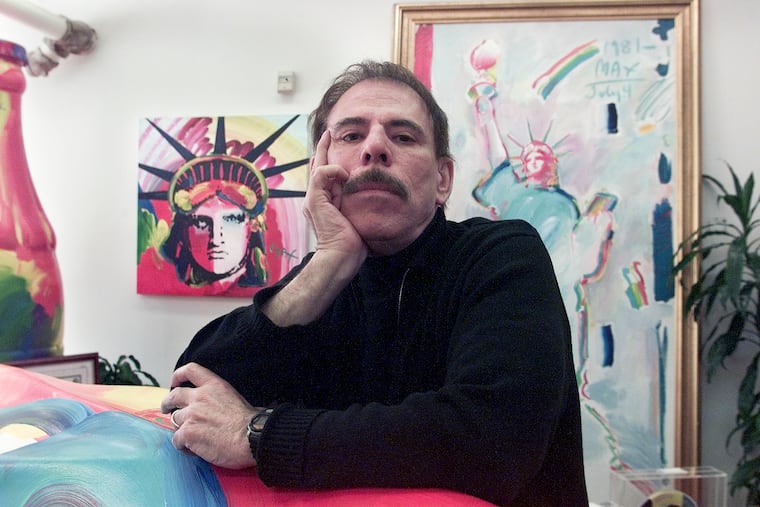
Peter Max, the psychedelic pop artist whose vibrant designs defined 1960s optimism, died Monday, September 14, at age 88. FarOut Magazine reported Max had battled Alzheimer's disease in his final years. His son Adam confirmed the death without disclosing the specific cause. Max's bold, colorful work—featuring space imagery, rainbows, and the Statue of Liberty—appeared on Olympic posters, Super Bowl promotions, postage stamps, and even a Boeing 777 aircraft.
Born Peter Max Finkelstein in Berlin in 1937, he fled Nazi Germany as an infant and lived in Shanghai, Tibet, Israel, and Paris before settling in New York. The Inquirer noted his work sold millions of dollars and epitomized the 'flower power' movement. Max also created portraits of U.S. presidents, Nelson Mandela, and Taylor Swift, and was a fierce animal-rights advocate who became vegan after leaving his cat behind in Shanghai.
A Career Spanning Five Decades
Max's artistic reach was extraordinary. He designed the official poster for the 1994 World Cup, depicting a scissor-kicking soccer player in outer space with an American flag containing a heart. He explained the heart represented Americans, while the space imagery reflected the approaching year 2000. His work also graced the Olympics, the Super Bowl, the World Series, and major cruise ships, making him one of the most visible artists of the modern era.
His artistic philosophy centered on deliberate optimism. Max said, "I don't discuss in my paintings negative things, I don't dwell on it in my mind and don't dwell on it in my canvasses." This approach aligned perfectly with 1960s counterculture ideals. WOKV reported that his signature Day-Glo flowers, butterflies, rainbows, stars, and planets became instantly recognizable symbols of the era.
From Shanghai Loss to Animal Advocacy
Max's passion for animal welfare stemmed from a childhood trauma. He left his cat behind in Shanghai and recalled, "I cried for hours and hours." This experience transformed him into a lifelong activist. He later became vegetarian, then vegan, and worked to secure sanctuary for a runaway slaughterhouse cow. His animal-protection artwork benefited numerous conservation and welfare organizations throughout his life.
Later Years Marked by Dementia and Legal Disputes
In his final years, Max lived with advanced dementia and largely withdrew from public life. The Sun reported he had not been seen publicly for many years. His daughter Libra Max sought to overturn a court-appointed guardianship, alleging it depleted his finances and isolated him from family. His son Adam supported the guardian's role, creating a public family divide during Max's declining health.
Sentiment
Mostly PositiveNEGATIVENEUTRALPOSITIVE
Publishers
27
Articles
570
Reach
597
A
AnonymousAuthor


