Exoplanet Radio Emissions Detected
Astronomers Detect Repeating Radio Bursts From Distant Exoplanet Beta Pictoris b
Anonymous
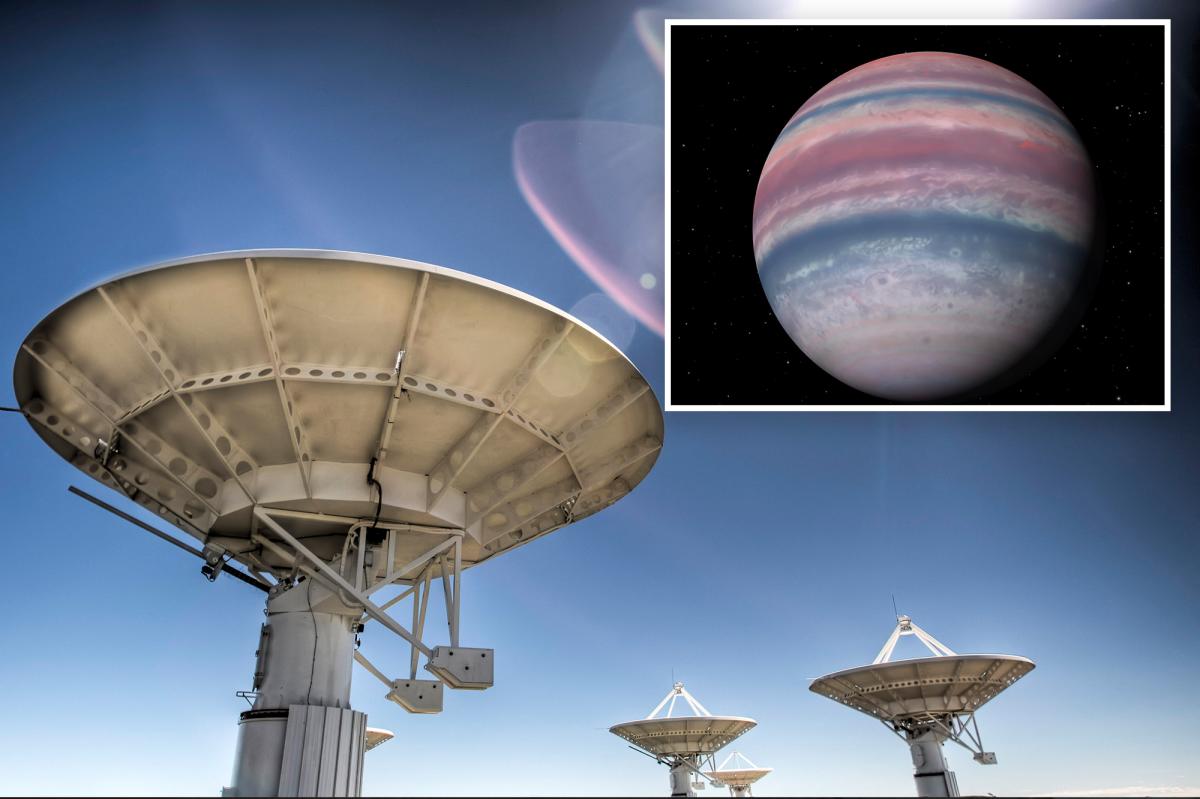
Astronomers say they have directly linked repeating radio bursts to Beta Pictoris b, a gas giant about 63 light-years away, in what they describe as the first unambiguous detection of radio emission from an exoplanet. Using South Africa’s MeerKAT radio telescope, the team distinguished the planet’s signal from that of its host star and interpreted its variability and circular polarization as signs of auroral emission driven by the planet’s magnetic field. The researchers estimate that field at about 1,250 gauss, substantially stronger than Jupiter’s, offering a new way to study the magnetic environments of distant planets. The findings are posted as a preprint and have not yet been peer-reviewed.
Key Points
1
The team localized the signal to Beta Pictoris b with 4.4σ significance after accounting for reported systematics, and found its position highly inconsistent with the host star.
2
The detected emission spans frequencies of 0.85 to 3.5 GHz, and the researchers reported a magnetic field of at least 1.25 kilogauss.
3
The researchers observed the Beta Pictoris system multiple times from February 2025 through May 2026; one reported interval between signals was about eight hours, corresponding to the planet’s rotation period.
4
Beta Pictoris b is estimated to have a mass roughly 10 to 12 times that of Jupiter.
Sentiment
Mostly PositiveNEGATIVENEUTRALPOSITIVE
Publishers
10
Articles
2
Reach
12
Topics
A
AnonymousAuthor


