Russia Plans First Duma Vote Since Ukraine Invasion
Russia Plans First Duma Vote Since Ukraine Invasion
Anonymous
Key Points
1
The State Duma election uses a mixed electoral system: 225 deputies are elected from single-member constituencies and 225 through proportional representation, with parties generally needing at least 5% of the federal vote to qualify for proportional seats.
2
United Russia won 324 of the 450 State Duma seats in 2021, giving it a substantial starting advantage in the 2026 contest.
3
A Levada Center survey found that 66% of respondents at the end of May did not know that State Duma elections would be held this year; campaign spending was also reportedly substantially lower than in previous elections.
4
The presidential administration reportedly set internal targets of at least 55% turnout and 55% of the vote for United Russia. According to the cited analysis, such a result could give the ruling party enough support to amend the constitution if necessary.
5
Russian citizens voting in South Africa must be at least 18 and present a valid Russian document proving their identity abroad, in practice a valid international passport. Polling is scheduled at the embassy in Pretoria, the consulate in Cape Town and a separate venue in Umhlanga, KwaZulu-Natal.
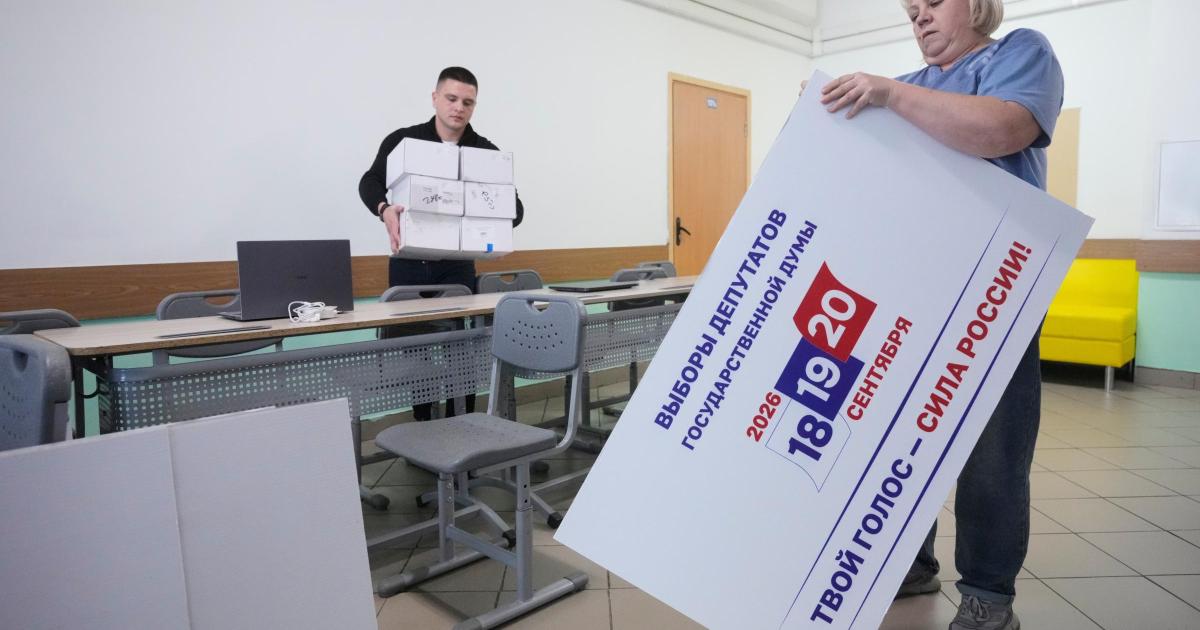
Russia held parliamentary elections on September 18-20, 2026, marking the first State Duma vote since President Vladimir Putin launched the full-scale invasion of Ukraine. South Wales Argus reported that the Kremlin-aligned United Russia party is poised to retain control of the 450-seat lower house, as authorities tightly control campaigning and suppress war criticism to project stability amid battlefield losses and economic strain.
The election tested public loyalty while independent observers warned that restricted monitoring could make fraud harder to detect. India Today noted that the main Kremlin party, United Russia, was expected to retain its majority despite the outcome being more difficult than in previous years.
United Russia's Stronghold and Electoral System
United Russia won 324 of the 450 State Duma seats in 2021, giving it an overwhelming starting advantage. The State Duma uses a mixed system: 225 deputies are elected from single-member districts and 225 through proportional representation. Parties generally need at least 5% of the federal vote to qualify for proportional seats, a threshold that benefits large, established parties like United Russia.
Low Public Awareness and Kremlin Turnout Targets
Public awareness of the election remained surprisingly low. A Levada Center survey found that 66% of respondents in late May did not know State Duma elections would be held that year. Campaign spending was also substantially lower than in previous election cycles, suggesting a less competitive race.
The presidential administration set internal targets of at least 55% turnout and 55% of the vote for United Russia. According to analysis cited by Belfast Telegraph, such a result would give the ruling party enough support to amend the constitution if necessary.
Voting Spread Across Russia and Occupied Ukraine
Russians abroad participated in the election, with polling stations operating in countries including South Africa and India. News18 reported that Russian citizens voting in South Africa must present a valid international passport and be at least 18 years old. Polling occurred at the embassy in Pretoria, the consulate in Cape Town, and a separate venue in Umhlanga, KwaZulu-Natal.
The election was also held in Russian-occupied parts of Ukraine, a move criticized by Kyiv and international observers. Irish News noted that voting occurred in four Ukrainian regions that Moscow illegally annexed, further inflaming tensions over the legitimacy of the electoral process.
Kremlin's Stability Message Amid War Pressures
The Duma election served as a key test of public loyalty and support for the Kremlin during an unpopular war. Belfast Telegraph reported that authorities suppressed war criticism and limited meaningful opposition to ensure United Russia's victory. The vote aimed to project stability and legitimacy as Russia faced mounting economic pressures and battlefield losses.
Concerns about a possible new mobilization wave also shadowed the election. Independent observers warned that restricted monitoring of the vote could make fraud harder to detect, raising questions about the integrity of results that appeared predetermined by the Kremlin's tight control over the political process.
Sentiment
Mostly NegativeNEGATIVENEUTRALPOSITIVE
Publishers
81
Articles
405
Reach
486
A
AnonymousAuthor


