Barapullah Phase III to Open Sept. 29
Barapullah Phase III to Open Sept. 29
Anonymous
Key Points
1
The project has missed nine deadlines over nine years; the September 29 opening date follows an earlier June 30 target that was also missed.
2
The corridor will be Delhi’s 10th road overbridge across the Yamuna and is expected to benefit commuters traveling between Mayur Vihar, Patparganj and Trilokpuri and southern hubs including Jangpura, Sarai Kale Khan and AIIMS.
3
PWD Minister Parvesh Sahib Singh said the project’s progress accelerated during the past year and a half through regular inspections, continuous monitoring and coordination among multiple agencies; he also said the government secured permission to transplant trees from the construction site.
4
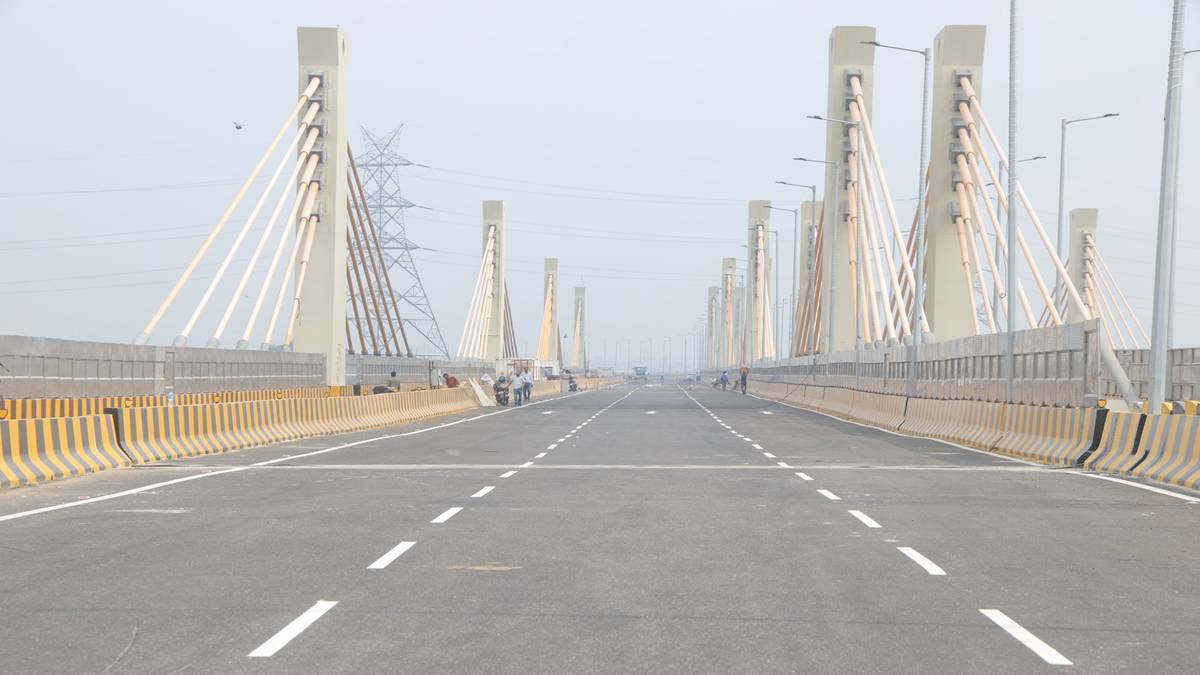
Both ramps of the elevated corridor have been completed—one connecting to Mayur Vihar and the other to the existing corridor near Sarai Kale Khan—and the extra-dosed bridge over the Yamuna is ready to serve as the connecting structure.
Delhi's Barapullah Phase III corridor will finally open to the public on September 29, after nine years of delays and missed deadlines. Hindustan Times reports that Union Home Minister Amit Shah will inaugurate the 3.5-kilometre elevated route alongside Chief Minister Rekha Gupta and Public Works Minister Parvesh Sahib Singh. The signal-free corridor will connect Mayur Vihar Phase I to Sarai Kale Khan and cut travel time between East and South Delhi to roughly 15 minutes.
The project includes dedicated cycle tracks, pedestrian walkways, and an extra-dosed bridge over the Yamuna River. Originally approved in 2014 and started in 2015 for completion in 2017, the corridor faced land disputes, environmental issues, and construction challenges that pushed costs from Rs 1,260 crore to Rs 1,635 crore. Financial Express notes that both ramps are now complete and ready for traffic.
Nine Years of Delays and Cost Overruns
The Barapullah Phase III project has missed nine deadlines over nine years. It was originally supposed to finish in 2017, but land-acquisition disputes, tree-clearance issues, and Yamuna floodplain construction challenges derailed progress. A June 30 deadline was also missed this year. ANI News reports the project was approved in 2014 and started in 2015 under complex circumstances.
The cost ballooned from approximately Rs 1,260 crore to Rs 1,635 crore as delays mounted. The Hans India reports that the PWD Minister attributed recent acceleration to regular inspections, continuous monitoring, and coordination among multiple agencies over the past year and a half.
Signal-Free Route Links East and South Delhi
The corridor will be Delhi's 10th road overbridge across the Yamuna. It extends the existing Barapullah corridor to about nine kilometres total and connects major hubs including AIIMS, Jangpura, and Sarai Kale Khan. Urban Acres explains that the route benefits commuters from Mayur Vihar, Patparganj, and Trilokpuri travelling to southern destinations.
The elevated route is completely signal-free, meaning no traffic lights or waiting at intersections between the two endpoints. This design is expected to ease congestion near Ashram Chowk, a major bottleneck in South Delhi. The corridor includes nine traffic-distribution loops to manage traffic flow at key points.
Modern Features Including Cycle Tracks and Walkways
The project goes beyond basic road construction. It includes dedicated cycle tracks for cyclists and pedestrian walkways for foot traffic. The infrastructure reflects modern city planning that prioritises multiple modes of transport, not just cars. These additions make the corridor more accessible to residents who use bicycles or walk.
The most striking feature is the extra-dosed bridge spanning the Yamuna River. Hindustan Times reports both ramps—one connecting to Mayur Vihar and the other to the existing corridor near Sarai Kale Khan—have been completed and are ready to handle traffic flow.
Sentiment
Mostly PositiveNEGATIVENEUTRALPOSITIVE
Publishers
13
Articles
8
Reach
21
Topics
A
AnonymousAuthor