Delhi Transport Strike
Delhi DTC Bus Strike Enters Third Day as Commuters Face Severe Disruptions
Anonymous
Key Points
1
Contractual drivers and conductors said they are currently paid Rs 862 a day—the Delhi government’s minimum wage—despite operating large public buses. DTC has about 6,500 buses and carries roughly 60 lakh passengers daily.
2
The DTC Karamchari Ekta Union alleged that the dearness allowance had not been revised for 18 months and that the basic increment due every five years had last been implemented in 2019, with the next increment pending since 2024. The union called the Rs 862 daily wage comparable to “bonded labour.”
3
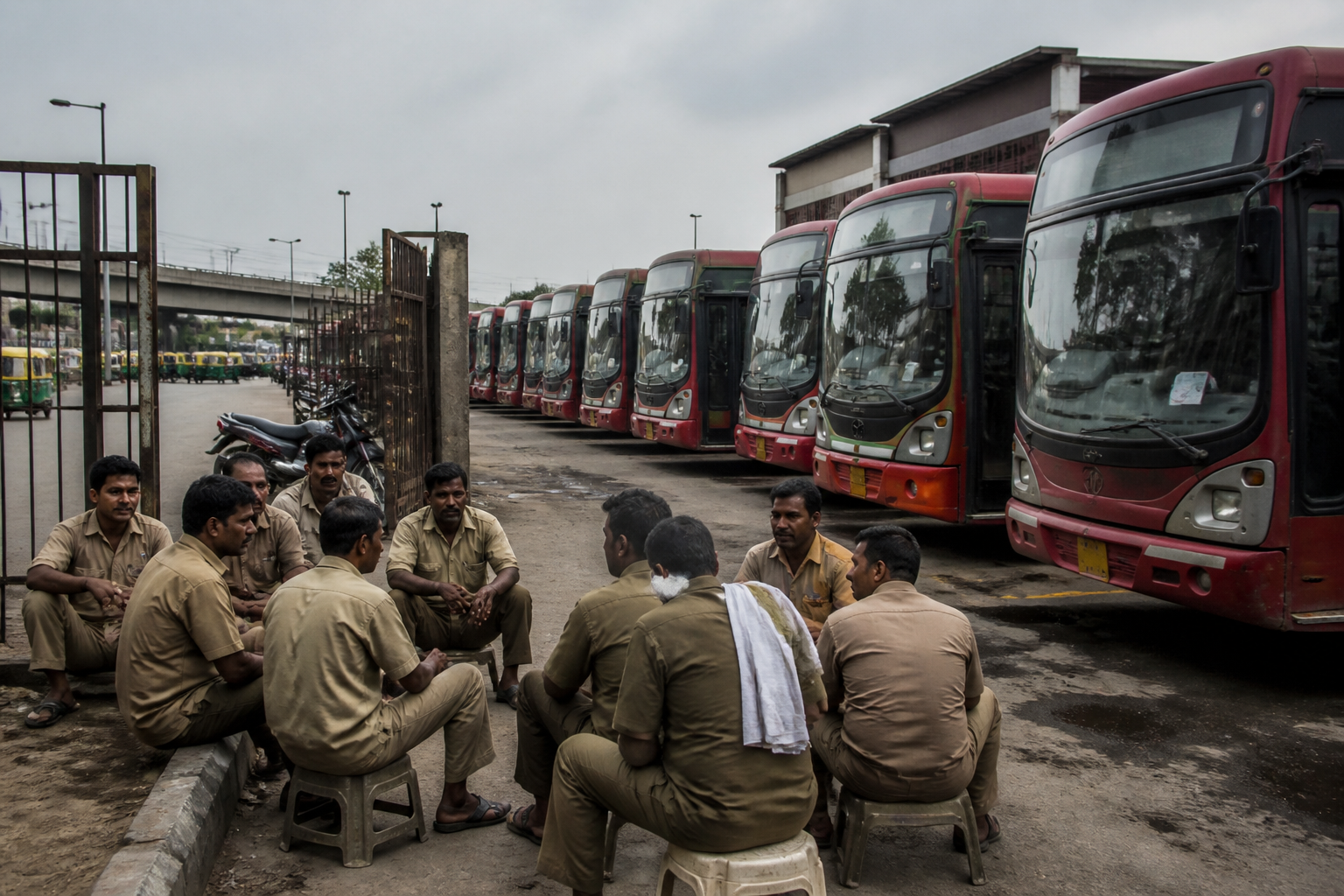
At Wazirpur depot, all 150 buses were parked while striking drivers sat on mattresses. Driver Joginder Singh said he travels 80 km daily to work from Jhajjar, spending about one-tenth of his daily wage on the commute, and has had friends help pay his motorcycle loan installments.
4
DMRC said it increased train trips by 20 across its network, including eight additional trains on September 16 and plans for eight more on September 17, with the extra services available between 8 a.m. and 8 p.m. according to demand.
5
Delhi Airport said bus connectivity to and from the airport could be affected, although inter-terminal transfers were expected to continue through alternate arrangements. Drivers at depots including Rani Khera, Rajghat, Nehru Place, Burari, Wazirpur, Ghumanhera and Sarita Vihar were reported to be participating in the strike.
A strike by roughly 12,000 contractual Delhi Transport Corporation drivers and conductors entered its third day on September 17, keeping thousands of buses parked across the city and disrupting commutes for millions of daily riders. Urban Acres reported that over 10,000 drivers stayed off duty, with most of the DTC's 6,840 public buses remaining parked at depots across the city. Workers are demanding a daily wage of Rs 2,000—up from the current Rs 862—along with overtime pay, holiday bonuses, medical benefits, and removal of penalties.
Commuters faced long waits and sharply higher fares, with some paying up to Rs 150 for journeys that normally cost Rs 20 by bus. India Today reported that auto-rickshaw and e-rickshaw fares doubled or tripled as desperate travelers scrambled for alternatives. The Delhi Metro added 20 extra train trips to absorb the overflow, while Delhi Airport warned of possible disruptions to bus connectivity.
Drivers Earn Rs 862 Daily Despite Huge Commute Costs
Contractual drivers are paid only Rs 862 a day—Delhi's minimum wage for unskilled workers—yet operate the massive DTC fleet that carries roughly 60 lakh passengers daily. Driver Joginder Singh told reporters he commutes 80 kilometers daily from Jhajjar, spending about Rs 80 on travel costs out of his daily wage, or roughly 9 percent of his pay. The Indian Express quoted Singh saying: "This job doesn't leave me with a single penny." Permanent DTC drivers, by contrast, earn over Rs 70,000 per month plus benefits, creating a stark divide in the same workforce.
The DTC Karamchari Ekta Union called the Rs 862 wage comparable to "bonded labour," citing years of wage stagnation. Urban Acres reported that the dearness allowance—a cost-of-living adjustment—has not been revised for 18 months. Basic wage increments due every five years were last implemented in 2019, and the next increment pending since 2024 has not been granted. Drivers with 10–15 years of experience remain classified as unskilled workers with no path to better pay.
Strike Shuts Down Buses Across Seven Major Depots
The strike spread rapidly across Delhi's public transport network by the second day. Urban Acres reported that drivers at Burari, Nangloi, Rewla Khanpur, GT Karnal Road, Nehru Place, Wazirpur, and Shadipur depots stopped work. At Wazirpur depot alone, all 150 buses were parked while striking drivers sat on mattresses in protest. The Economic Times reported that over 3,000 buses were off the roads by the fourth day, with long waits and crowded alternatives becoming the new normal for Delhi commuters.
Metro Rail Added Extra Trains as Minister Claims Progress
The Delhi Metro Rail Corporation (DMRC) moved quickly to ease the crisis. Urban Acres reported that DMRC added eight additional train trips on September 16 and planned eight more on September 17, with extra services running between 8 a.m. and 8 p.m. based on demand. A total of 20 extra train trips were deployed across the network to handle the overflow from stranded bus commuters. Schools including Sardar Patel Vidyalaya faced bus uncertainties, while students, office workers, and hospital patients struggled to reach their destinations.
Transport Minister Pankaj Singh announced that concessionaires had accepted the drivers' non-wage demands. The Indian Express quoted Singh saying: "Regarding their demands... I ensured that the concessionaire accepted all of them... we would ensure that they receive a pay hike." However, union leaders immediately disputed this claim. The Indian Express reported that DTC Karamchari Ekta Union President Lalit Chaudhary stated: "None of the demands of the drivers have been met by the government. The strike will continue." As of September 18, talks had failed and the strike remained ongoing.
Sentiment
Mostly NegativeNEGATIVENEUTRALPOSITIVE
Publishers
48
Articles
22
Reach
70
Topics
A
AnonymousAuthor


